
Blog

  • Hymn of the Big Wheel

    Hymn of the Big Wheel

      Therapy
    Therapy

    My home town of Bristol boasts a psychedelic ‘amazement’ park and therapy clinics. How did that happen?
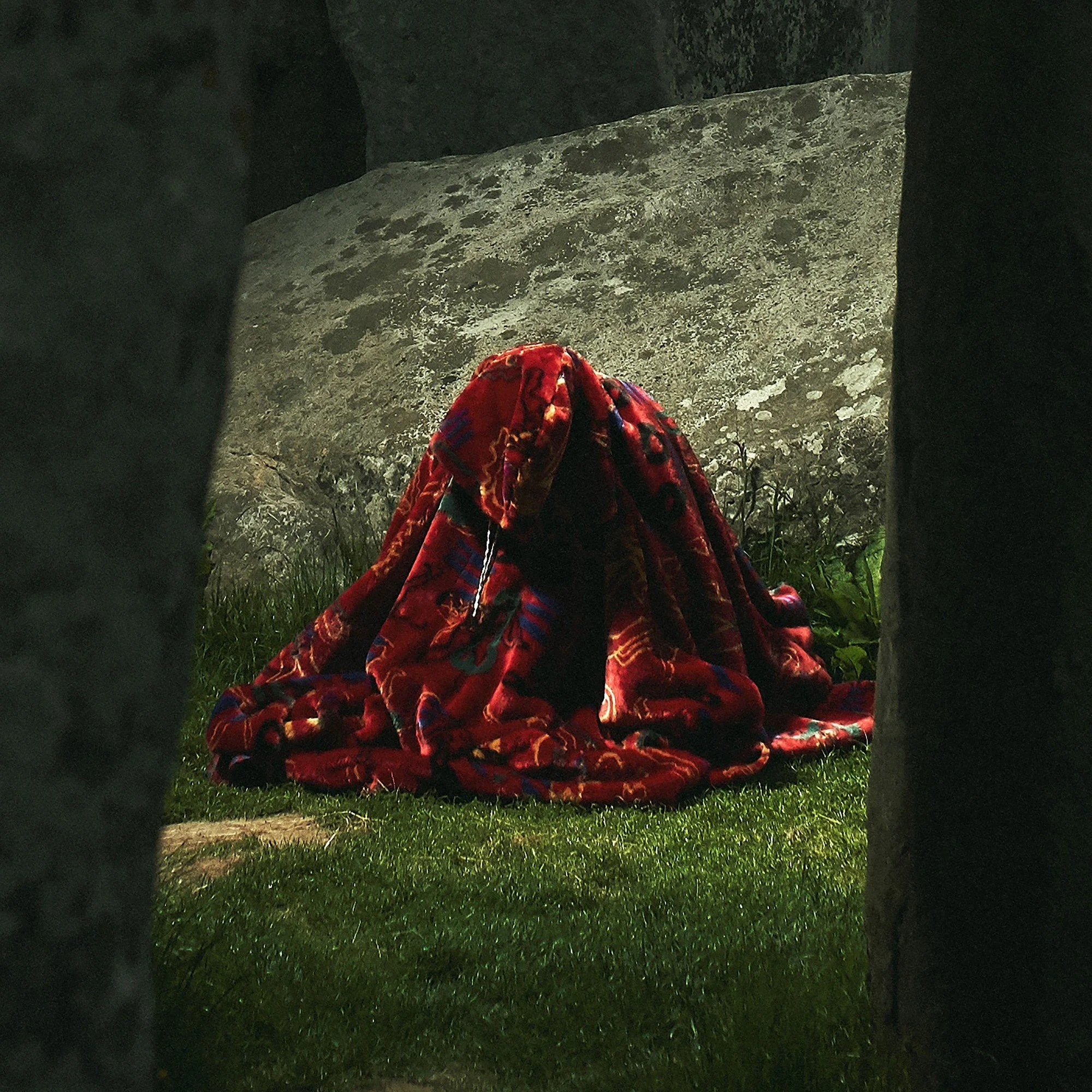
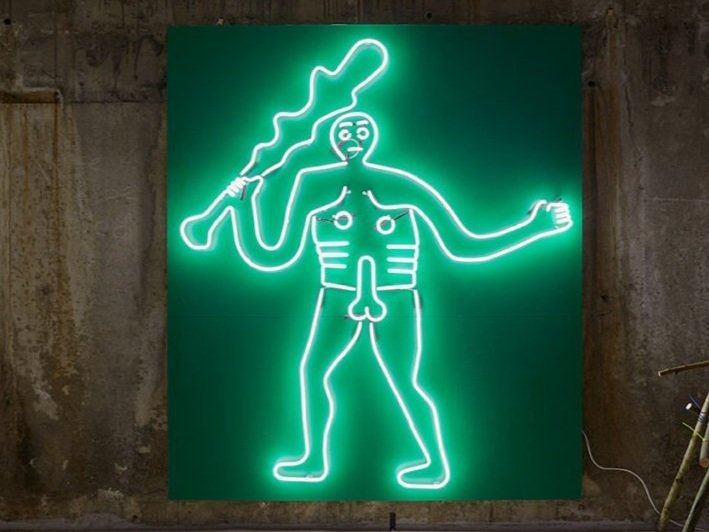
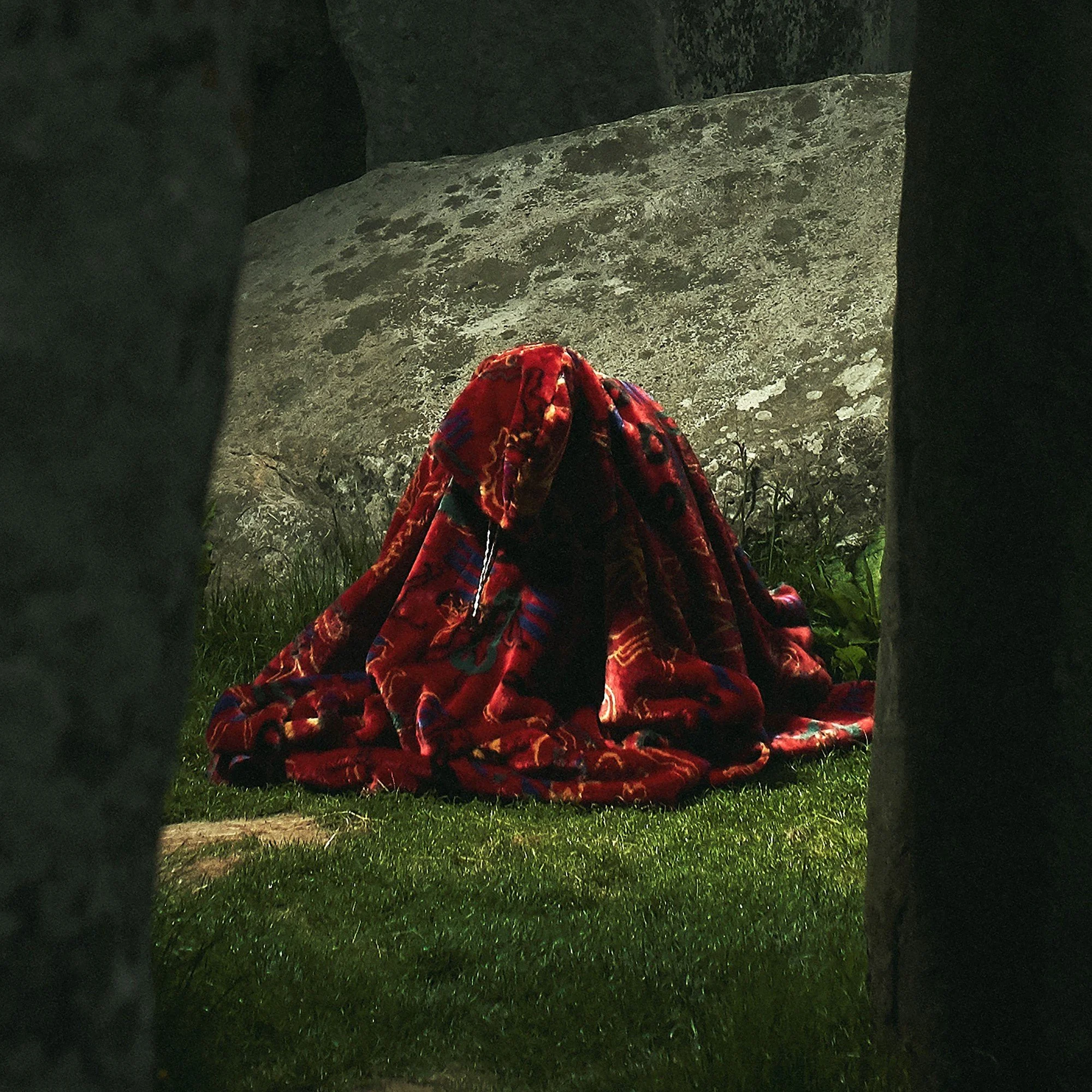
      Jeremy Deller, ‘Wiltshire Before Christ’ photo by    David Sims for Aires Arise
    Jeremy Deller, ‘Wiltshire Before Christ’ photo by David Sims for Aires Arise

    “Bristol is the San Francisco of Britain” declares Dr Ben Sessa of my home town where Awakn Life Sciences is based.

    How? Not only with Britain’s first psychedelic clinic – accessible without a referral – but also the world’s first immersive psychedelic ‘amazement park’. Bristol is making up ground, perhaps, for its heritage in tobacco and slavery.

    The clinic is the first branch of Awakn Life Sciences, opening also in London (opposite Euston Station) fronted by Psychedelic Renaissance author Dr Ben Sessa and addiction treatment icon Dr Celia Morgan. As of earlier in 2022, AWAKN’s main investor is the UK government. 

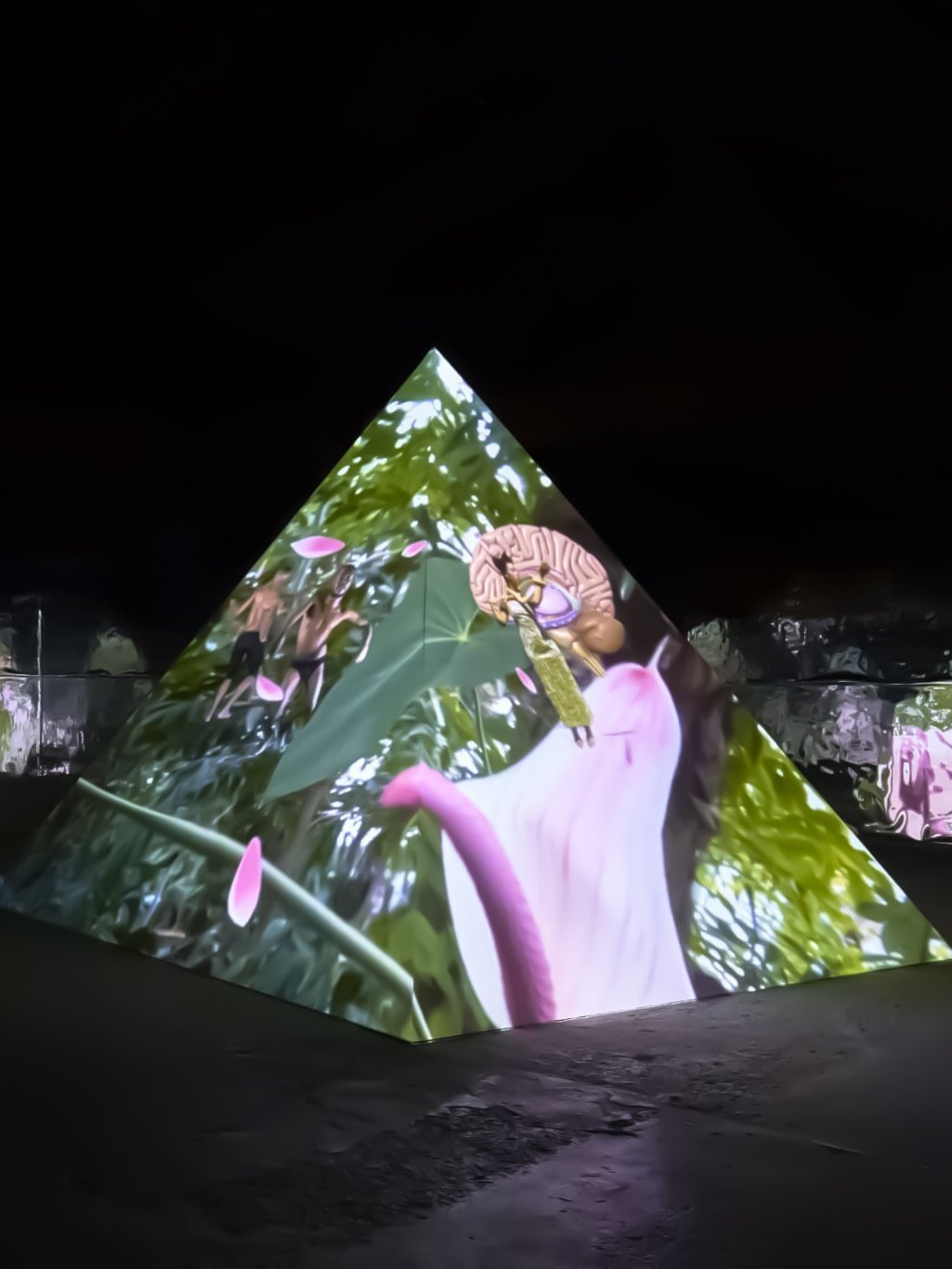
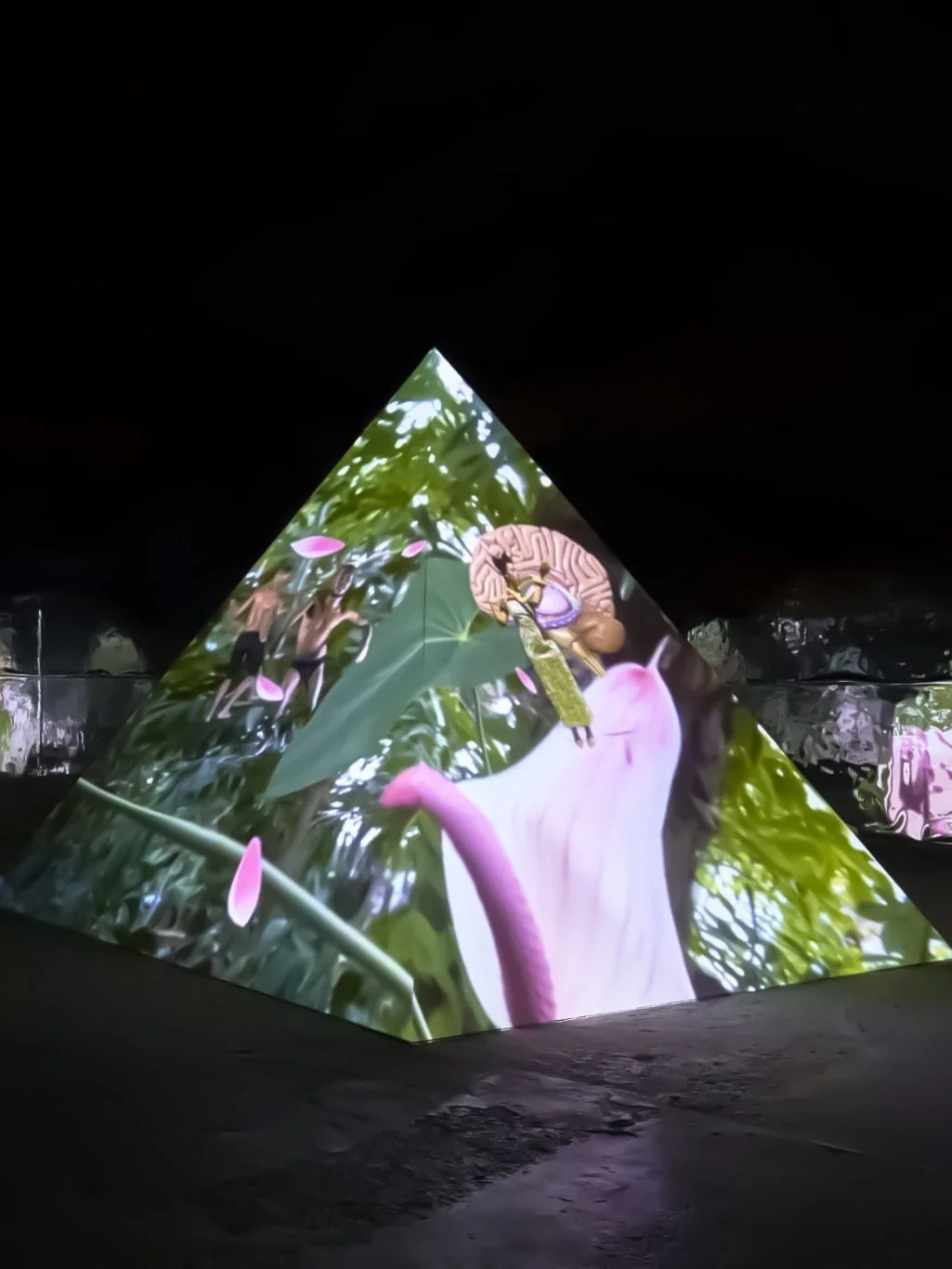
    Wake the Tiger is the name of the day trip destination. A lockdown brainstorm from festival innovators Boomtown, it is actually named after Peter Levine’s trauma tome Waking the Tiger. Creative director Lak Mitchell’s wife is a shadow-specialising psychotherapist, and suggested it. Wake the Tiger’s backdrop narrative offers a journey to an alternative dimension where all the unwanted clutter of consumer culture ends up; the sequence begins with a luxury living development where the only thing really living is a tree in the lobby.

        Wake the Tiger      in Bristol, the world’s first psychedelic ‘amazement park’
    Wake the Tiger in Bristol, the world’s first psychedelic ‘amazement park’

    Stu Tallis who sorted the branding at Taxi Studio, told the website Business Leader, “It pushes the boundaries of imagination and represents the truly unique and fantastical experience that fuses ancient wisdom and creativity… it needed to be scalable to accommodate the possibility of replicating the experience across the country and becoming a multiverse. It is a category-defining moment representing a sea change in how immersive art experiences are created.” 

    Opening in late July 2022, Wake the Tiger received £1.85 million in crowdfunding. Reviews are gushing, from those microdosing or otherwise. Kids get in free. They don’t know they’re born. Dropping a Purple Ohm to watch Bristol City lose at home to Swindon (by four goals) was all that we had in my day.

    “Wake the Tiger is a unique and fantastical experience that fuses ancient wisdom and creativity”

    Bang in the middle of the upmarket Clifton district is AWAKN’s Bristol ketamine clinic. The Times dispatched its most simultaneously verbose and glib columnist, David ‘Fatty’ Arranovitch to check it out. Unlike more intrepid reporters (hem-hem), he did not try it out. Although he does end the piece by pointing out the potential for psychedelic treatment of obesity, after beginning by complaining about the walk up Constitution Hill that I and my chums made to school most mornings, while daydreaming of the next time we could obliterate the pain of a rigid, parentified upbringing in service to the slave morality. Sorry, flashbacked and regressed a bit there.
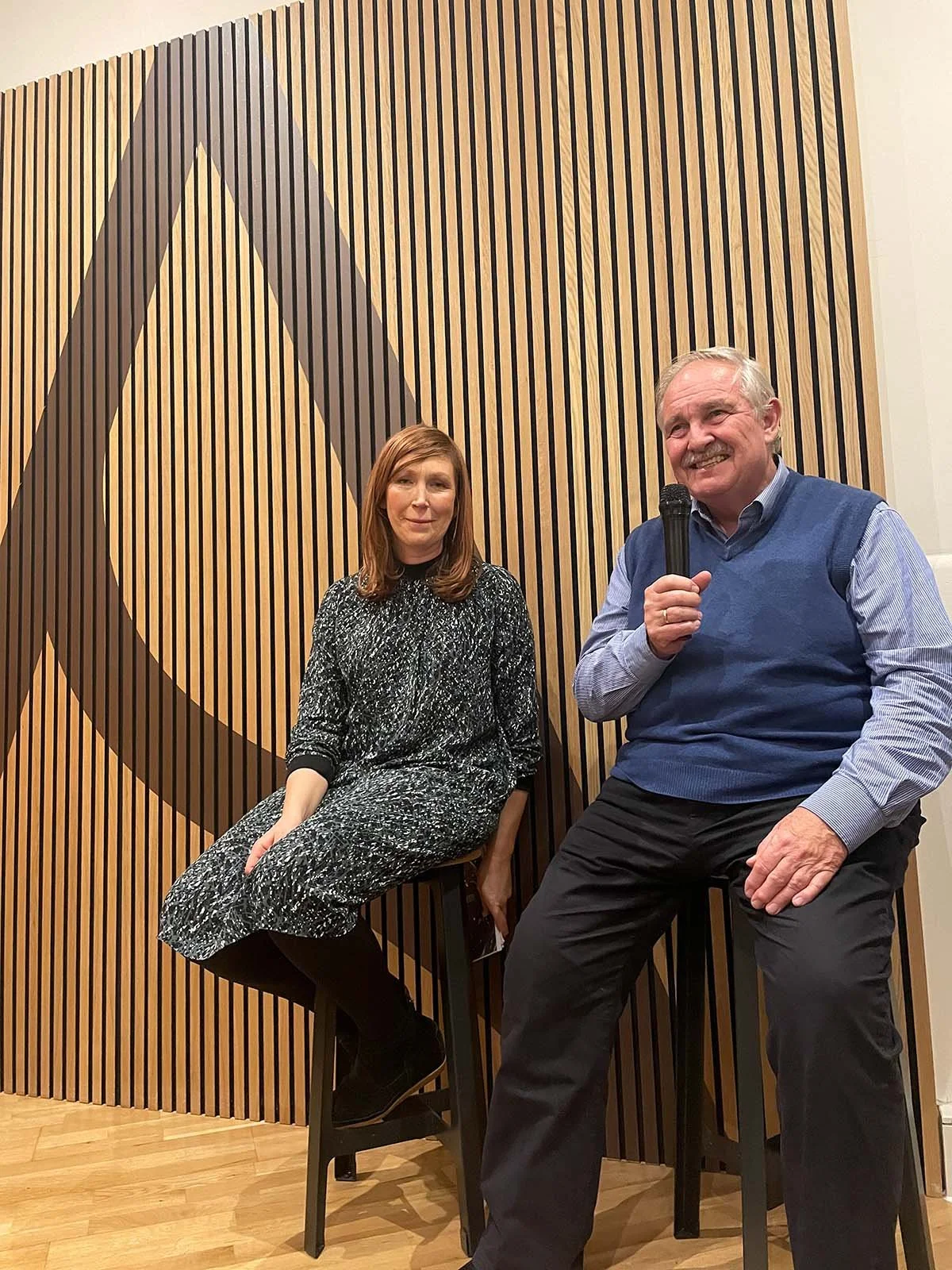
       Professors David Nutt and Celia Morgan, who form the Awakn dream team with Dr Ben Sessa
    Professors David Nutt and Celia Morgan, who form the Awakn dream team with Dr Ben Sessa

    Anyway, another AWAKN is planned for Manchester later this year while Oslo in Norway was the first AWAKN to open. AWAKN’s chief advisor is Professor David Nutt, a national treasure since he was sacked as the government’s drug policy advisor for saying LSD (and ecstasy, and cannabis) was less harmful an intoxicathan alcohol on daytime TV. Dr Sessa, who Vital students will hear from in Week 13, I believe is the most forthright and refreshing middle-aged man in the psychedelic space internationally right now. 

    AWAKN’s special sauce though is arguably provided by Celia Morgan. The fabulously clever redhead is also Exeter Uni’s head of psychopharmacology, and inspires fervent adoration from her Phd students. The National Institute for Health and Care Research (NIHR) are funding two-thirds of the costs for her alcohol use disorder treatment programme with the very British name of ‘Project Kestrel’, although KARE was used instead once the bureaucrats got their hands on it.

    Professor Morgan appeared in Business Insider’s list of the most important women in psychedelics earlier this year. Devising the first official cure for alcoholism, though would assure her a place in medical history. There are no flies on Morgan, who has discussed the dangers of chronic recreational ketamine use on BBC Woman’s Hour – “I’ve met teenagers who have to wear catheters,” is her conversation-stopper.

    Professor Morgan has even adapted psychedelic therapy for both the addiction and ketamine aspects of Project K: “We designed it to go with the ketamine effects,” she told The Guardian newspaper in its own report, “We wanted something evidence based, a therapy that has been shown to help people avoid alcoholic relapse. But also something that would work with what we know about the brain in the ketamine state.”

    Morgan embarked on Project Kestrel as a final year student at once-mighty University College London (which is about to open its own psychedelic mega-department headed up by the highly plausible Rosalind McAlpine). She pulled together strands of her friend’s experiences of recreational ketamine use with her family’s of addiction, and laid the foundations of an approach that could wrest thousands of sufferers and those close them from the living hell of alcoholism. Plus cut the £5.5 billion the UK loses to the condition every year. Morgan’s test subjects stayed clean 87% of the time after six months, compared to a measly 2% beforehand.

    Many have pointed out that it could be the therapy itself that’s making the difference, provided at very high quality in the trials for free, just like in the depression trials. (That this is not your regular psychoanalytic therapy is a matter for another time, although props to Arranovitch for quoting a patient as saying “it was more about the boozing than my mother”). 

    Only 8% of addicts ever seek treatment as it is, due to stigma or the way they’re not guzzling miniature brandies on the commute like a TV stereotype. It’s this ‘not quite in crisis, yet’ group who suffer too and are arguably more motivated to seek treatment should it be available without a CV-staining, divorce-prompting  diagnosis. Dr Sessa too stresses that childhood trauma isn’t usually born of what we know as ‘abuse’ – corporal and cruel punishments – and instead is a feature of many material-focussed western upbringings.

    “We wanted evidence based therapy shown to help people avoid alcoholic relapse, plus work with the ketamine state”

    Dr Sessa is a soundbite slinger, which I as a journalist appreciate. “Bristol is the San Francisco of Britain” is one of his best shots, and he’s done a lot to catalyse that.

    ‘There is only one good use for a small town. You hate it and you know you’ll have to leave,’ sings Lou Reed on the opening track of Songs for Drella, his and John Cage’s 1990 concept album dedicated to Andy Warhol.

    I left my own home town of Bristol for university in 1992, aged 18. Since, it has realised its media image as a Mecca of skateboarding, street art and… intentional drug taking (plus plasticine animation, as local artist Banksy rarely misses the opportunity to point out). And in the past six months, Bristol has even superseded modern-era triumphs such as the aforementioned world’s favourite artist’s Dismaland exhibition, in the admittedly dismal Weston Super-Mare, a former holiday resort notorious for its quicksand beaches. 

    But I remember my home town for its repression, casual violence, and nihilistic ennui, caused mostly by traumas and addictions that while ‘low-level’, eat away at the soul and body nonetheless. And it’s partly because they will never be seen as a source of necessary concern; we change only when we have to. If the West of England is coming unstuck from those behaviours, then I shall never slag it off again. I might even go to Wake the Tiger. 

  • UK leads new inner space race

    UK leads new inner space race

      Space
    Space

    But there are not nearly enough healers to dish out the (desperately required) medicine. Why?

       This is actually from new ‘psychedelic amazement park’ Wake the Tiger  in Bristol
    This is actually from new ‘psychedelic amazement park’ Wake the Tiger in Bristol

    “Mental health workforces are shrinking at a time the demand for mental health services is increasing,” says the news blog for Europe’s first psychedelic research centre Clerkenwell Health, just down the road from me in London. 

    Dr Derek Tracy, medical director at West London NHS Trust, told Sky News earlier this month that he has never seen such a high demand for access to mental health treatment. “It’s as busy as I’ve ever seen in my career. Numbers are up across all age groups and in all types of presentations, in London and nationally.”
    March 2021 figures claimed a quarter of adults reported ‘clinically significant psychological distress’ that month, up from just over a fifth before the C-19 pandemic. 

    So one in four of us are suffering from… ‘clinically significant psychological distress’. Suicides are up again since 2018. In May 2022 the number of under-18s referred to emergency mental health services went up 37% on the previous year, a record high. Depression and anxiety are the number one reason for taking time off work.

    “There are not enough therapists to deliver these treatments”

    This while corks pop on bottles of Nyetimber as the UK is declared “world leading” in the innovative treatment research field.

    Back on Clerkenwell Health’s blog, “Developing new drugs has attracted significant commercial interest. But the delivery aspects of these treatments are yet to receive the same attention. There are more than 150 psychedelic drug developers in the market. Patients’ demand for psychedelics is also increasing.”

    Clerkenwell Health’s stark conclusion? “There are not enough therapists to deliver these treatments.”

    I’d respond: that’s because there are too many barriers to becoming qualified.

    This week Vital students heard from lawyer Courtney Barnes, who detailled Oregon’s facilitator license training requirement that are not dissimilar to its own syllabus. Clerkenwell Health’s own psychedelic therapy program requires accredited health professional (AHP) status for entry. Which puts it beyond my means, for example. That requires a degree in occupational therapy at least, or better still being a clinical psychologist, which involves a decade or so of grind that I’ve been told by those who know for sure is not worth me trying in my mid-40s. Psychotherapist training is three to six years according to the UK Council for Psychotherapy

    I wonder how long the list would really be of qualified individuals, who have experience with psychedelics, and have long harboured a compulsion towards a very different psychological approach? How do they feel about the commute to central London?

    Who otherwise has the time or the money to retrain? I’ve worked with graduates in £80K of debt who want to be superstar fashion stylists, not spend their days under fluorescent light talking to long-term alcoholics about their visuals. Experts from Stanislav Grof to Dr Rick Strassman implore upon prospects how demanding psychedelic therapy can be.

    This is before we talk about the 28% of AHPs who quit due to burnout, the 16% who want to leave the sector entirely, the 43% actively looking for a new job, or the third who cite low pay and overwork as the main issues.

    “Developing new drugs has attracted significant commercial interest. But the delivery aspects of these treatments are yet to receive the same attention”

    100,000 vacancies in the NHS lie unfilled while expensive and life-consuming qualifications that were once unnecessary – my mother worked as a midwife, and the ward sister at Dick Whittington Hospital A&E here in London with no university education – stand right in the way of anyone compelled to join the sector. Anecdotally: a friend who’s worked at a high level in nursing for 12 years, including on the COVID-19 ward, has to undertake an MSc (in… nursing) before she can go up a pay grade and become a senior nurse. Granted there may be one or two useful things she picks up during it, but compared to 12 years on the job will it be worth the time and the debt? Especially given the demand for senior nurses?

    Full psychopomp status via the Clerkenwell Health program lasts only three months and is free, incidentally. To accredited healthcare professionals.

    Embers of hope burn, certainly with outspoken, heritage foundations like Beckley emerging into the C-suite conversation and the fast-tracking of the MAPS PTSD programme. Though no wonder unofficial psychedelic mental health services thrive. While these may cater well to the slightly-unhealthy normals, who Grof to David Nutt say can benefit immediately from psychedelic experience alone, they cannot expect to hold back the tide of trauma and addiction. And as almost everyone connected to the issues –except the gatekeepers – agrees, the current set-up certainly can’t either.

  • The New Bethlehem. Not like the Old Bedlam

    The New Bethlehem. Not like the Old Bedlam

      Medical
    Medical

    The UK NHS, Compass Pathways and King’s College promise a ‘beacon for mental health treatment’ in South London

       South London architecture collective      Resolve
    South London architecture collective Resolve

    Compass Pathways are partnering with the UK’s National Health Service and King’s College London – at the once-notorious ‘Bedlam’ asylum in London.

    Plants to treat over 650 NHS patients with Compass’ Comp360 psilocybin-based treatment plan include a new facility amongst 200-acre woodland.

    Mired in scandal back in the 1700s for making a tourist attraction of inmates St Mary Bethlehem Hospital has actually moved site at least once and is now in un-psychedelic Croydon. It’s run by South London and Maudsley NHS Foundation Trust (SLaM), the largest mental health trust in the UK National Health Service (NHS). Research will be conducted by the Institute of Psychiatry, Psychology at Neuroscience (IoPPN) at King’s, which was founded in the 12th Century and has partnered with Compass since 2007.

    It’s the first of its kind for the UK state healthcare system that’s under siege from the demographic time bomb and mental health epidemic. 

    “It will be a centre of excellence for new therapies that don’t always involve psychedelic drugs but also the key therapy that goes along with it” says Professor Allan Young from IoPPN.

    “The focus is on people who use mental health services day to day, developing effective new medicine for patients with depression, anxiety, addiction and other mental health issues,” says NHS exec David Bradley.

    No news yet on who will be designing this New Esalen but South London’s Resolve must be high on the shortlist. 

    London-based Compass has come out swinging in 2022, taking on autism alongside the NHS with its, er PSILAUT program and fighting off off a challenge to Comp360 by Freedom to Operate, whose founding legal eagle Carey Turnbull said, “We are confident that the PTAB’s extremely narrow interpretation of Compass’s patent claims will provide generic manufacturers of psilocybin with wide latitude to produce and commercialise psilocybin without risk of violating the Compass patents.” So everybody’s happy… for now.

  • Once and future Albion

    Once and future Albion

    Is this actually it? Builded here? Amongst the mills?

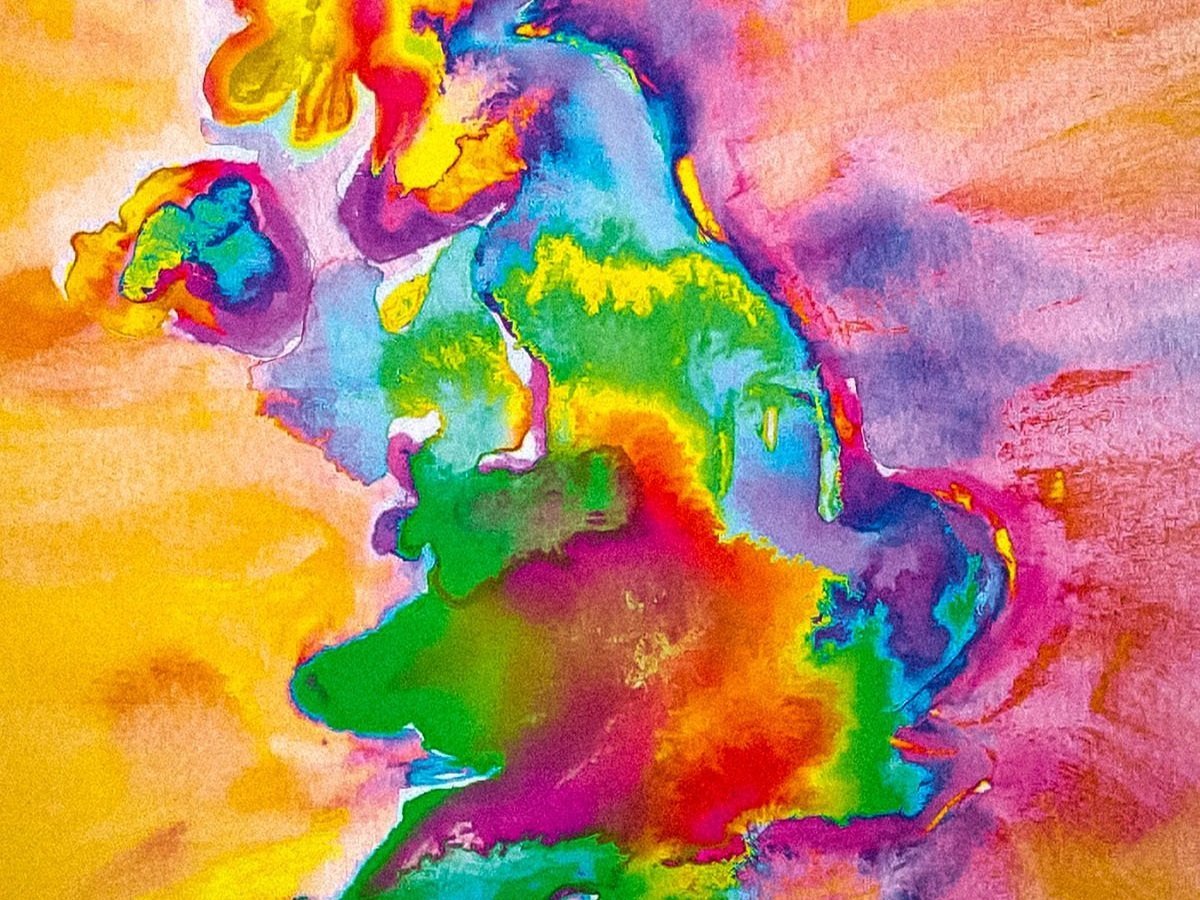
       Jeremy Deller’s 2022 cover for The New Statesman magazine’s ‘A Dream of Britain’ issue      guest edited by actor Michael Sheen
    Jeremy Deller’s 2022 cover for The New Statesman magazine’s ‘A Dream of Britain’ issue guest edited by actor Michael Sheen

    “It’s a hopeful, optimistic interpretation… blended, dynamic, fantastical,” says British artist Jeremy Deller of his vivid cartographic A Dream of Britain pictured above. 

    The vibrant painting of the United Kingdom closed the British Museum’s smash Stonehenge show of spring/summer 2022. Deller is colourblind so sees it differently to you and I. This he says reflects a national identity that is forever intersubjective, and in flux.

    In issue one of the Vital Student Zine I pulled out Albion Dreaming, Andy Roberts’ history of psychedelic Britain: “From the Sixties onwards sections of the counter culture used the term Albion to refer to their vision of a land, society and individual consciousness based on the insights offered by LSD,” writes Roberts of the romantic goal gathering pace in pop culture.

    All the big gun historians from Pliny the Elder, through Marinus of Tyre, to Geoffrey of Monmouth cite Albion as the original name for these sceptred (in a non-dual way) isles. The legend is kick-ass (arse). First, the original King of Syria, or a King of somewhere in Greece maybe, had 43 (or possibly 33) illegitimate daughters who all got married on the same day, killed their husbands on the same night, and fled right here. Where there were no men. So they had it off with incubi – the male equivalent of a saucy ‘succubus’ sex demon – and produced a race of giants. The sisters named the place after their alpha female, Alba.

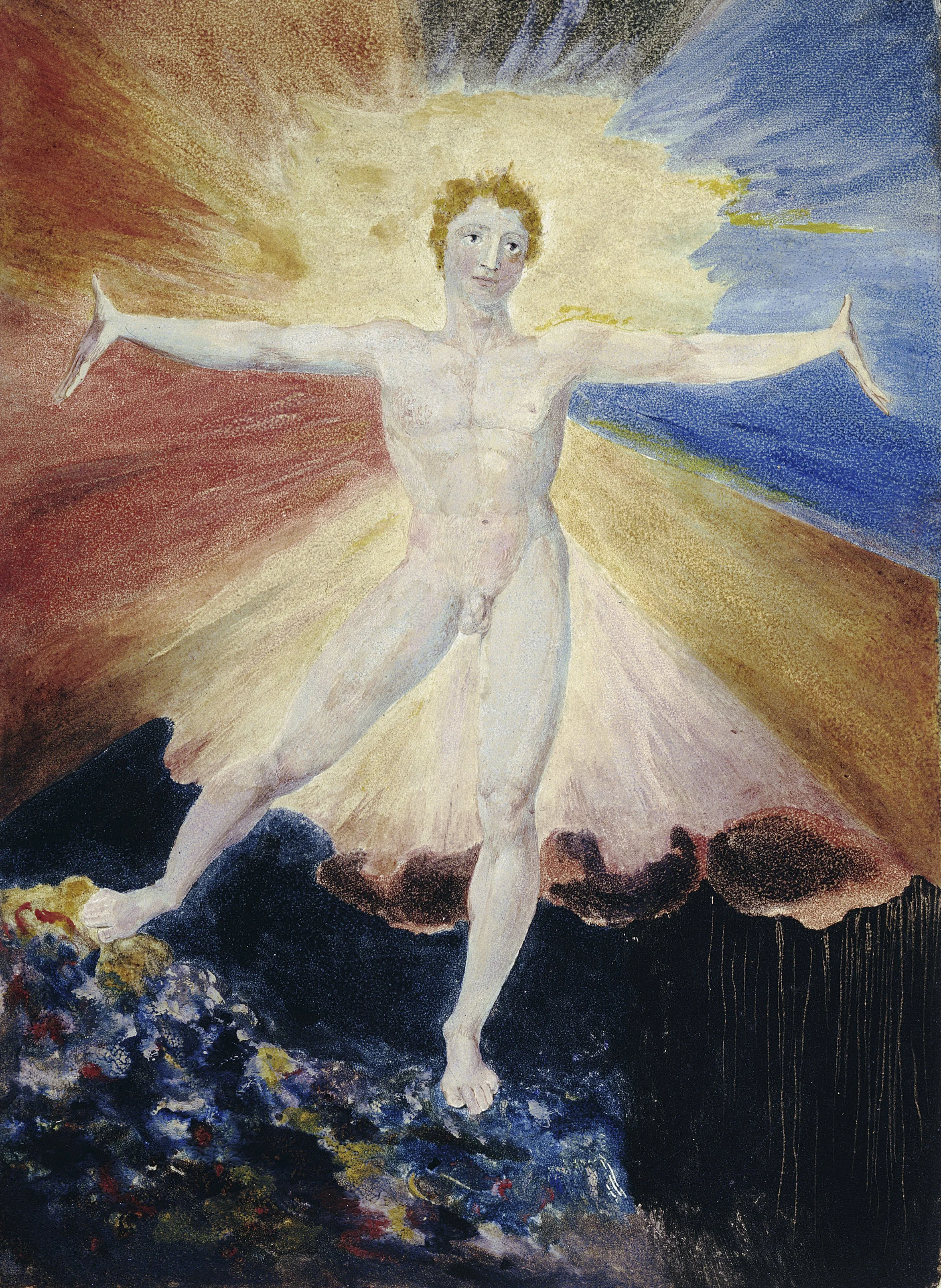
        William Blake     ’s ‘The Dance of Albion'
    William Blake ’s ‘The Dance of Albion’

    In the sequel, beleaguered Brutus of Troy is fleeing his eponymous horse fiasco when the freaking goddess Diana appears and tells him to voyage beyond Gaul to “raise a second Troy”. There were only 24 giants left by then including the fearsome Gogmagog, who got chucked off the white cliffs of Dover. That’s my GoT-style swashbuckling version with apols to Geoffrey of Monmouth and the crew.

    “To the counter culture Albion refers to a land, society and individual consciousness based on the insights offered by LSD”

    Any sort of ‘New Albion’ got off to an auspicious start after Sir Francis Drake used it as the first name for California upon landing in 1579. Since then it’s had further ups-and-downs. Esoteric saint, the poet and painter, William Blake named Albion ‘the primeval titan’ from which his four aspects of man sprang, and pictured it as a giant wearing nothing but a broad grin against a rural Utopian background featuring splashes of pastel colour… apropos of nothing.

    Blake invokes Albion when in need of a term to idealise Britain: his Vision of the Daughters of Albion is a feminist protest poem influenced by his friend, and collaborator, Mary Wolstencraft Shelle. And he cries “does this thing happen on Albion’s shores?” in Little Boy Lost, an ode against child cruelty. The English cricket, rugby, and Commonwealth Games athletic teams all use Blake’s proto-socialist hymn Jerusalem instead of the official national anthem.

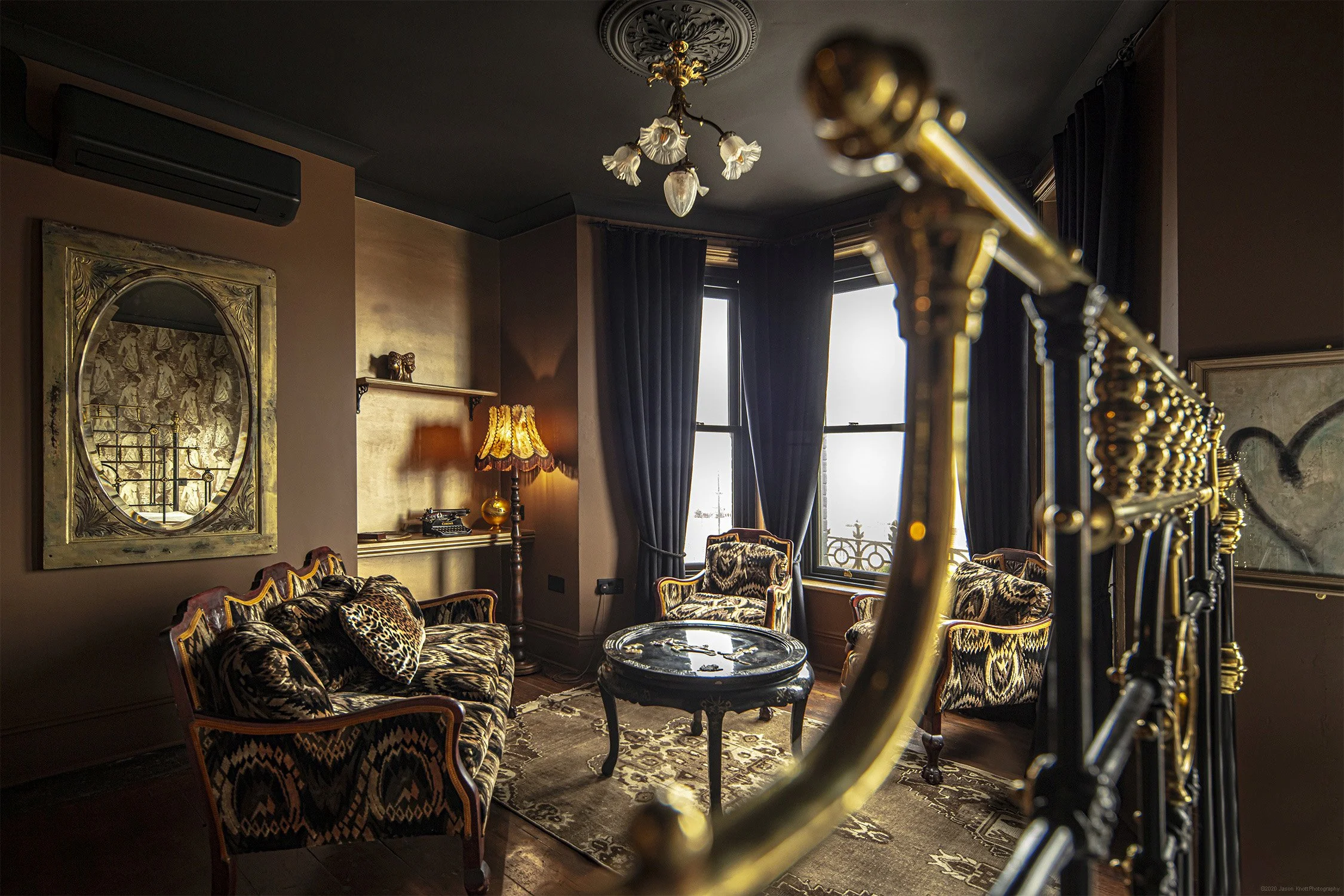
       Pete Doherty’s Margate HQ      The Albion Rooms
    Pete Doherty’s Margate HQ The Albion Rooms

    Shadow side ‘Perfidious Albion’ was a term invented by French bishops to bemoan England’s Dark Ages clerical set-up. Later, French Revolutionaries assumed support from the country that toppled its monarchy and installed a puppet aristocracy a century previous. When it didn’t come, the former miserables ran with the term propagandising an, erm, supposed track record of diplomatic betrayal, even bringing up the whole Joan of Arc thing again which everyone knows they were in on.

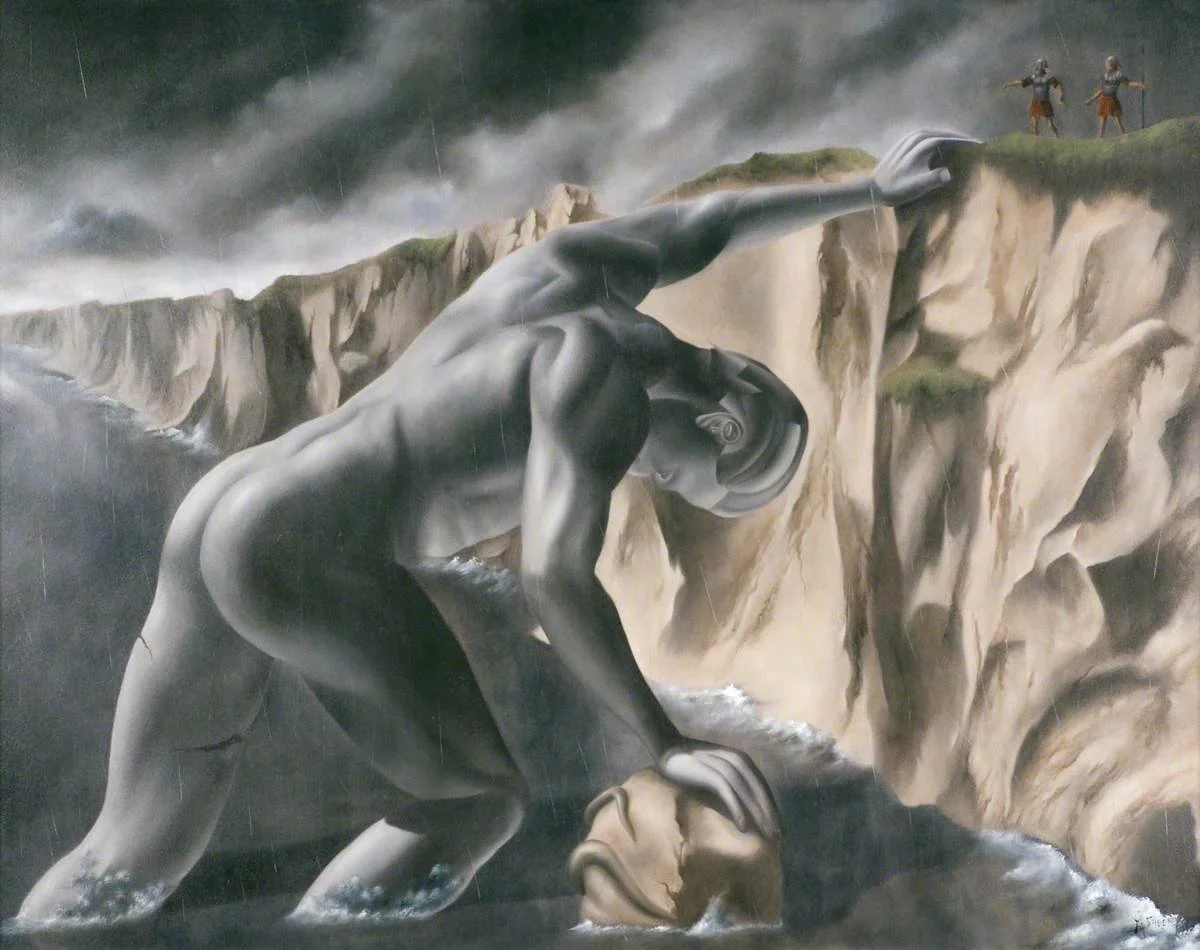
       ‘Two Roman Legionaries Discovering The God-King Albion Turned Into Stone’ by Mark Sheeky
    ‘Two Roman Legionaries Discovering The God-King Albion Turned Into Stone’ by Mark Sheeky

    Two Roman Legionaries Discovering The God-King Albion Turned Into Stone is a 2008 painting by Mark Sheeky. He says, “It’s inspired by Brief Encounter, a film from 1949 that showed a Britain which no longer exists, a country and time so alien to the Britain of 2008 that it is difficult to believe that a place like that ever existed. I wanted to represent the end of that old Britain, so I chose the end of another era as the setting. Two foreigners, Roman legionaries, walk towards the edge of Britain in the grey rain. Through mud, to the grassy limit of the country, the top of the great white cliffs. As they reach the edge they discover a giant stone man standing in the sea, the once king Albion, now dead and grey and cracked. A statue preserved like a memory. A reminder of an ancient time now gone forever.”

    Or has it? Under re-story-ation rules fiction can be considered as powerful as the imagined past, right? And in terms of syncronicitous relevance, the phrase Albion cropping up like this must be some sort of sign?

    “I’m not an activist, I’m a fantasist”

    Here in C21 the Dionysus figure of our second Atlantis, musician Pete Doherty evokes Albion so strenuously that he’s opened a hotel in Margate (it’s like Portland crossed with Oakland, by the sea) called The Albion Rooms. “Reebok classics, and canons at dawn; terrible warlords, good warlords, and an English song” goes Doherty’s band Babyshambles’ gentle rabble-rouser Down in Albion. “I’m not an activist, I’m a fantasist. Inverted snobbery is just as dangerous as snobbery itself, you know – that pride in having nothing,” he says.

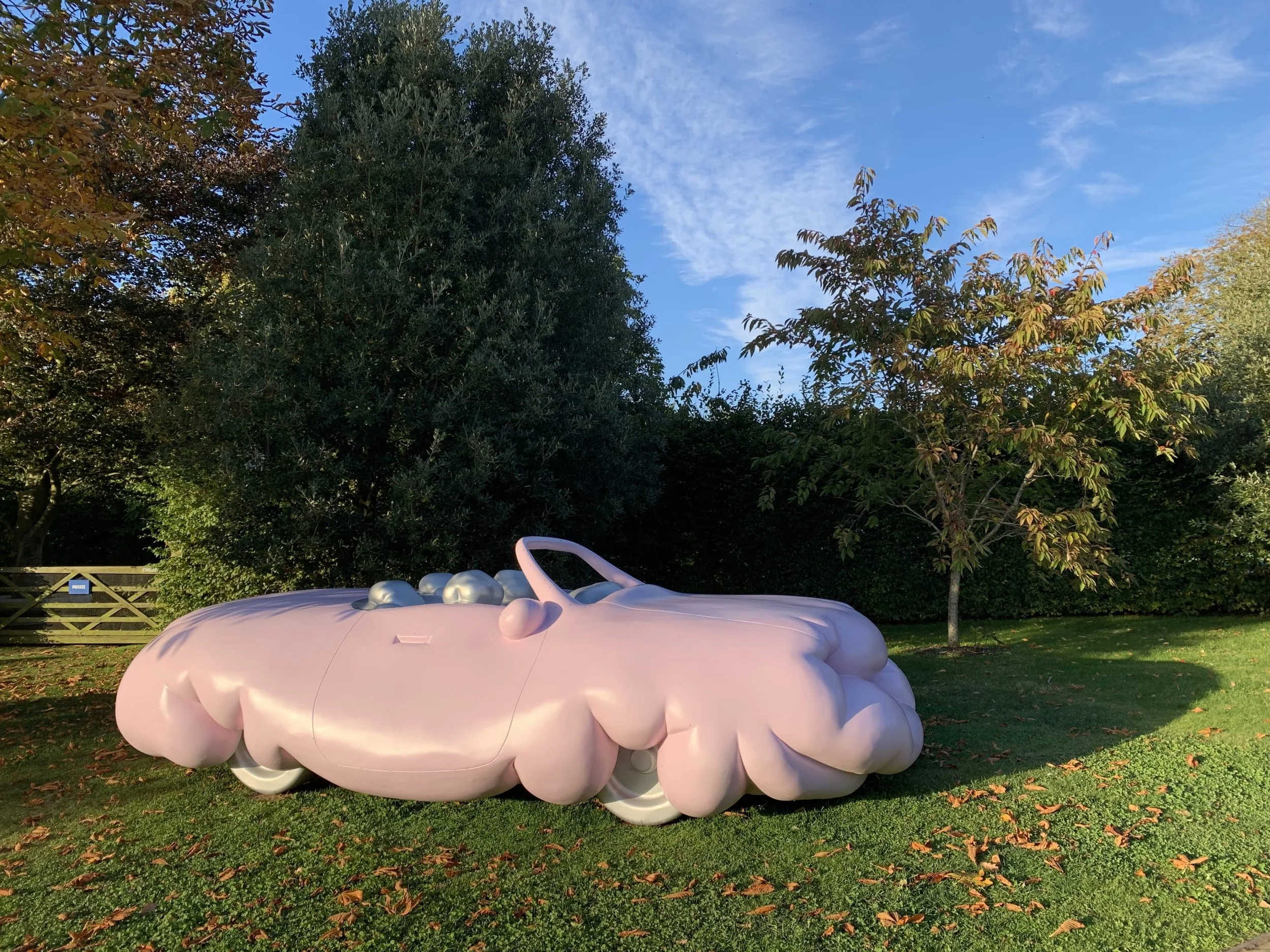
       By Erwin Wurm at      Albion Fields      sculpture park
    By Erwin Wurm at Albion Fields sculpture park

    Over at the other end of the quantum funnel from this grass-roots desire for a new national identity lies Albion Fields sculpture park, open till end of October 2022. It’s an outdoor exhibition free to anyone but to which nonetheless ‘the glitterati are flocking’ according to Tatler magazine. 

    The woodland’s owner (in fact it was planted at his birth) is Michael Hue-Williams, an art dealer who first showed Ai Weiwei in the UK and represents generation-defining photographer Nick Knight. He says, ‘Walking through these beautiful grounds during lockdown, I realised I have a unique opportunity to share the experience.’ Perhaps reciprocity can exist at all levels. Once and future.

  • Kool-Aid Corner #9

    Kool-Aid Corner #9

    To finish: trippy clippings, merry pranks, and psychedelic student life

    Graph or Table of the Week

    Self treatment with psychedelics:

        From:      Self-treatment of psychosis and complex post-traumatic stress disorder with LSD and DMT —A retrospective case study      by Mika Turkia published in Psychiatry Research Case Reports Vol 1 Issue 2 (2022)
    From: Self-treatment of psychosis and complex post-traumatic stress disorder with LSD and DMT —A retrospective case study by Mika Turkia published in Psychiatry Research Case Reports Vol 1 Issue 2 (2022)

    My bookshelf weighs a ton

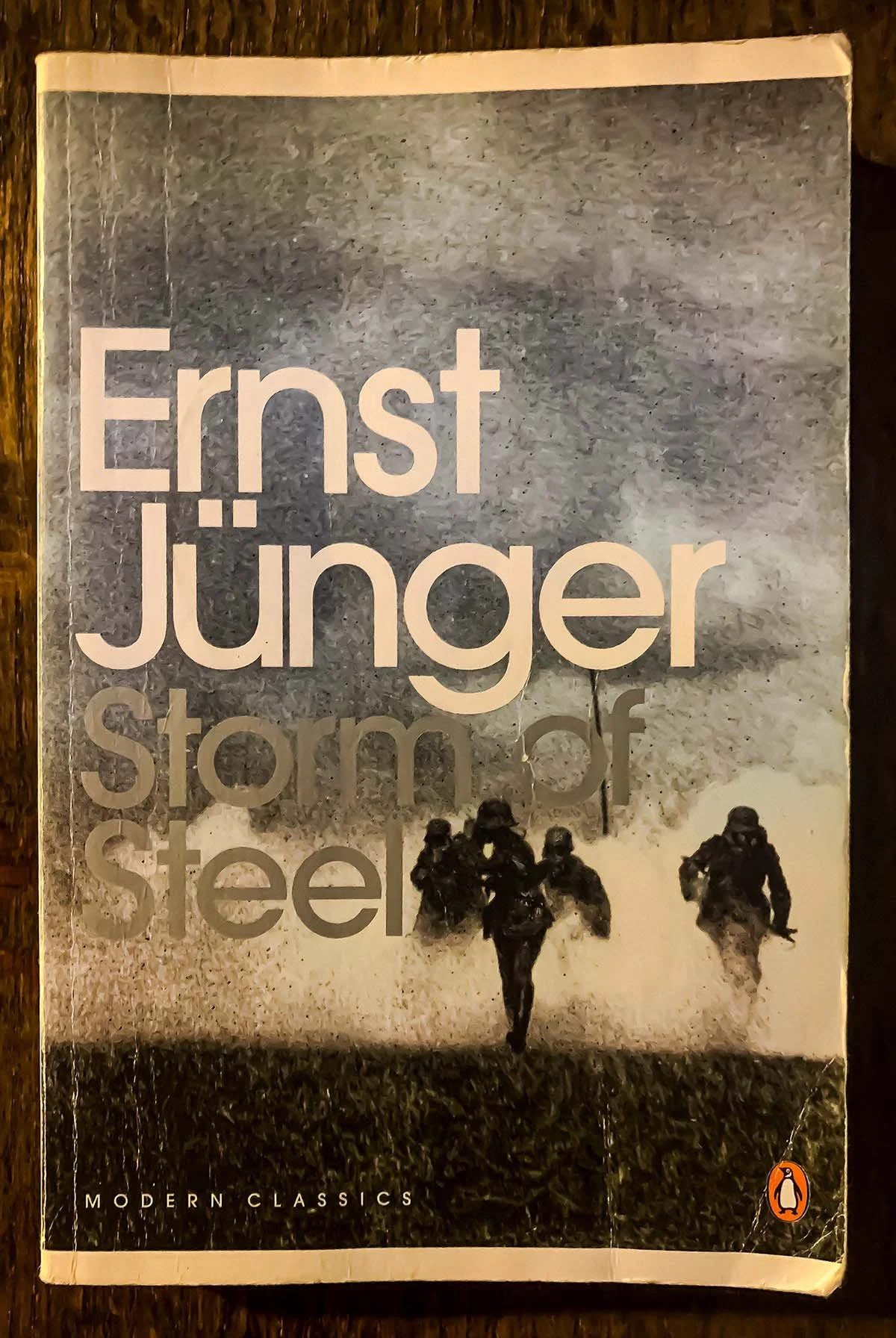
    Notable new purchases for the occult library. Strictly second hand snap-ups only. This week: Storm of Steel by Ernst Junger

       Another score from the Brick Lane bookstore, £6.50
    Another score from the Brick Lane bookstore, £6.50

    “No other writer has thus opened my eyes,” wrote Albert Hoffman of Junger’s sublime nature writing in LSD: My Problem Child. Although the psychedelic inventor who corresponded with Junger after WW2, was keen to point out that he was less into Junger’s ‘earlier books’ about ‘war and a new type of human being.’

    Junger was Germany’s greatest military hero of WW1. Throughout his career he consistently refused to apologise for embracing conflict when necessary, perhaps in contrast to his proto-hippy views that influnced the 60s counter-culture. He did accept that the warrior was powerless against the march of tech. “In war you learn your lessons, and they stay learned, but the tuition fees are high” is just one of the gems from this terrifying and exhilarating account of trench warfare that’s often uncomfortably, but necessarily, voyueristic.

    Next issue: Core module two Psychedelic Therapies continues with ethics training on the edge of reality

  • Emerging landscapes with Dr Bennet Zelner

    Emerging landscapes with Dr Bennet Zelner

    My unofficial Vital Study Zine #8 with observations from Vital Psychedelic Training and recent happenings in the space

        ‘Liquidated Chanel’ by Zevs, works avaialble from      Magda Danysz      gallery
    ‘Liquidated Chanel’ by Zevs, works avaialble from Magda Danysz gallery

    The final lecture in Vital’s first core module of five, Psychedelic Therapies: Historical and Current Approaches focussed on the future.

    And not only that of psychedelic use, medical or otherwise. 

    Dr Bennet A Zelner is developing and applying ‘biomimetic’ solutions inspired by the natural world, to on-the-ground business practice. Right now he’s associate professor of business and public policy at the Robert H. Smith School of Business at the University of Maryland. His research there includes a radical study on the impact of psychedelic insights on organisational leaders, with the petri dish being a local copper mine. 

    “Around 2013 I felt disconnected from work, marriage and life in general,” he explains of his psychedelic journey, “I put the blame on myself; after all, I had external measures of success supposed to fulfil me. I was reintroduced to psychedelics, this time in an intentional setting. The insight was that my profession was completely dysfunctional, which wasn’t supposed to happen.”

    After examining this with his psychedelic circle, “Gradually I realised I could use what I had learned to possibly affect change. I started working with a focus on psychedelic assisted mental health treatment.”

    Dr Zelner’s experience of the vastly successful Frome Model of healthcare in Somerset, UK provided the evidence for his economic solutions that integrate business, community, wellness and health.

    “Pharma has leveraged the social and financial disconnection which contributes to mental distress”

    He now advises a plethora of businesses and orgs, including the MIND European Foundation for Psychedelic Science and Europe’s Synthesis, where its first leadership retreats with Zelner and Sampson are underway. Dr Zelner is teaching along with fellow psychedelic academic, lawyer Rachelle Sampson. Plus, in the spirit of altruism he helps out with his local Brooklyn Psychedelic Society. Plus, he’s behind the investment fund trying to turn on business, Transformative Capital.

    “Today, about 40% of Americans report that they feel isolated and don’t have meaningful relationships,” says Dr Zelner. The pharmaceutical industry has leveraged this hyper-individualism, the social and financial disconnection, which itself is contributing to the mental distress they’re supposed to be trying to address the first place.” And which it is holding at bay at very best, with big pharma profits tripling and patient numbers rising steadily. 

    “Frightening as it may be, the chaotic state of our systems holds the potential for true change”

    This happens across the business sector. ’Extractive economics’ where resources and revenue are taken from a community and applied elsewhere, contribute to the sense of disconnection impacting healthcare, says Dr Zelner. “The CEO to worker pay ratio rose from 24 times to over two thousand, between 1980 and 2017. That’s one example; another is chain stores taking over local businesses, Main Street to Wall Street.”

    Re-connecting finance and communities will benefit healthcare in and of itself, while bottom-up innovations in healthcare provide fertile ground for communities and local businesses to grow organically. 

    “The current chaotic state of our current systems, as frightening as it may be, I think, also does hold the potential for true change,” says Dr Zelner. 

    Here he is talking to London’s Psychedelic Society plus you can see more of Dr Zelner over in the New Psychonaut YouTube lecture hub.

  • Healing of the Nation

    Healing of the Nation

      Approach
    Approach

    Become a tree, mushroom, bee or flower with pollination models and mycelial economics

       By Tabita Rezaire in      Black Fantastic      at the Southbank Heyward Gallery, London till September 18
    By Tabita Rezaire in Black Fantastic at the Southbank Heyward Gallery, London till September 18

    Psychedelics have been totally colonised, of course. But mushrooms even have the answer for that.

    Dr Zelner didn’t just quit the rat race. He found a way to disable the money trap.

    ‘The Pollination Approach’ that he originally outlined in a landmark article for MAPS is a new community based healthcare structure, inspired by the vastly successful Frome Model that you can read about in this issue’s Medical section.

    He further acknowledges that if community, business, economics and health are interconnected, then it’d only truly work if systems other than healthcare change too. Especially if we’re to avoid a psychedystopia like that set out in illustrated story We Will Call it Pala, which my Reichian body work coach would call ‘evocative’.

    Wielding his understanding of biomimetics, Dr Zelner says “Fungi control the allocation of resources to plants, and they don’t set it all up so one can get much bigger than the others,” he says, “The social shift is from a disconnected pattern to a connected pattern, where people in social organisations are linked in multiple ways – which is also nature’s pattern, the mycelial network, the root networks if you will, of mushrooms. Resources are circulated through the entire system, keeping money local and creating economic multipliers.”

    It’s the kind of thing both Banksy and my dad would agree on.

    Dr Zelner’s Transformative Capital Institute is allocating funds to those kind of projects.  

    “None of us needs to take on the responsibility to change the world. Incremental, emergent change is how life’s process works”

    Regenerative economics, the ‘community and wellbeing first’ business strategy has also been completely colonised. You can do an MSc in it. Zenner says, “I’m not anti-capitalist, but in regenerative economics shareholders can’t be prioritised above all. I saw the phrase crop up in a traditional venture capital firm report, saying they like my pollination approach and it could help double their profits. Obviously there’s a conflict there.”

    He continues, “Wellness has been colonised,” of course, “any change we can make through the policy process is incremental at best.” Ranting at your Twitter feed about the latest moral-political infraction is finally over.

    “None of us needs to take on the responsibility to change the world, says Dr Zelner, “Incremental, emergent change is how life’s process works. Positive action at a micro level is regenerative. Individual behaviours quickly become a pattern shift. You are a pollinator.”

    And yes, psychedelics could still be the healing of the nation as ‘The first lady of LSD history’ Dr Erika Dyck stated in this rallying Charcuna piece. “Psychedelics help people question their beliefs, and we are socially constructing this reality. They shift people from disconnection to connection. It’s an embodied experience of the regenerative pattern.”

    We don’t need to get everyone on board immediately. “Tipping points happen only at 15-20% of a network,” advises Dr Zelner.

    Switching to ‘steward ownership’ is one way socially-minded firms new and old can limit their exposure to extracting finance. The format allows a business to legally put purpose over shareholder returns, capping revenue-based financing returns after eight years. Late in 2021 Europe’s Synthesis Institute raised its Series A round of $7.25 million investment funding under a stewardship model becoming the first psychedelic company to do so.

    Back around the neighbourhood, Dr Zelner’s local Brooklyn Psychedelic Society are drawing up a Frome-style health co-op to great excitement. 

    I grew up near Frome, and my parents remain active in community life: amateur dramatics, parish council, village hall management committee, ‘walking football’ for the boomers. The internecine clashes within village life have inspired endless hours of situation comedy over the years, plus recently a lockdown viral sensation

    Research from Imperial College, no less, says psilocybin treatment for depression increased nature awareness and softened any authoritarian politics amongst the test group. I ask Dr Zelner if psychedelics can even heal neighbourly squabbles. 

    “I don’t have as many funny stories as I’ll probably have this time next year,” he grins, “The Brooklyn project is very new and run by a guy called Colin Pugh. They’re still at the phase where they’re figuring out if to be a traditional co-op, versus a non-profit co-op, how to engage the existing membership of their traditional psychedelic society…” 

    Maybe a dose of non-dual thinking will still be required before life’s committee meetings.

    Till then, we can but dream.

  • Re-Story-Ation

    Re-Story-Ation

      Therapy
    Therapy

    Ancient principles for living encourage a wondrous view of the world. Is this the ‘re-enchantment’ with life we need?

       From Modern Alchemy, photographs by Viviane Sassen,    available from by JBE Books
    From Modern Alchemy, photographs by Viviane Sassen, available from by JBE Books

    Rainforests gave the West spectacular medicines for the body. Could their way of life provide healing for the mind too?

    Half of all pharmacological medicines are derived from plants, including recent innovations, and 25% come from global rainforest. Curare, the muscle relaxant Amazonian tribes used to stun animals, prompted a revolution in anaesthetics and modern medicine. Quinine was the first cure for malaria. Vincristine and Vinblastine from Madagascar, used the treat cancers, have vastly extended the chance of surviving childhood leukemia.

    Now, thousands flock to ayahuasca retreats to balm their souls. But passionate field researchers both young and old claim the lifestyle and ideology around the medicine is essential to redemption.

    “Our profound alienation is a consequence of turning relationships into things”

    Washington-based Joseph Mays, wields a master’s in ethnobotany from the University of Kent – a likely hotbed of radical thought – after observing responses to globalisation from the Yanesha in central Peru. He’s published a smart medicinal plant guide for the Jama-Coaque Ecological Reserve and works as the program director of Chacruna’s arse-kicking Indigenous Reciprocity Initiative (IRI).

       From Modern Alchemy, photographs by Viviane Sassen,    available from by JBE Books
    From Modern Alchemy, photographs by Viviane Sassen, available from by JBE Books

    Mays cracked his bonus Vital lecture off by quoting Karl Marx like a boss.

    “Marx spoke about the ‘metabolic rift’, man’s alienation from nature,” says the scholar and activist, “We are now in ‘The Anthropocene Epoch’.”

    That’s the conceptual geological era we’re living in now. The official one’s the Holocene. The Anthropocene represents a time man begins to have geological impact upon the Earth, roughly marked by the detonation of the first atomic bomb.

    “We should think of our bodies with alchemy in mind”

    Ernst Junger warily observed the march of technology throughout the 20th century. He wrote that it was best explained by the senseless, arbitrary nature of the First World War. Not only in the power new weapons had to slaughter hundreds in a moment, but the absence of any serious evaluation of why it was happening.

    Junger considered the endemic, fatalistic nihilism he witnessed in the trenches, and in the commuter era that followed it, “a new, terrible practice” and spoke of “the loneliness of man in a new, unexplored world, whose steely law will be felt as meaningless.”

    Vincent Blok, in his acclaimed Ernst Junger’s Philosophy of Technology writes that our enlightenment values of ‘“Reason and humanity, of morality and individual freedom” count for nothing now they are wedged within the indefatigable gears of… The Anthropocene.

    “The resources of our inner and outer worlds are inseparable”

    Mays quotes feted Brazilian anthropologist, Cambridge lecturer and writer of Cannibal Physics Eduardo Viveiros de Castro, who writes that our profound alienation is a consequence of “turning relationships into things” and “perceiving life as a collection of detached objects.”

    The animistic view though is “inherently subjectifying” in contrast to the objectified modern era. It also stands alongside our own subjective spiritual beliefs, working as a system to integrate Earth and consciousness.

    “We are now in The Anthropocene Epoch”

    Breaking the dichotomies – mind-body, mankind-Earth, civilisation-environment – can also free us from our alienation. Our energy spent on tweaking existing problems could go into designing alternatives. “Maybe we should think of our bodies with alchemy in mind, and imagine many other compositions or assemblages,” says The Life of Plants writer Emanuele Coccia in his introduction to Modern Alchemy, a new series of photographs by Viviane Sassen published by JBE Books, photos from which you see here.

       From Modern Alchemy, photographs by Viviane Sassen,    available from JBE Books
    From Modern Alchemy, photographs by Viviane Sassen, available from JBE Books

    Learning on the job develops a deeper relationship with the non-human elements of vocation and personal growth. Individual responsibility and local ‘bottom up’ development puts ownership for our immediate experience in our own hands, away from the distraction of political infighting.

    Communities are marginalised in a similar manner to the environment. Energy is better spent providing a container for them to address their “own needs, and their own priorities in a self-directed manner from the ground up” as a forest would. Or like Somerset UK’s Frome Model of Compassionate Primary Care that has slashed hospital admissions by 40% over a decade, which you can read about in this issue’s Medical section.

    “Biological and cultural diversity are inextricably linked,” says Mays, “And the culture of plants and communities are inter-dependent. The resources of our inner and outer worlds are inseparable.”

  • Complex cosmologies, explained

    Complex cosmologies, explained

      Space
    Space

    Syrupy new age spirituality cannot hope to illustrate our lived experience. What can?

        From      Modern Alchemy      published by JBE Books
    From Modern Alchemy published by JBE Books

    ‘Psychedelic rhetoric’ is a term I’ve been searching for.

    I can’t claim to have coined the phrase or for it to be sacred ceremonial insight.

    Instead it is the words of academic hotshot Reanne Crane, a linguistics expert at the ever-more radical University of Kent. She spoke at The University of Exeter’s Philosophy of Psychedelics Conference 2022. On the programme, one of the keywords listed for her talk was ‘synthesisers’.

    “Everything’s ineffable. If I had to describe the experience of sitting on this chair I’d have trouble”

    Music’s only one method we use to communicate notions language – especially this one – can’t. Words certainly don’t do justice to the psychedelic experience, as we are all painfully aware. In her talk Scrap the Book: Polymodes, Metaphors, and the Psychedelic Skyline at The University of Exeter’s Philosophy of Psychedelics Conference 2022 Crane asked, what damage might that be causing and what can we do to make it better?

    Crane, also a bedroom producer and songwriter, used ‘cleaning the filter’ as an example of witless psychediatribe, employing contemporary sound design to demonstrate her point. 

    Making a rockstar late entrance, Crane strode down the auditorium steps and took straight to the stage declaring, “Everything’s ‘ineffable’. If I had to describe the experience of sitting on this chair I’d have trouble.”

    Lumbering late Anglo-Saxon lingo requires myth and story to weave in philosophy and perception. “Indigenous people don’t need to say ‘ineffable’ because they have complex cosmologies,” Crane delivered in her plain-speaking Yorkshire accent. “Losing our grip on absolute truth might be what we all actually need right now,” she declared to a hall of hardcore truth seekers while hovering cross-legged above a conference chair.

    Awareness of other realities is the key to coming to terms with our own, say the modern-day explorers returning from in-depth field research.

    “If we remove the mushroom from our taboos it loses meaning. And efficacy”

    Back at Vital where we’re drilling down on meta-awareness with a no-holds barred lecture on the realities of Amazonian shaman-hood.

    “Poetry can include nuance and euphemisms avoiding difficult subjects,” says Nicholas Spiers, a courageous anthropologist and film maker who directed space smash hit The Peyote Files and is Chacruna’s research coordinator.

    Nonetheless “Difficult questions are not answered by the new age” says Spiers to rapturous applause from this website. The West has been ‘addicted’ to positivist spirituality for decades. Our crystal-based codswallop is a sanitisation of the post-industrial Western mysticism inspired by Helena ‘Madam’ Blavatsky in the 1800s. Can we cope with the lessons of the plants?

    Because this particular medicine might be difficult to swallow. “Objects with particular material value are considered profane,” expands Spiers, “neither does anybody ‘own’ the trees, or the forests.” To put it another way: Chihones, morally ambivalent spirits of nature, can infect you with illness for not respecting natural customs. Does that somehow strike more of a chord?

    “It’s OK to use the mushroom to find a missing rooster”

    It gets worse: “If we remove the mushroom from our taboos,” as we do seem set on doing to some extent, “it loses meaning… and therefore efficacy,” warns Spiers.

    Human ingenuity and good old acceptance can see us though. During his time with the Maztecha, Spiers was taken by one way the gentlemen of the village compete in their craft. “They use permaculture farming styles to grow organic coffee using natural predators to kill pests. The ferocity of the wasps’ nest on your farm is highly valued.”

    It’s not all “cosmic diplomacy” with the Chihones and working alongside wasps amongst the indigenous though. Spiers points out there are other advantages besides a resolution with nature: “It is seen as appropriate to use the mushroom to do practical things. Like, find a missing rooster.”

  • Village Green Preservation Society

    Village Green Preservation Society

      Medical
    Medical

    A radical healthcare program centred on human interaction emerges in Somerset

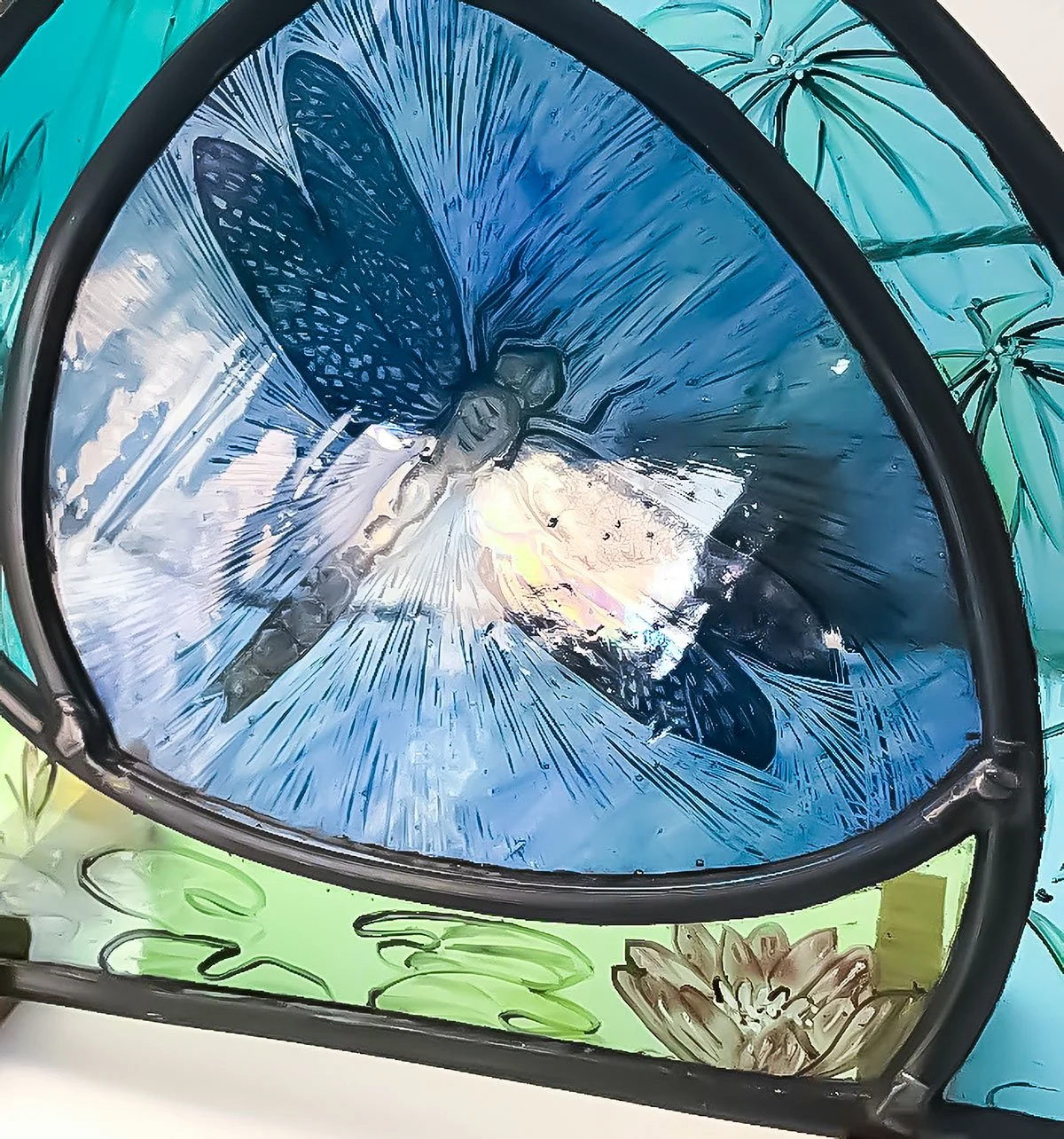
        Frome stained glass artist      Jo Eddleston
    Frome stained glass artist Jo Eddleston

    Here in Albion a new psychedelic model of healthcare is saving the National Health Service millions.

    “What we should be doing is spreading wellbeing with an integrative approach, not just treating diseases,” says Dr Zelner, “Wellbeing is an inherently holistic concept. You can only create it with an integrative approach.”

    Glorious Somerset is the supposed site of King Arthur’s Camelot and the 4,500 year-old stone circles in Stanton Drew where Currunos and The Wild Hunt roam (it is also reasonably close to glastonbury and Stonehenge, yes). It’s also a hotbed of middle-class flight from post-COVID London. Property prices are going through the thatched roof. Born within this liminal fuzzbox is The Frome Model of Enhanced Primary Care. In place for over a decade it’s saved the NHS £6 for every £1 spent on it.

    This gently radical approach to public health provision is focussed on community interaction, especially including the most vulnerable. Over its 12 years in progress, the sleepy West Country town of Frome’s accident and emergency admissions have reduced by 16% while the local average has risen 30%. 

    “It proves community improves wellbeing”

    ‘Primary care’ is health work intended to prevent disease before it requires any treating. Face-to-face contact has proven to be the most effective way to do this. The model mixes primary care innovations with organic community development programs. 

    Dr Zelner explains, “Around fifteen years ago the health workers in Frome observed a lot of patients coming in were suffering from loneliness. They decided to treat loneliness as a medical condition: training up health connectors who’d look out for people who seemed lonely, and community connectors who connected them with community organisations.”

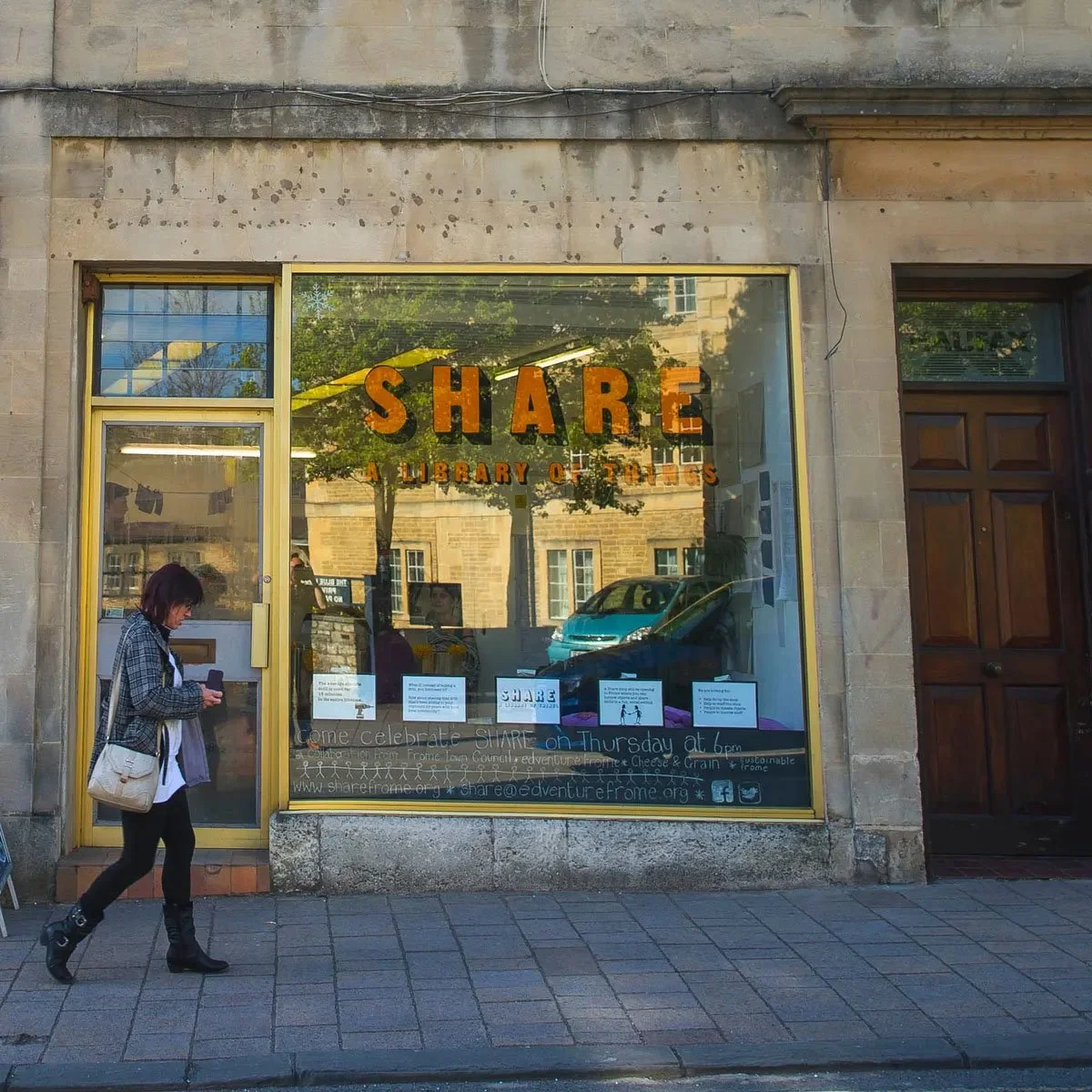
       ‘Why buy when you can borrow?’ is      A Library of Things’      slogan
    ‘Why buy when you can borrow?’ is A Library of Things’ slogan

    Further innovations followed in what Compassionate Communities director Dr Julian Abel, former vice president of Public Health Palliative Care International, calls ‘Integrated well being networks that enhance naturally occurring ones.’

    “They set up ‘talking cafes’ where you could chat to strangers freely,” expands Dr Zelner, “in-person visits for hospital dischargees, and hubs inside the surgeries. It became known as ‘Compassionate Frome’. There’s been enough time for empirical evidence and all admissions have declined by 30-40% relative to neighbouring areas. It proves community improves wellbeing.” Indeed, 81% of patients felt their wellbeing increase and 94% said they found it easier to mange their health.  

    The programme is being rolled out across the UK.

    Echoing Stanislav Grof’s view of the Freudian mental health model, Abel writes, “‘Survival of the fittest’ is not a phrase that accurately reflects our evolution. Instead, ‘survival of the kindest’ describes how animals, especially humans, have evolved to be social creatures. We are dependent on each other, and how we treat the people around us has a profound effect on us all’.”