
Blog

  • The Hybrid Model

    The Hybrid Model

      Therapy
    Therapy

    Dr Luis Eduardo Luna’s got a plan to mix shamanic ceremony with Western medicine

        Lucile           Haut     , ‘Cyberwitches’
    Lucile Haut , ‘Cyberwitches’

    What can the Western model take – sorry, learn – from a tradition of psychedelic medicine that’s many millennia on from our own?

    After all our boffins recently confirmed that the mystic elements of a psychedelic experience can be especially restorative, although that aspect of healthcare was dismissed as ‘miracle work’ centuries ago. Despite their shared basis of a healing process using psychoactive plants, what we understand as psychedelic therapy is still very different to a traditional shamanic ceremony.

    That doesn’t stop regular guys like Green Bay Packers quarterback Aaron Rogers crediting ayahuasca for the two seasons in a row he just won the American football team’s ‘most valuable player’ award, and telling sports reporters ‘The greatest gift I can give my teammates, in my opinion, is to be able to show up and to be someone who can model unconditional love to them’ in the pages of USA Today. Those unable to travel can give virtual reality shamanic ayahuasca a try.

    Dr Luis Eduardo Luna is considered one of the foremost experts in the Amazonian shamanic custom. In his Vital lecture closing the course’s therapy-themed module, he rattled off a bluet-point list of what western therapy can do to make it as effective as its Amerindian inspiration. And as popular – given the choice it’s difficult to opt for a K-clinic treatment room on the high street over Dr Luna’s Wasiwaska retreat. Even halfway houses like luxury ayahuasca resort Rythmia or the growing number of on-trend local circles offer much more of that all-important mystical allure.

    “I think the doctors would be happy, as they participate in this separation, this depression”

    Dr Luna believes that group therapy over a period of days with eight to ten participants: “Intensive collective retreats are potentially more efficient and less expensive than individual treatments at medical institutions,” says Dr Luna demonstrating that he’s meeting the Western mindset halfway.

    Moreover, in a group session over several days a patient’s “Sense of community is created too” says Dr Luna. He also suggests the presence of a medical doctor, “Nearby in case help is needed, but not as part of the ceremonial aspect.” 

    From then on Dr Luna’s tips on how western psychedelic therapists can learn from the ancient ways diverge from our current model. His number one tip is for the therapist to trip too, like a traditional shaman does. “The therapist will go part of the route of taking the medicine him or herself, ready to give assistance if needed,” he says, “Only persons thoroughly familiar with modify the state of consciousness can understand and therefore assist persons on the going the experiences. Besides the therapist’s theoretical knowledge, he or she needs to have first hand experience in training with at least one or several sacred plants, fungi or other substances.”

    Which may put the puma amongst the guinea pigs, so to speak. “Ideally a well-trained indigenous practitioner, or [facilitators] trained within indigenous communities would be present too.” You can read more about the controversial trend of ‘co-sitting’ over in this issue’s Space Holding section.

    “Illnesses of civilisation are often related to a state of separation from the natural world”

    Dr Luna also frowns on western use of isolated chemicals instead of the whole plant or fungus they’re derived from and we’ll go further into that in this issue’s Medical section. He’s also got some superb suggestions for your retreat centre’s design based on his experiences tending the exquisite gardens at his Wasiwaska Rereat Centre in Florencia, Brazil that I detail in this week’s Integration slot.

    Here’s Dr Luna’s other suggestions specifically relevant to therapy. 

    Echoing the styles of pioneering MDMA therapists Dr Ben Sessa and The Mithoefers, Dr Luna urges level communication between therapist and patient where possible. “There are no shared myths,” he says, “despite a complex socio-economic provenance.” The codified language used instead is psychology, “which the patient has little knowledge of” and is very unlikely to lead the conversation in. Read Dr Ben Sessa’s own tips for negotiating the transcendental with alcoholics at his Awakn clinic in Bristol in Vital Student Zine issue #14.  

    Preparation for both therapists and patients should take the form of traditional dieta, “Minimising the use of salt, sugar or fat and consumption of alcohol. The food should be produced on site as much as possible so participants have direct access to the plants.” Also verboten, or kept to essential use only, is the use of personal electronic devices and social media.

    “Pharmacology does not take into account social or ecological concerns”

    Furthermore Western healers could benefit their own knowledge and reciprocate by establishing “Transnational networks involving conservation in educational ecological projects, involving whenever possible traditional societies, cross cultural recognition and integration of knowledge derived from indigenous sources.”

    Instead of chugging beer at the bar and doom scrolling during downtime on retreat, patients can enjoy face to face interaction, educational lectures and plentiful nature worship, “spending time in silence with the forest or gardens encircling the body, feeling the presence of the nonhuman persons.”

    Dr Luna expands: “Illnesses of civilisation are often related to a state of separation from the natural world. We would be learning about the habitat, disease tuition, cultivation, preparation, and cultural uses of sacred plants and fungi by traditional societies.” Our pharmacological model “Does not take into account social or ecological concerns,” he adds, instead putting emphasis on legal, economic, bureaucratic and moral factors, presented for the benefit of the patient when they are only really in place to protect and feed the managerial machine.

    Shamanic healing views discomfort very differently, considering it part of a restitution cycle. Affliction is something we consider anathema to medical treatment, and life outside hospital too. But it is the body exhuming disease that causes the unpleasant symptoms of illness, not the malaise itself. The close monitoring western psychedelic therapy adheres to may consider ‘disturbing’ outbursts – somatic, verbal, or ‘humorous’ in either the amusing or purgatorial sense – to be unacceptable in a treatment situation. Clinical staff and patients without the knowledge of their importance may not feel able to embrace the process, and may even consider encouragement of it to be inappropriate and even abusive. 

    A combined model of Western and Amerindian spiritual healing seems like a dream for now. Albeit a very worthwhile one that’s being mirrored to an extent in ‘underground’ ceremonies. Dr Luna though is optimistic for his vision being taken on board by the medical establishment: “I think the doctors would be more happy, as they participate in this separation, this depression.”


  • Vibing as one

    Vibing as one

      Space
    Space

    Research claims voyagers prefer guides to trip with them in the shamanic tradition

      Pablo Amargino, ‘‘The Sublimity of the Suminura’ via Dr Luna’s    True Amaringos gallery
    Pablo Amargino, ‘‘The Sublimity of the Suminura’ via Dr Luna’s True Amaringos gallery

    Down at your local psychedelic clinic, your therapist is certainly not tripping with you like an Amazon shaman would.

    ‘Therapists should not take any mind-altering substances before or during therapy sessions,’ says a 2021 review of the nascent Western sector. While it’s certainly not new for indegenous people to voyage alongside each other, historically the ceremony leader alone takes the medicine while the community receives mystical healing.

    In Dr Luis Eduardo Luna’s question and answer session following his Vital lecture on medical anthropology, one student who facilitates jungle ayahuasca ceremonies lamented this state of affairs in the West. “You drink when you assist,” she said, “There is no choice. And so much magic happens.”

    Sober sitter or co-consumer? published May 2022 in Addiction Research and Theory concluded that heads out in the space did prefer their guide to be tripping too. Although maybe not as hard as they were. How much? One poster is quoted as recommending “around a quarter to one gramme of cubies [Cubensis mushrooms, the underground’s fungi of choice].” 

    Why? The ‘benefits of improved communication and shared experience’ according to the report.

    “The relationship is subject-to-subject, not object-to-object”

    It went on, ’Psychedelic co-consumption was portrayed as an opportunity for bonding, connection and communication between co-consumers. This seemed related to a perceived mutual understanding of the ineffable that couldn’t be accessed without the influence of psychedelics.’ Given that a strong, open, trusting relationship between voyager and therapist is absolutely key according to modern-day experts wouldn’t a quarter gramme of Cubensis for the therapist contribute to the success of the therapy?

    That’s not all. Normals hanging around bring the vibe right down.

    ‘Consuming psychedelics alongside sober people could increase anxiety,’ suggest researchers, ‘It was also suggested that sober carers could make psychedelic experiences more awkward. Other forum participants simply found being around sober people whilst experiencing the effects of psychedelics to be irritating.’

    The Sober Sitter or Co-consumer? paper said recreational requirements for guides did align with many other elements of psychedelic therapy: including not directing the experience, first hand knowledge of the substance, unconditional acceptance of what comes up for the patient, and boundary-setting beforehand. The data also uncovered recommendations that a ‘sober sitter’ be used during difficult emotional times, when out and about… or taking 5-MEO DMT.

    “Lived psychedelic experience represents knowing through identification, and transformation… the spirit of the jaguar”

    How does the ceremony leader partaking – be they guide, therapist, sitter, shaman or space holder – contribute to a better experience? Dr Luna thinks it’s because “The relationship is subject to subject, not object to object.”

    Being ‘on the same level’ is equivalent to a “relational epistemology” where there is “reciprocity” which in this case means a mutually endorsed understanding rather than overdue donations to the indigenous people.

    By tripping together “magic happens” because therapist and patient are ‘being’ together rather than ‘doing therapy’. They share a bathtub of their own cosmic love, as opposed to nervously going through the motions set out in a top-down bureaucratic directive. “That is non-particpation, disenchantment,” says Dr Luna, “with objectivity, the world is not of my own making… I do not feel a sense of belonging to it. What I feel is a sickness of the soul.”

    Relating instead to a sense of subject promotes agency and mindfulness. Here’s someone who knows about lived experience: ‘I am not a thing, a noun,’ wrote engineering genius Buckminster Fuller, ‘I seem to be a verb, an evolutionary process – an integral function of the universe. Life is regenerative, and conformity meaningless.’ I pinched this contribution from a Vital school chum, in case they are reading.

    “You drink when you assist at the ceremony, and so much magic happens”

    Dr Luna says this is part of the ‘lived experience’ of animism. “Ancestral language is 70% verbs compared to 30% in English,” he adds by way of illustration, “the lived psychedelic experience represents knowing through identification, and transformation… the spirit of the jaguar.” Not simply referring to ‘your dried pig skins’ as militant tribesmen call books. 

    Sure, the preference for ‘co-consumer’ guides comes from the psychedelic underground rather than clinical patients. Yet as the report points out in its intro, ‘In a similar way that indigenous knowledge about psychedelics can be utilised to inform psychedelic-assisted psychotherapy,’ like the lecture from Dr Luna you’re reading about now, ‘we believe that Western people who use psychedelics outside of a clinical environment for healing purposes also have knowledge relevant to psychedelic-assisted psychotherapy.’ Like Dr David Luke said in his Vital lecture on transpersonal psychology, the underground can teach the medical sector “everything.”

  • Soul reduction

    Soul reduction

      Medical
    Medical

    ‘Pharmahuasca’ pills are simply not the same as ingesting traditional brews fully in a ceremonial context

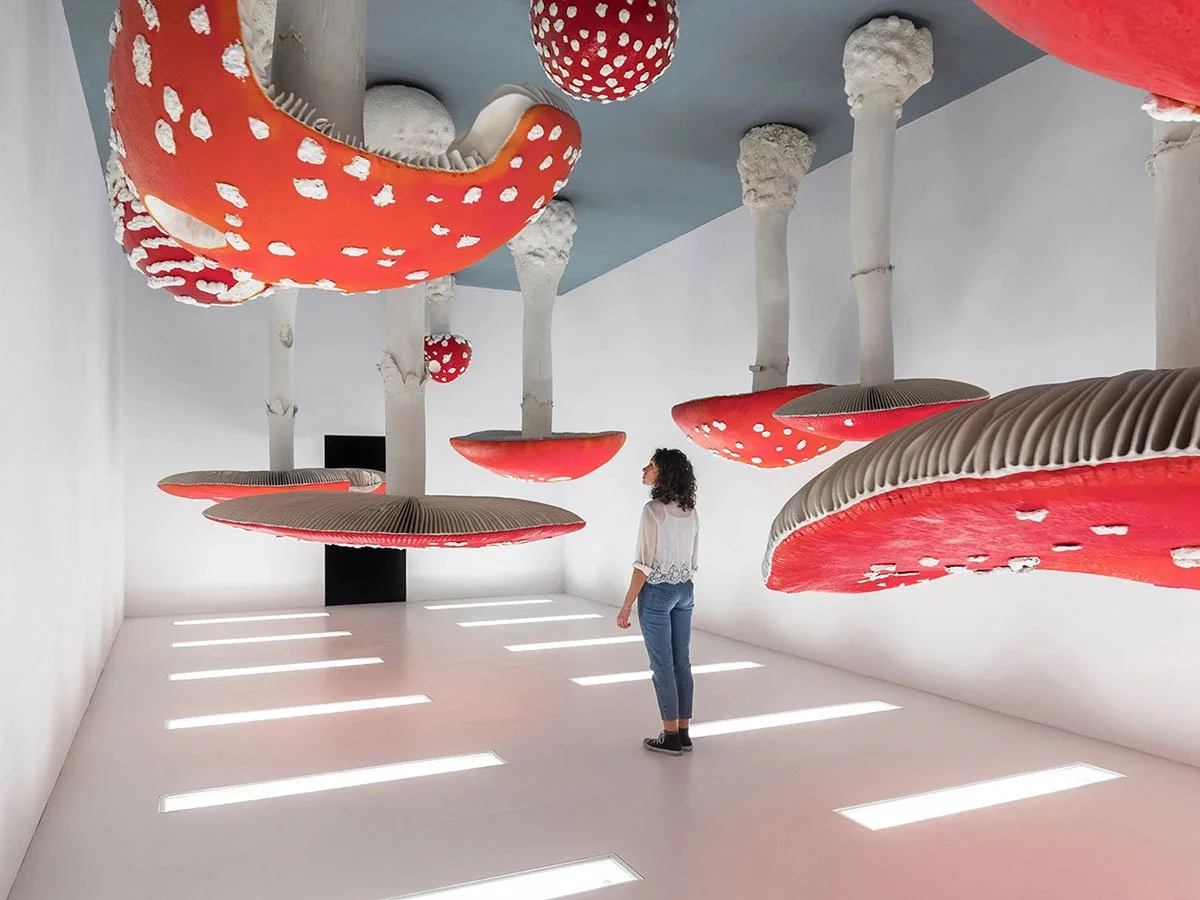
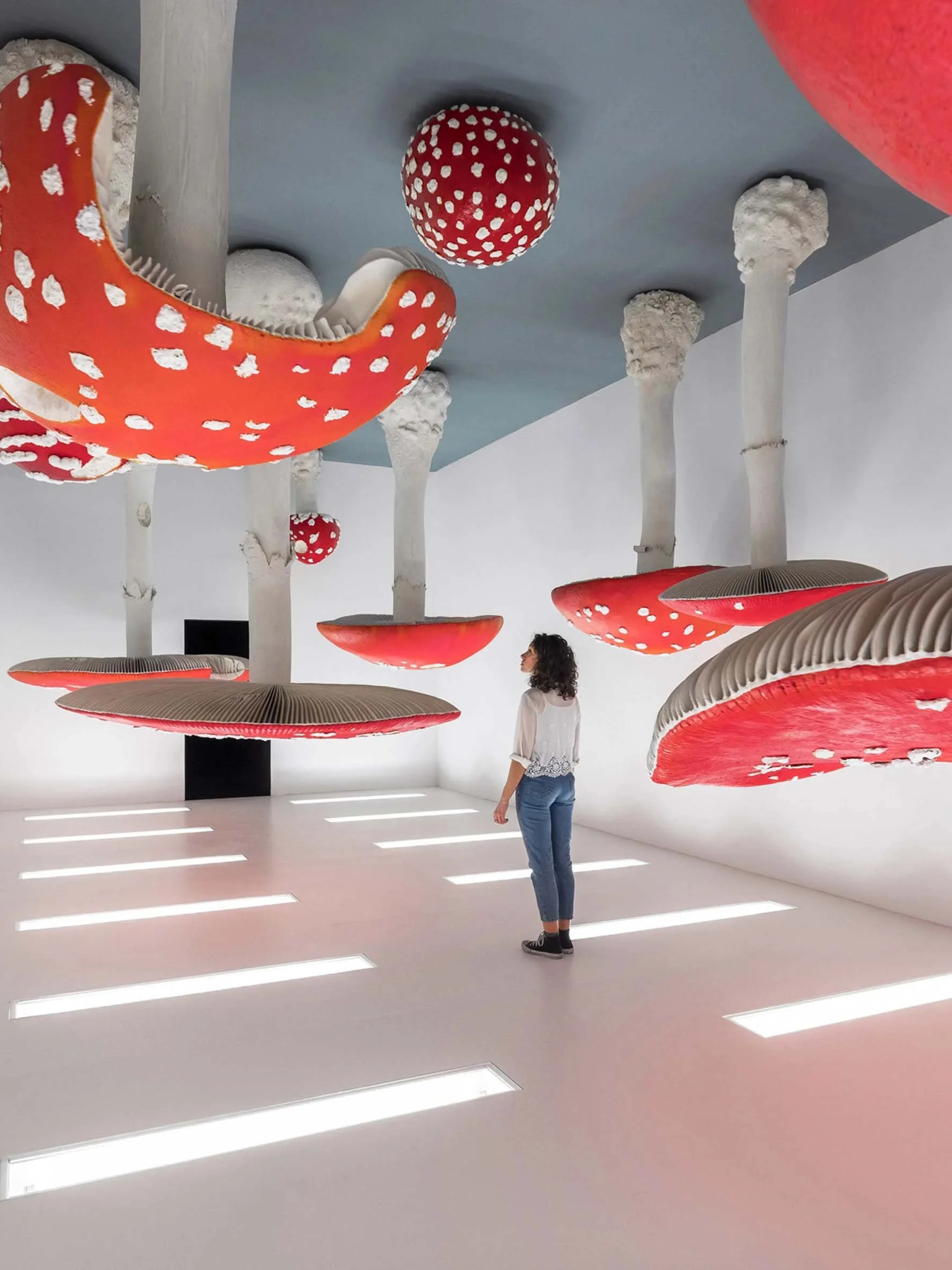
      By    OMA       at      Foundazione Prada     , Milan. Yes, these are Fly Agarics.
    By OMA at Foundazione Prada , Milan. Yes, these are Fly Agarics.

    The Vine of the Soul has been synthesised. Kind of.

    Pharmacusca is a combination of DMT and beta-carboline stomach inhibitor harmine, which also boasts psychedelic properties. “There’s a huge body of evidence showing ayahuasca’s therapeutic potential,” says Imperial College’s Ashleigh Murphy-Beiner who’s been a cheerleader for ayahuasca research here in the UK

    What’s used for most tests on ayahuasca, ‘The Vine of the Soul’ is ‘pharmahuasca’ a combination of DMT and harmaline, the brew’s two stand-out alkaloids, often taken as separate pills 10-20 minutes apart so the mono-inhibitors in harmine that stop the stomach from registering the fact there’s a bucket of DMT in there can take effect. Pharmahuasca’s long been gaining popularity with recreational users too.

    “The vines are part of a magnificent cluster of beings”

    “You just use the alkaloids and you say this is equivalent,” comments Dr Luis Eduardo Luna in his lecture closing Vital’s therapy-themed teaching module examining what Western practitioners can learn from traditional amazonian approaches, “It isn’t, neither chemically or synergistically. It is reduced down to a pill… an object.”

    Pharmahuasca also dispenses with the aspects of ritual, myth and ceremony – and even the digestive pruging – that are obligatory in traditional use. 2021 resarch paper Examining changes in personality following shamanic ceremonial use of ayahuasca gently insisted, ‘Ceremonial practices may be informative about key elements of psychedelic-assisted experience that potentiate positive psychological changes’ and used authentic ceremony as its laboratory setting.

    Traditional ayahuasca brews contain more than two dozen active ingredients, some of which are contained in the chunky bits floating around the ichorous concoction. “The vines run throughout the forest. They are in symbiotic relationships with other plants, insects, animals and microbes, part of a magnificent cluster of beings,” says Dr Luna who cultivates an ecosystem friendly to Columbian ayahuasca equivalent yagé at his Wasiwaska nature reserve in Florentina, Brazil that you can read more about in this issue’s Integration item. 

    Preparations and admixtures for ayahuasca, yagé and another concoction capi differ between tribes and locations, so don’t accept any black-and-white categorisations from know it alls while debating psychedelics at one of your global north dinner parties. For example the Colombian Orinoco tribe consider ayahuasca to contain a ‘male’ spirit while it is generally thought of as ‘Mother Ayahuasca’ elsewhere and in the West.

    “I believe in both approaches, science and animism. We could be epistemological polyglots”

    The Colombian yagé Dr Luna first took alongside Terrence McKenna in 1971 uses the chaliponga plant as its DMT source instead of chacruna. While it may not be of relevance to Western researchers the preparation and ceremonial aspects of yagé are certainly different. Yagé’s effect is considered more contemplative and ayahuasca’s purgative, but that statement is also generalising to an inappropriate degree.

    Forcing down all the ingredients ceremonially for the true effect is no piety, insists Dr Luna. Indeed traditionally ayahuasca and yagé are used to solve practical issues (for instance locating a missing cockerel, clearing out your guts) rather than ‘finding God’ as canonical maestro Maria Sabina put it. 

    If Westerners can come to terms with an overlap of the spiritual and the material inherent in amazonian animistic and plant medicine culture, “We could truly be epistemological polyglots – studying the living and non-living world with the precision of scientific language, while simultaneously somehow perceiving the spirit, the anima of all that exists,” said Dr Luna in his keynote speech at Exeter University Philosophy of Psychedelics conference earlier this year, titled ‘Decolonising the Self’. “I believe in both approaches, science and animism, and that they are entirely compatible in the modern world,” he edicts.

    Even the paper Examining changes in personality following shamanic ceremonial use of ayahuasca printed in March 2021’s Scientific Reports slipped into the academic conversation that ‘The present study shows preliminary support for the therapeutic benefit of the shaman, icaro, purgative elements, cognitive reappraisal, sacramental atmosphere, and communal/group context.’

    44% of Amazon biomass is vine. Vines are plants that require other surfaces to support themselves. They climb up these, which are mostly ‘self-supporting’ trees, using strong arterial veins pumped with water so they love rainforest. While vines might creep around and not stand up straight without leaning on something else, they’re of considerable importance to the local ecosystem and tribespeople put them to good use as a versatile building and manufacturing material. Animals use them as transport, for avoiding predators in particular. Their abandoned biomass keeps the soil below host plants nutrient rich and vines provide food and medicinal sources aplenty: grapes, cucumbers, melons, and vanilla come from vines.

    Dr Luna lists the importance of ingesting the whole plant/fungus, not an extraction, in his bullet-points for Western therapists. Ideally it would be grown on-site at one’s paradisiacal retreat like Dr Luna’s Wasiwaska, a psychedelic nature reserve. Ecological projects involving the local community bring economic benefits. in the Amazon itself for example, retreats investing in the community would bring serious good vibes back in return. I’d cite Jake’s in Jamaica as a great example, would-be psychedelic travel entrepreneurs. 

    Ayahuasca’s shown considerable benefits to mindfulness (being ‘in the moment’) and cognitive flexibility (common sense) in tests for depression plus it’s also been a focus for studies into borderline personality and eating disorders. Leading crowdfunded research into trauma already testing DMT on rats is none other than… the esteemed Dr Robin ‘Hollywood’ Carhart-Harris, now ‘Founding Director of The Neuroscape Psychedelics Division and newly endowed Ralph Metzner Distinguished Professor of Neurology and Psychiatry at the University of California San Francisco’ (capitals all theirs). Hollywood says, ”DMT is a particularly intriguing psychedelic. The visual vividness and depth of immersion produced by high doses of the substance seems to be on a scale above what is reported with more widely studied psychedelics such as psilocybin or ‘magic mushrooms’.” Before you think ‘Isn’t that a bit of a Western science-y interpretation?’ that’s what Hollywood does – get these concepts over the line with the scientific establishment. We should thank him for that, I reckon. 

    Even if he is using pharmauasca. For now – because the active chemical ingredients may only play one part in the healing power of Amazonian-style plant medicine traditions. And not be so powerrful without the… is magic too strong a word? ingredients that are impossible to replicate in laboratories and treatment rooms.

  • Botanic therapy

    Botanic therapy

        Integration
    Integration

    Wasiwaska in Brazil is Dr Luna’s psychedelic nature reserve

       Hummingbird babies nesting on Dr Luis Eduardo Luna’s      Wasiwaska      nature reserve
    Hummingbird babies nesting on Dr Luis Eduardo Luna’s Wasiwaska nature reserve

    Gardening just got even more quietly inspirational.

    Among Dr Luis Eduardo Luna’s itemised tips for for the Western psychedelic therapy sector presented in his Vital lecture is: ‘Experience the medicines among beautiful, dedicated surroundings.’

    Another recommendation is to grow the plants and fungi locally, plus grant patients access, “So they can spend time in the forest feeling the presence of non-human persons. There is healing from contact with the forest itself.” Specimens should be kept around at least, so “People have direct perception of them.”

    Wasiwaska is Dr Luna’s psychedelic nature reserve, retreat and research centre on a far corner of Santa Caterina island, Brazil’s answer to Ibiza. Artist Alex Gray, Cosmic Serpent author Jeremy Narby, writers Graham Hancock and Sue Blackmore, plus DMT pioneer Dr Rick ‘The Strass’ Strassman are among the luminaries on Wasiwaska’s advisory board.

    Dr Luna, who was born on Santa Caterina is not the only local ecologist; an initiative to reintroduce oysters to the ecosystem has proved stunningly successful. 

    This El Jardin de la Ciencia (scientific garden) was founded in 1996 while Dr Luna was teaching at nearby San Catarina University. It boasts extensive ethnobotanical gardens, a psychedelic library, and study facilities plus guest rooms. It is the culmination of several other attempts that Dr Luna didn’t let phase him.

       Distinctive brugmansia aurea flowers at Wasiwaska
    Distinctive brugmansia aurea flowers at Wasiwaska

    Dr Luna showcased the garden in a speech titled The Wasiwaska Ethnobotanical Garden in Southern Brazil: A Chronicle at Exeter University (where he is an associate research fellow) for its Transdisciplinary Research Colloquium on Psychedelics in July.

    The enclave is home to miles of ayahuasca vines, fifty-plus chacruna plants, capi, yagé, plus even more exotic DMT-containing plants like the distinctive brugmansia aurea, which flowers near constantly and produces “an intoxicating scent, that at night is overpowering. Its leaves vary in length like a key. A spider living inside the flowers changes colour accordingly; the bees are interacting with the spiders, getting some sort of effect. Perhaps it’s possible to make psychotropic honey.” 

       Ayahuasca flowers at Wasiwaska
    Ayahuasca flowers at Wasiwaska

    Dr Luna and Anna tap sap from the psychoactive vines and drink it as a syrup. DMT-containing Cohaba trees, which Christopher Columbus turned down and took tobacco home instead, are also in situ. Non-native plants like Polynesian kava-kava, Tabernaemontana catharinensis a South American plant with similar effects to iboga, and peyote – which has been grafted on to San Pedro so it grows much quicker – have been cautiously introduced. 

    Permaculture innovations like clitora plants, which sport vibrant flowers and invigorate clay soil, support the ecosystem. Living alongside are the hummingbirds, bees and spiders one would expect in the wild. The garden is mostly curated by Dr Luna’s wife Anna, who recently introduced marmoset monkeys. These headed straight for the Cohoba trees that were part of their ecosystem, taking resin in morning and evening. The monkeys climbed other DMT-rich plants that weren’t part of their natural environment and did the same.

    “My first teacher, Don Emilio,” about whom Dr Luna made probably the first ayahuasca documentary Don Emilio and his Little Doctors in 1984, “told me everything is full of life, of spirit,” he reminds us.

    See what’s on at Wasiwaska via wasiwaska.org

  • Kool-Aid Corner #15

    Kool-Aid Corner #15

    To finish: trippy clippings, merry pranks, and psychedelic student life

    From ‘The Creatures with the Creator’ a tribute to Glauco Vilas Boas by Adrix

    Graph of the Week

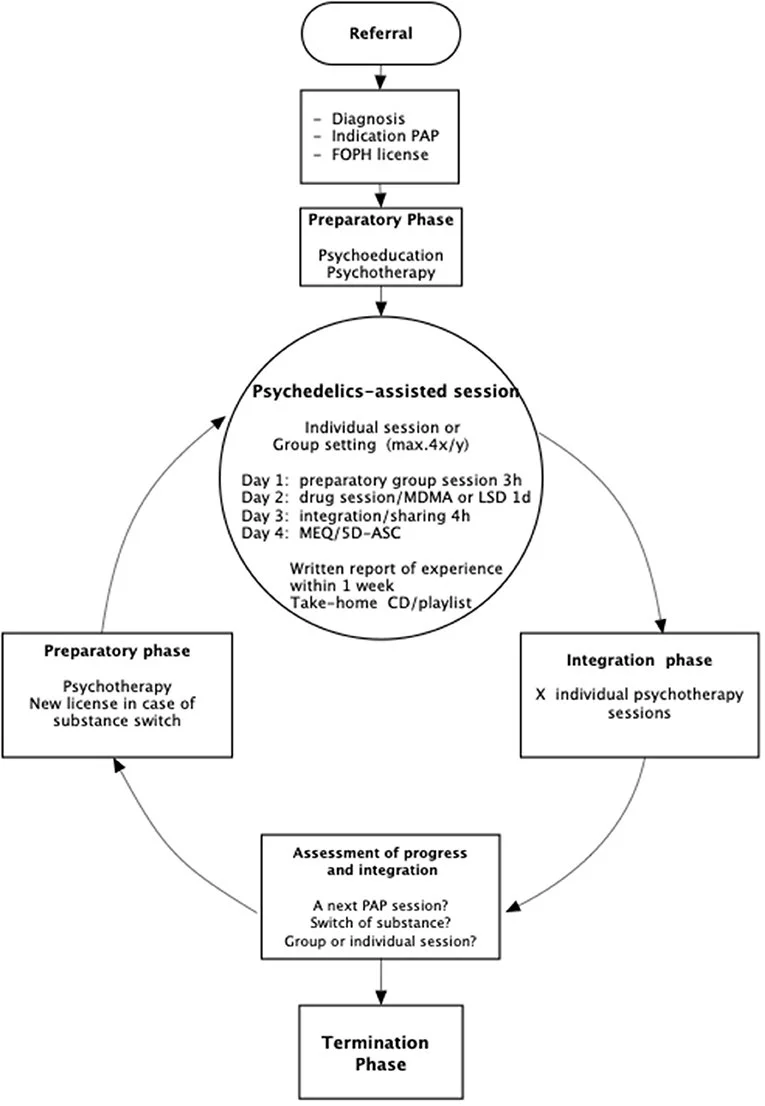
    Group MDMA and LSD therapy trails are underway. Put the mix CDs in the middle with the leaflets

       Group MDMA and LSD therapy outline from MAPS      trials      recently underway
    Group MDMA and LSD therapy outline from MAPS trials recently underway

    My bookshelf weighs a ton

    Notable new purchases for the occult library. Strictly second hand snap-ups only. This week: The AA Atlas of Secret Britain

       Easily available from      WoB
    Easily available from WoB

    Developing a personal relationship with your indegenous cosmology? Looking to trip out the glovebox in that new state of the art camper van? Then bail out the barley sugars and give thanks to the Spirit of Sediment for this round-Britain guide to the wyrd and sort-of cute but macabre at the same time.

    Divided into regional sections for easy referral. Disclaimer: even indegenous British sacred groves may have purgative properties. One New Psychonaut reporter walked around Avebury stone circles and took five lengthy visits to the bathroom upon returning to his nearby bed and breakfast. Scrumpy rituals meanwhile are being colonised.

    Next issue: Vital’s Space Holding module is all about the direct experience…

  • Trauma, addiction and MDMA therapy with Dr Ben Sessa

    Trauma, addiction and MDMA therapy with Dr Ben Sessa

    My unofficial Vital Study Zine #14 with observations from Vital Psychedelic Training and recent happenings in the space

        Jimmy Cauty, ‘Riot Shield’
    Jimmy Cauty, ‘Riot Shield’

    Dr Ben Sessa’s book The Psychedelic Renaissance acted as exactly that.

    The agenda for a new Albion is effectively a ‘hypersigil’ – the gnostic term for a creative work that somehow manifests its content. These effects even included the buzz phrase the proceeding new era of research was awarded.

    Debuting a decade ago, The Psychedelic Renaissance contained ideas Sessa first officially voiced in a presentation to the Royal College of Psychiatrists in 2006. LSD hadn’t been mentioned in its halls for over 30 years.

    Since The Psychedelic Renaissance took psychiatry by storm Dr Sessa has hardly been flouncing around in a kaftan. He’s living the experience, conducting frontline child trauma and addiction treatment… including acting as lead psychiatrist on the Bristol Imperial MDMA for Alcoholism (BIMA) project, where patients relapsing into heavy drinking were cut to a rate of 21% from the 73% who do so despite trying medications, 12-step and conventional therapy.

    BIMA research took place at leading clinic Awakn, co-founded by Sessa in Bristol, UK. It’s now listed on the NEO Toronto stock exchange and has hooked up with David Nutt’s Drug Science. The Mithoefers are on Awakn’s advisory board. Celia Morgan is head of ketamine assisted therapy, an area where Awakn just received 66% of new funding from the UK government and licensed its staggeringly successful ‘Project Kestrel’ design to US chain Revitalist.

    “I resent the assumption this is all about money. My job is getting the maximum amount of psychedelics to as many people as possible”

    Sessa is an avid member of the psychedelic ‘subculture’ too. In 2015 he co-founded and ran the Breaking Convention conference that showcases the space’s sharpest upcoming minds. His children are named Huxley, Jimi and Kitty.

    I’ve noticed during academic presentations that after their personal intro is over it’s de rigueur for presenters to, if they’d like, admit to any horrendous biases.

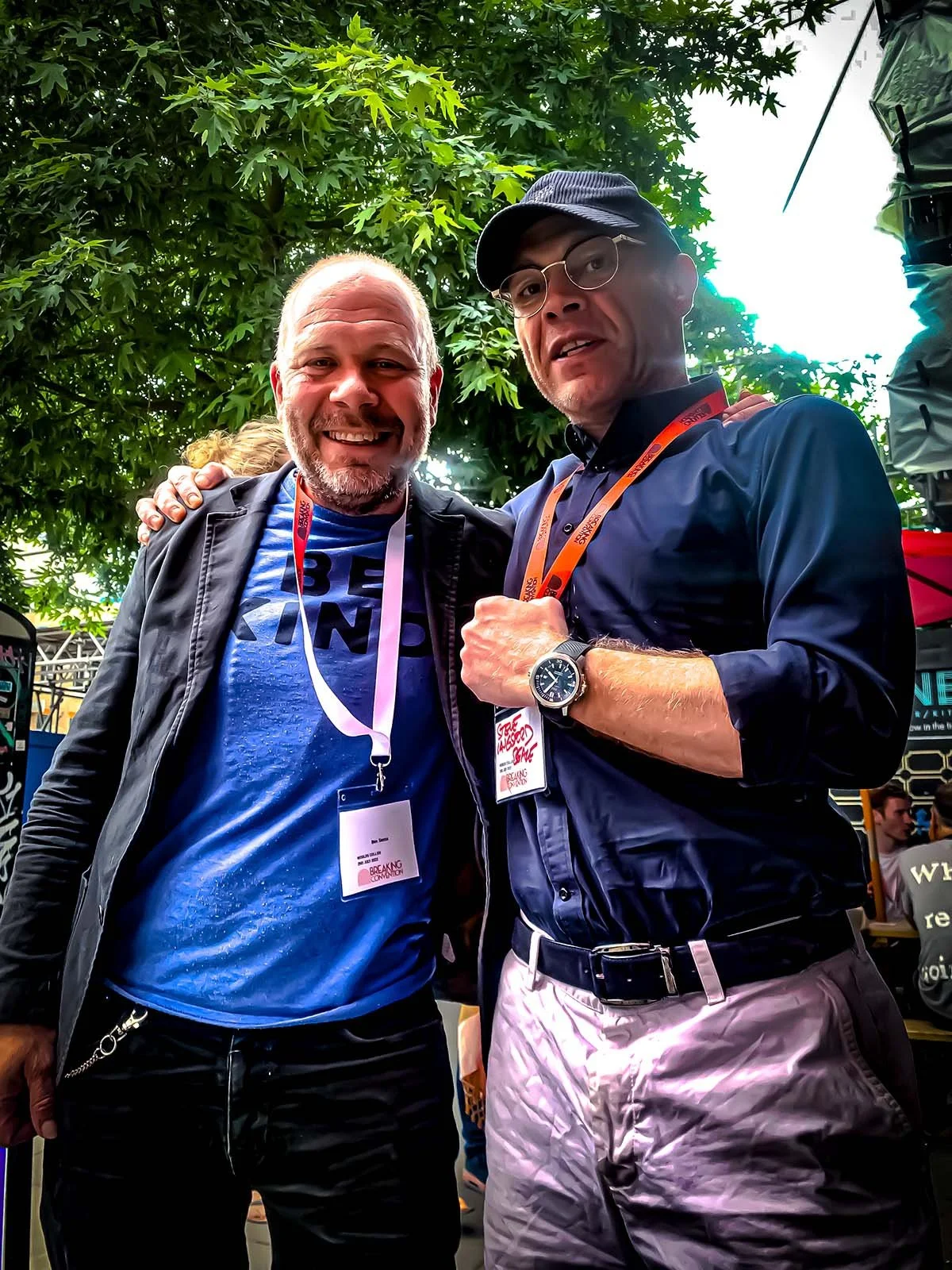
    Prostrate before you, I make clear: Dr Sessa is my age, lives and cheerleads for my home town, and confesses to an achingly middle class upbringing that includes winter sports and bedroom DJing… so there’s ‘similarity bias’ there. Moreover: only in the past few weeks I discovered he wrote a column for a hipster magazine I was founding editor of that’s having a bit of a moment now, and made a cameo in a Channel Four sketch show I wrote on. 

       Myself and Dr Ben Sessa (right) at Breaking Convention 2022
    Myself and Dr Ben Sessa (right) at Breaking Convention 2022

    So don’t ask me to justify statements like ‘Sessa is our generation’s admittedly unlikely Leary or McKenna’, and yes, I am calling that with this blog post. Instead ask Vital students, whose reactions to Dr Sessa ranged from “That was my favourite presentation so far” to “You’re the most interesting person to hear from in psychedelics right now” and “This has me so excited and hopeful for the future of this space!”

    Whilst actually being the closest thing we do have to Timothy Leary or Terrence McKenna – closest rival Robin Carhart-Harris has recently zhuzh’d up his look just to keep up – Sessa has succeeded in ushering in a revolution where the two counterculture icons failed.

    “This is the psychedelic era. Here. Now. We’re living in it,” he decrees to Vital’s class of ‘22.

    “Following medicalisation the psychedelic underground is richer and freer than ever”

    How has Sessa made this happen? By following his own advice in the closing pages of The Psychedelic Renaissance.

    ‘An unfortunate but necessary truth is that professionals working in this field must remain as boring and staid as possible,’ he solemnly advised in those very pages, ‘as well as inspirational and enthusiastic – to get the message across. I do not say all of these dull and conservative things because I lack imagination or fail to appreciate the fun, wonder and spirituality of the psychedelic experience. On the contrary, I welcome and embrace it.’ 

    This trademark approach of blowing minds by stealth doesn’t stop him racking up a ton of newspaper credits, where he lays down psychedelic law (and lore) in a fashion also quite dissimilar to his predecessors. 

    In fact, only this year at 2022’s Breaking Convention he decimated criticisms of corporadelia at his £6K per programme Awakn clinics with: “I resent the assumption this is all about money. My job is getting the maximum amount of psychedelics to as many people as possible, and researching that is very costly. There will still be raves, festivals, ceremonies. The psychedelic underground is richer and freer than ever post-medicalisation.”

    Dr Sessa is a boon to journalists. Here’s a few choice quotes from his week fourteen Vital lecture:

    “There’s nothing more dangerous than drinking a bottle of vodka a day” 

    “Then they go back on heroin, or other far, far more dangerous substances like alcohol” 

    “Three quarters of a million people in the UK take ecstasy every weekend and our hospital wards are not full of casualties” 

    “I’m not that spiritual a guy, but I’ll talk to patients about kundalini and chakras till the cows come home. They do also want to talk about things like how to get their children out of social services care”

    Here he is on NBC with MAPS’ The Mithoefers talking about their slot on Netflix’s How to change Your Mind, showing ITV viewers around Awakn, plus watch his TEDX Talk on psychedelics as antibiotics, explain childhood trauma and MDMA therapy and more on the New Psychonaut YouTube lecture archive.

    Here’s this issue’s contents arranged along Vital Psychedelic Training’s five learning themes:

    Next issue: Vegetalismo author Dr Luis Eduardo Luna of Wasiwaska Research Centre

  • Indistinguishable from magic

    Indistinguishable from magic

      Approach
    Approach

    Dr Ben Sessa’s greatest conversation stopper: psychedelics are a ‘psychic antibiotic’ capable of statistically curing mental diseases

       Novotak   , ‘Daydream Version Six’
    Novotak , ‘Daydream Version Six’

    “Psychiatry is a pretty desperate and miserable place to work.”

    Dr Ben Sessa’s been at the frontline of mental health services since 1997, and deserves a rant. “Where are we going wrong? We’ve had modern psychiatry around for 100 years. And we’re not getting the kind of clinical outcomes we want,” he opines, “younger people get given the SSRIs, can’t work the therapy, and kill themselves.”

    ‘Psychic antibiotic’ is another of Sessa’s bravura catchphrases. Mental health treatment’s in a miserable state of affairs comparable to general medicine in the late 1800s, says Sessa who first presented his vision that psychedelic medicine could be revived to the Royal College of Psychiatrists in 2006.

    “Doctors were losing the battle to the infectious diseases, leprosy, smallpox, tuberculosis, people dying post-operatively,” he continues, flexing his storytelling skills in a swaggering lecture, “Back then, were very good at our statistical analysis and epidemiology too. We knew that people were dying, but it wasn’t clear what was going on.”

    Things changed when a joint German-Japanese team discovered a cure for… syphilis in 1908, and Nobel prizes ensued.

    “Where is our treatment that gets to the heart of disorders?”

    ‘Antibiotics’ as they were called, ‘cos they killed bacteria, include any micro-biological treatment for bacterial infection, not just other bacteria bred to fight against their microscopic kin.

    Penicillin, invented by Sir Alexander Fleming in 1928, is derived from a fungus secretion… just saying. Specifically a mould, which are traditionally used for their anti-infection properties.

    “Where is our antibiotic?” bellows Sessa in the general direction of the gods, “Where is our treatment that gets to the heart of disorders, and actually cures them? We write these voluminous tomes,” he continues, hitting his stride, “The ‘DSM’ and ‘ICD’. We track who gets depression, and anxiety, and eating disorders, and personality disorders, and addictions, and affective disorders,” here it comes, “…but we’re not very good at treating them.”

    Dr Sessa’s allowed to ham it up like this because he is legit as any clinician, researcher or spokesperson.

    “The idea that healing patients would be a bad business model is sick”

    It’s almost like the anthropology reports from the Amazon… where researchers are struck by the animist doctrine that you’re only allowed to talk shit about stuff you’ve actually done…

    Tell us why our ailments continue to vex us so, oh unlikely shaman returned from the darkest depths of the forest with knowledge?

    “Because we treat them symptomatically,” answers Dr Sessa, “We provide a whole plethora of daily maintenance drugs that mask the symptoms. Which the pharmaceutical industry queued up to provide us with.”

    Yet there is hope. Way back in 2012’s breakthrough Psychedelic Renaissance, Sessa’s book which coined the phrase, he was already declaring psychedelic medicine the ‘psychic antibiotic’ that his profession and his patients crave.

    In his Vital presentation during the course’s second module covering psychedelic therapy styles, Sessa beams with pride after battering his return key to reveal a graph showing MDMA-AT thrashing a combination of the best anti-addiction treatments money can buy, plus 12-step and more, by a 73% to 21% recovery rate.

    “We’re not going to cure everyone and therefore put ourselves out of business”

    Sessa’s surging Awakn chain though, is a listed company. Like other private medical providers, doesn’t he have a duty to shareholders to drag treatment plans out too?

    “The idea that healing patients would be a bad business model is sick,” and he doesn’t mean in the same way he dryly describes my wannabe-hipster home town of Bristol as ‘extremely sick’ in his introduction, “sustaining poor treatments with poor outcomes in order to maintain a customer base is absurd.”

    Accident wards don’t keep your leg held up in traction forever. “There’s plenty of work out there for orthopaedic surgeons mending broken legs,” explains Sessa to an enquiring Vital student in the Q&A, “plus there are plenty of people out there who could do with their mental disorders being completely cured. We’re not going to cure everyone and therefore put ourselves out of business.” 

  • Behind the mask

    Behind the mask

      Therapy
    Therapy

    MDMA provides lasting respite for the traumatised

       Stefanie Schneider,      Boy with Silver Mask (Stay) Photograph
    Stefanie Schneider, Boy with Silver Mask (Stay) Photograph

    MDMA’s ideal for therapy because it can “rebrand your sense of self.”

    Shame and trauma dance a ghostly tango. An ostracised alcoholic is merely the grown-up version of the abused child we clutch our perals over. Or so says child psychiatrist and leading psychedelic researcher Dr Ben Sessa, presenting to Vital students.

    “Abused children generate tremendous sympathy,” says Sessa alluding to many high-profile court cases in the UK during lockdown and beyond, “but once the same abused child turns to addiction, they’re written off as a filthy smackhead, or an alcoholic.” Reported child abuse cases rose a staggering 1493% at one point during the C-19 lockdowns.

    Dr Sessa has worked as a child psychiatrist since 1997. But not just with under-16s. He’s taken his knowledge of childhood trauma and applied it across the all-too-adult issues it causes later.

    “Existing drugs are not treating the base disorder – trauma”

    Like alcohol use disorder (AUD) for example. 

    “I naturally take a very developmental approach to mental disorder,” he says, “I think that every adult psychiatrist should spend some time as a child and adolescent psychiatrist, because we really do grow up to become our parents. And those things that we learned in those early years – ‘Even my parents can’t love me, I’m useless, I’m a failure, I can’t achieve’ – become a blueprint for the rest of our lives.”

    Childhood trauma operates on a scale ranging from forced labour and sustained sexual abuse, to simply growing up in a rigid suburban household where neurotic parents act out their frustrations with a shaming communication style featuring ‘too many shoulds’. 

    “I deliberately lump together childhood trauma, post traumatic stress disorder, complex post traumatic stress disorder, and addictions,” explains Sessa, “it’s very difficult to treat these, and there’s no single approach.”

    The trajectory from trauma to addiction draws on John Bowlby’s attachment theory and research from the past decade or more connecting PTSD to substance abuse. Attachment theory suggests that maladaptive adult behaviour is more likely to be caused by issues between a baby and its mother and other environmental factors including poverty. This contradicts established psychoanalytic narrative, which says it’s all about… the oedipus complex, and other aspects of thanatos, the Freudian ‘drive’ to act according to one’s most selfish, basest urges.

    Despite being head of The Tavistock Clinic’s child psychology department from the mid-1940s, Bowlby’s ideas were still being rubbished by the establishment in the 1990s.

    “If you’ve had an insecure attachment to your parents, you develop these neuro-protective narratives: ‘I’m bad, I can’t achieve, I’m unlovable, the world is dangerous’,” explains sessa, “By the time you’ve been thinking like this for ten, twenty, thirty years you truly believe it. This is why mental disorders become chronic, lifelong unremitting problems. Faced with it, the safest and simplest way of dealing with it is to numb yourself, block out the world with sedating dangerous substances like heroin. And far more dangerous ones… like alcohol.”

    Like in the USA, there’s currently no pharmacological prescription for PTSD available in the UK. Nor alcohol use disorder; in the United States only 4% of AUD sufferers are given a medication.

    “We have what we call ‘polypharmacy’,” explains Sessa, “If the patient’s depressed, we’ll give them an antidepressant. If they can’t sleep, we’ll give them a hypnotic. If they’re constantly anxious, we’ll give them an anxiolytic. If their mood goes up and down, we’ll give them a mood stabiliser. If they are hyper-vigilant, one of the core features of PTSD, if this spills over into paranoia will give them an anti-psychotic. And of course, you have to keep taking these drugs day-in, day-out as maintenance medications for the rest of your life. None of these different classes of drugs are curing the patient. They’re not treating the base disorder – which is trauma.”

    Here in the UK psychiatrists (doctors prescribing drugs), clinical psychologists (NHS trained psychoanalysts who have lots to do) and psychotherapists (talk therapists of wildly varying quality, without medical training) have long existed seemingly independently of each other.

    Personal and financial resources are required to tackle one’s mental health with impact.

    “Pharmaceutical MDMA is 99.8% pure and very expensive”

    I’d recommend medication, psychoanalysis and psychotherapy. But as a customer myself I know it doesn’t come cheap. The experience can be arbitrary too.

    “After 30 years in psychiatry, my opinion is that psychotherapy boils down to a relationship between the patient and the therapist, and an ability for the patient to talk about their pain,” claims Sessa with authority, “that’s fine for around 50% of people with trauma based disorders.” 

    But not nearly for all.

    “A significant half, they cannot go there to talk about their pain… they will do anything but talk about that night when they were ten years old, and their grandfather came into their bedroom,” says Dr Sessa.

    Many therapists are understandably not fully prepared to deal with angry, impenetrable PTSD cases with substance use disorders and co-morbidities like ADHD.

    “Trauma victims drop out of therapy. We have high rates of self harm and suicide, and very high rates of addictions. There’s a 50% treatment resistance in PTSD. After detox, 70 to 90% of addicts are back on the substance again.”
    Combining psychiatry and psychotherapy sounds like common sense. But it’s practically unheard of. “The therapy alongside the MDMA makes the difference,” says Sessa pointing out that his clinic Awakn doesn’t offer its current ketamine programme without accompanying talk sessions.

    Awakn conducted its BIMA – Bristol Imperial MDMA for Alcoholism – project under research trial conditions, so while the process mirrored a regular treatment programme with genuine sufferers they didn’t pay and regulations were fiercely adhered to. Pharmaceutical MDMA was used, “it’s 99.8% pure and very expensive,” says Sessa. 

    MDMA’s cocktail of positive therapeutic effects include a melodic duet between the amygdala and frontal cortex, where the amygdala ‘fear response’ shrinks while activity in the advanced brain grows, providing an ‘optimal window of arousal’. MDMA’s empathy-increasing properties, generated by production of the hormone oxytocin, strengthen the bond between therapist and patent.

    “Elements of transpersonal psychotherapy were used during the drug sessions”

    The ‘peak experience’ though remains key for softening the calloused neural pathways that dictate repeated cycles of dysfunctional behaviour, like addiction in particular. 

    “You can’t just tell someone ‘stop thinking like that’. Chronic unremitting mental disorder is all about ‘stuckness’. It becomes your version of yourself.” Decades on from the original trauma, “Something otherwise relatively benign happens in the queue at the post office and you have a panic attack,” illustrates Sessa. 

    BIMA’s eight-week course Sessa describes with characteristic honesty as, “‘MDMA assisted psychotherapy for the treatment of alcohol use disorder’, which is perfectly accurate. It’s never been done before; we were making it up as we went along.”

    For MAPS-trained Sessa and his prodigal collaborator Dr Celia Morgan (named by Business Insider as one of the ‘Women Shaping the Future of Psychedelics’) this meant drawing on their wealth of experience carving out the Psychedelic Renaissance over the past 20 years, rather than riffing.

    “Of course it was more nuanced than that. We had elements of transpersonal psychotherapy we used during the drug sessions; we used a lot taken from the maps manual for PTSD.” 

    All the subjects were daily heavy drinkers who had been through detox. Talk therapy in the ‘non drug’ sessions, a total of 15 around three MDMA ‘trips’ drew from their experience at the forefront of addiction treatment: “We used elements of Acceptance and Commitment Therapy, Motivational Enhancement Therapy, and CBT [Cognitive Behavioural Therapy], which were typical for addiction studies. We are of course writing the manual for this, and will be using it as we move into Phase 2B.”

  • Where are you from and what are you on?

    Where are you from and what are you on?

      Space
    Space

    Therapists can meet anyone half way with a little universal love

        Weirdcore     ,      ‘Subconscious’
    Weirdcore , ‘Subconscious’

    “Is this is this what love feels like?”

    That’s what a trial subject in Dr Ben Sessa’s BIMA project using MDMA to treat alcohol use disorder said to him during a drug session.

    What was his answer? “I thought, ‘Well… no, of course this isn’t the noble, lofty form of love – it’s a transient artificial drug induced experience’.”

    The Bristol, UK-based psychiatrist remembered his MAPS training met his patient halfway though.

    “I thought to myself, ‘Hang on… she feels safe, warm and empathic. She feels held, contained. She’s in a trusting relationship with me.’ So I replied, ‘You know what? Yes. This is what love feels like,” he beams at Vital students in his triumphant lecture during our therapy-focussed module.

    The rapport held: “That’s amazing,” replied the recovering alcoholic from behind her Awakn-branded blindfold, “My whole life. I’ve never felt this, I’ve only ever felt scared, I’ve only ever felt frightened and threatened. But now I know what love feels like. And I have a platform on which to build.”

    ‘Loved up’ is raver slang for the narcotic-induced tenderness and sensitivity MDMA generates by increasing the flow of bonding hormone oxytocin.

    “Love will be the only religion, a religion of life for the children of the future”

    That rush contributes to the healing process by giving PTSD sufferers a glance of what may be. “The positively felt mood from MDMA is very important indeed,” says Sessa.

    Sigmund Freud wrote extensively about libido, ‘the energy, regarded as a quantitative magnitude… of those instincts which have to do with all that may be comprised under the word… love.’

    Opposite this positive, manifesting life energy that Freud dubbed eros though was thanatos – the ‘death drive’ towards addiction, aggression and rumination, derived from a desire to return to the simplicity of the womb. ‘The purpose of life is death’ wrote Freud in 1920. His flying monkey Jacques Lacan postulated that all other drives are ‘partial’ to the death drive. Freudians call it simply ‘the drive.’ 

    Freud’s star pupil Wilhelm Reich was pro-science and anti-mystic. He was nonetheless appalled by this one-sided development. “Love will be the only religion, a religion of life for the children of the future,” Reich wrote in his diaries during 1942, “it will transform man in such a way that the questions of passport and race will never arise.”

    Reich started well by coining the term ‘Sexual Revolution’ in 1948. But besmirched his reputation for rigour with the invention of implausible Orgone Generators, machines of various sizes and capacity to harness ‘orgasmic energy’ comparable to the eastern concept of chi.

    “Compassion has a natural partner in forgiveness”

    Beat generation authors JD Salinger, Allen Ginsberg, Jack Kerouac, William Burroughs, Saul Bellow, and Norman Mailer were all devotees. ‘Mailer kept a small collection of orgone accumulators in his barn in Connecticut; they were beautifully finished, and there was a big one that opened like an Easter egg’ writes Recih’s biographer Christopher Turner, ‘He climbed inside and closed the top.’

    This all ended rather horribly with Reich dying in prison and his books burned by the authorities. We certainly haven’t heard the last of Reich; for a start celebs like the Kardashians have been catalysing an Orgone Generator revival for years. No, it’s not a trickster prank. You can buy Reich tat on Etsy.

    The empathic compassion and awareness are part of this thing called love too. Reich’s predecessors in the field of bodywork are more careful to stress those elements in their own therapies. “Compassion has a natural partner in forgiveness,” says polyvagal theory icon Deb Dana, “awareness brings choice, the second element necessary for a regulated nervous system.”

    Polyvagal theory, endorsed by Dr Sessa, considers not only overactive fight or flight responses but ‘freeze’ too, the stultifying effect occurring when neither fight not freeze is not an option, seen for example in domestic abuse situations. Trauma victims have ‘the handbrake and the accelerator on at the same time’ in polyvagal terms. “With choice it’s possible to be still or move, approach or avoid, connect or protect,” writes Deb Dana.

    Forthcoming data reports from Awakn’ BIMA tests will examine compassion and empathy’s detailed role in the process. 

  • Ravers score rare victory over Mondays

    Ravers score rare victory over Mondays

      Medical
    Medical

    The Awakn formula to avoid notorious MDMA comedowns: peak early and don’t skimp on quality

        Scott Houston     , ‘Party Kids at Dawn’
    Scott Houston , ‘Party Kids at Dawn’

    In 40 years there’s been no single serious reaction to MDMA in clinical setting.

    Doses taken are 125mg and up, about half the size of a respectable ecstasy pill. But “It’s 99.8% pure, and very expensive,” says Dr Sessa of his MDMA stash.

    Alongside a 9:30am start time, measured hydration, and overnight stays in the chic surrounds of an Awakn clinic, the integrity of the substance is one of the many reasons why Dr Ben Sessa reckons MDMA comedowns don’t exist. Just like your mate, ‘Hardcore Mandy’.

    Sessa didn’t exactly say ‘Comedowns don’t exist’ in his December 2021 report Debunking the myth of ‘Blue Mondays: No evidence of affect drop after taking clinical MDMA.

    “Take it during the day”

    In fact, like he does say in the proceeding war of words on the letters pages of The International Journal of Psychiatry (which is a pretty cool thing to be having anyway) after the article appeared:

    ‘We were not stating that ‘Blue Mondays’ do not exist in recreational user populations. Quite the contrary, they do. In respect of power: across 26 clinical MDMA sessions, we did not elicit one single report of acute comedowns. All participants reported no negative disturbance to affect at the end of the day after taking MDMA as the drug wore off. No comedowns. This is a highly significant outcome over 26 separate sessions with clinical MDMA.’

    The notorious ecstasy ‘comedown’ where ravers feel considerably less clever on the morning commute than they did atop a riser earlier in the weekend, is likely due to sleep deprivation, over-exertion and dehydration.

    “People often ask, what about comedowns?”

    Plus combining recreational MDMA with whatever ravers can get their hands on at 7am, Dr Sessa told Vital students. 

    “Every weekend, three quarters of a million doses of ecstasy are taken in the UK, yet our wards and clinics and outpatient departments are not full of ecstasy casualties. That is a data driven,” he explains, “People often ask, ‘What about comedowns? Recreational ecstasy users describe all kinds of flowery terms to describe this: blue Monday, black Tuesday [usually the worst I find], suicide Wednesday. We saw no evidence of this effect drop after taking clinical MDMA.”

    “Not too quick on ‘Debunking the myth of ‘Blue Mondays’,” responded a team of Dutch psychologists in masterful pidgin english before going all n=17 on everyone and spreading a really heavy vibe over the whole session. 

    ‘For instance, were there multiple raters, and can the authors report inter-rater reliability?’ They wrote to the editor in the August 2022 issue of the IJP, ‘These questions also apply to the “list of representative questions and responses” included in Table 3. What does representative mean in this case, and how was representativeness assessed?’

    The urbane Sessa parried, ‘We feel our recent Blue Mondays article contributes positively to the field by providing a clear report of the relative lack of adverse effects seen with clinical MDMA administration in contrast with the widely reported negative anecdotes seen with recreational use… This is especially relevant given the fact that we were studying potentially vulnerable patients with significant mental and physical illness. We appreciate the criticisms about the article’s hard-hitting title, which has certainly resulted in considerable debate.’

    Dr Sessa’s valuable advice to recreational users?

    “Take it during the day,” he told readers of hoary hedonism journal Vice, “I realise that is a bit unrealistic.” The rave scene adapts nonetheless: next-gen London nightclub Printworks is built in a former newspaper printing press for total soundproofing within a central north London location. DJs play all afternoon and evening to three generations of ravers, mostly on the younger end. Closing time on the Tube hasn’t been the same since it opened in 2017. While Printworks will be demolished to make way for… commercial offices, a successor has been announced.