My unofficial Vital Student Zine #2 with observations from Vital Psychedelic Training and recent happenings in the space.
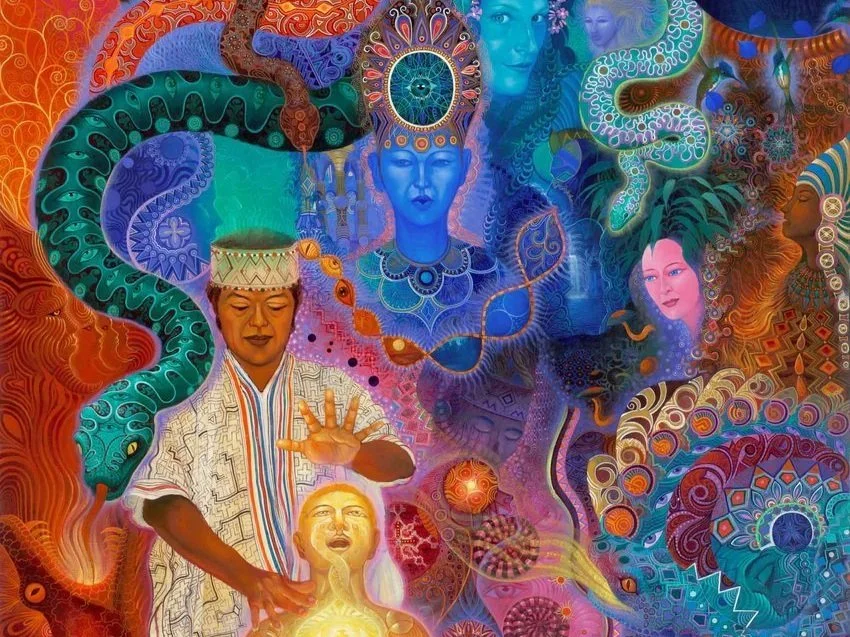
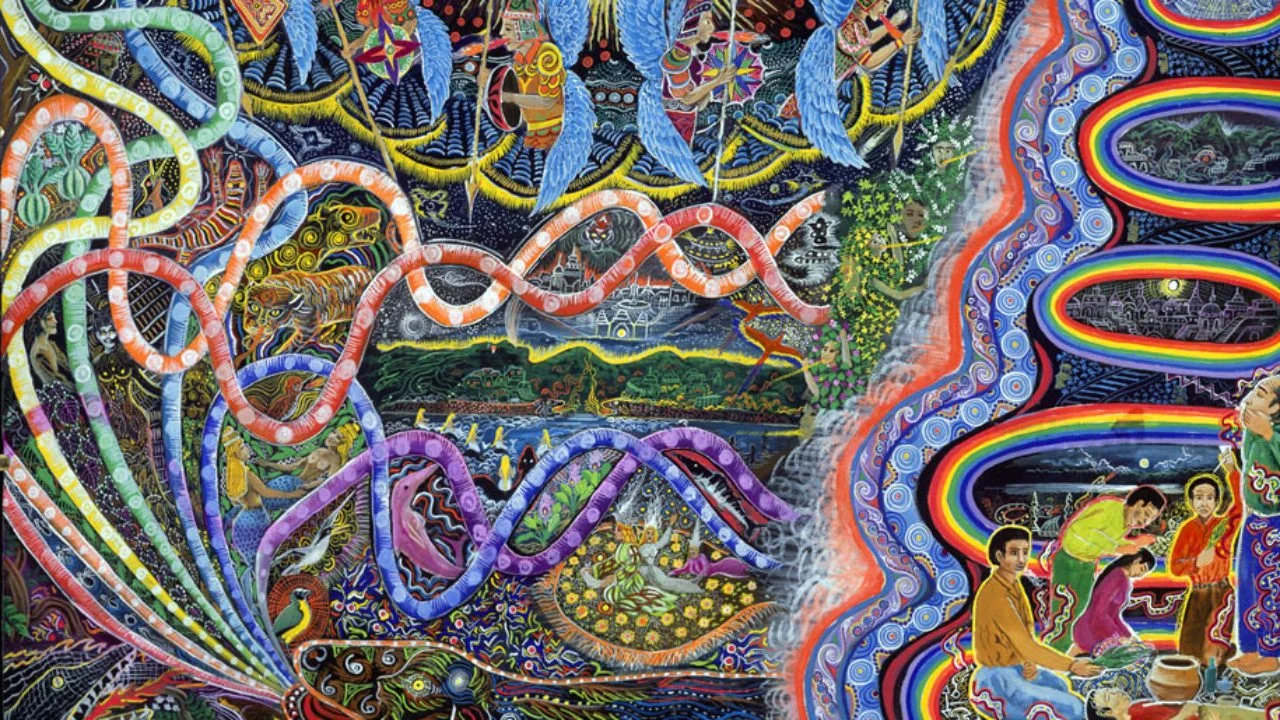
Celia Vasquez Yui, ‘The Council of the Mother Spirits’ via Salon 94 and Shipibo Conibo Centre
In Vital’s second lecture Dr Joe Tafur blew minds with a clinical overview of shamanic plant medicine healing. It included his staggering current research into conditions possibly related to epigenetics that range from PTSD to cancer.
The family doctor from Phoenix, Arizona is also a shaman in the Shipibo curanderismo tradition trained by Maestro Ayahuasca Shaman Ricardo Amaringo. He’s the author of ayahuasca blockbusterThe Fellowship of the River(‘with introduction by Gabor Mat´é’) plus theco-founder alongside Amaringo of Nihue Rao healing centre near Iquitos, Peru.
In the Zine this week, arranged in the Vital curriculum colour scheme:
Approach: Saving souls for three million years. And now with MDMA
Therapy: Psychedelic therapy is an art first and a science second
Space Holding: Songs in the key of life: energy and entropy
These five items I pulled from the week’s research are themed along Vital’s natural element-themed structure. Air provides anoverview of psychedelic use,Fireconcerns therapeutic applications,Watercovers ‘space holding’ – the art of keeping it together, Earthis where you’ll find medical matters, and Etherdiscussesintegration, the processof bringing psychedelicpower intoregularlife. Click straight through to your pet subject below.
Next issue: consciousness expansion from cave painting to the 2022 Psych Symposium
Graciela Arias Salazar, ‘La Virgen del Capinurí out of @centro_selva_arte_y_ciencia via Antricion gallery in Zurich
Dr Tafur saw ayahuasca’s positive effect on beleaguered veterans.
He took this as a validation of his own conversion to plant medicine after ayahuasca was instrumental in his recovery from a depressive episode.
He told Vital students that transcendent unconditional love, of the kind received in a sacred ceremony, has a positive effect on psychoneuroimmunology (PNI) just like family love (the good enough kind).
It can be transmitted via ‘limbic resonance’ – a theoretical term for hormonal interaction between one or more people. With its support our subconscious processes difficult emotions more efficiently. The healing effect moves from the psyche (P) through the nervous system (N) into the immune system (I), bolstering the body’s own intuitive ‘inner healer’.
The importance of empathy has recently been recognised within western medical treatment. But we are all understanding that professional clinicians can only give so much of themselves.
However. Try instead exotic ceremonies, remarkable locations, skilled practitioner, devout participants, and zealous dedication in the form of the ‘only was out is through’ strategy of taking high-strength ancient jungle acid five nights in a row – and you have the missing element required to treat a range of psychoneuroimmunologically-related conditions currently frustrating doctors and destroying families.
The spiritual sector, to its eternal credit, provides the social role of offering salvation to those mired in confusion, or paralysed by ethical quagmire. It can provide rare complex moral reconciliation, of the kind that PTSD treatment benefits from enormously. Where though does MDMA come in? It’s an ‘empathogen’ as opposed to a psychedelic.
Nonetheless the ‘love drug’ too can augment some characteristics of psychotherapy just like psychedelics and traditional healing ceremonies. Not only does MDMA increase the level of limbic resonance between doctor and patient, it’s also been shown to activate areas of the brain used during childhood to ingrain healthy social behaviour patterns.
Besides, “The MAPS PTSD programme going up for FDA-approval has a mystical element,” says Dr Tafur, responding to my disbelief that western psychotherapy can rapidly replicate the awe of ayahuasca, “in my experience the clinical sector is increasingly interested in ceremony. There are some really open-hearted therapists at MAPS,” he expands, referencing the completely accepting nature of spiritual fulfilment… historically known as ecstasy.
You can train as a shaman with Dr Joe! But there’s a catch. You actually have to go and do it
Anderson Debernardi, ‘Ayahuasqueros Healing’ available here
“It’s living in the jungle for four months, eating right,” says Tafur, “You can’t read it and write it.”
You can train to be a shaman with Dr Joe! But there’s what would be considered, in this modern world, a catch: you actually have to go and do it.
Even for psychotherapists practicing MDMA therapy at MAPS, Dr Tafur points out, “There’s no running away when you’re in there with people who have these issues for eight hours.”
Whether delivering the icaros in that delightful yet dread-laden way, or deftly reaching out with your neuroceptive aura, Dr Tafur is keen to stress, “this is an art.”
A powerful combination of the sacred, the empathic, and experience in healing epigentic-related conditions is central to his hypothesis (see Medical below). It’s why the clinical sector is fascinated; even in this 1950s archive footage a researcher asks his test subject “how does your soul feel right now?” Plus it’s also why ravers aren’t cured of mental health issues after a big weekend – context and other important characteristics are key to the drug experience having a self-healing element. The spiritual factor prompts an ever deeper form of self-healing when combined with the therapeutic. “Current medical science cannot match the transpersonal, or the moving,” says Dr Tafur.
‘Psyche’ in classical greek means ‘soul’. Dr Tafur explained that indigenous perspectives consider spirituality and healing to be one and the same. Music, prayer, ceremony, connection and affirmation: all augment the ‘spiritual experience’ that research shows is key to healing with psychedelics.
But there’s a gulf between Instagram ‘shamans’ and the type of grassroots work conducted for example in communities affected by the opioid crisis, where very well-intentioned and ultimately effective healers face risks of incarceration and rupturing their own community relations.
“We’re trying to help somebody, and using our faculties as human beings in order to do that”
How then can mystical healing’s beneficial elements be adopted by western health and wellbeing practitioners?
Apprenticing under an authentic expert would likely involve the path taken by, for example, Reiki healers who are also encouraged to search and wait for the correct master, and may need to prove their dedication upon finding them.
“It’s about real people and some real connection that you might have,” says Dr Tafur, “What opportunities do you have around you? Where are you? Is there somebody in your area where you can explore that?”
There are nonetheless fundamentals to the approach that can be considered. MAPS training assets for example refer to the importance of the therapist exuding ‘loving presence’. And somatic experiencing (which Dr Tafur recommends) coaches are trained to cultivate a ‘neuroceptive aura’ radiating a sense of safety to encourage ‘interoception’ a constructive dialogue between the body, emotions, and conscious thought.
“We’re trying to help somebody, and using our faculties as human beings in order to do that,” is what Dr Tafur distills the healing process down to. During his lecture he was hardly dismissive of authentic western efforts to replicate the process – but it’s essential that these are conducted with an ‘open heart’.
Singing icaros-type songs with substituted words in a shared language is not misguided… as long as it creates the required atmosphere for a mystical healing window to open. Sincerity of feeling is essential, but localised interpretations may be actually more effective than exotic traditional ones.
“Learning something well, then applying it elsewhere is more powerful than just coming up with whatever”
The most graceful nuances of ayahuasca are said to be ontologically lost on outsiders. Occultist Jason Louv points out that eastern spiritual systems like buddhism are guides to living well in different cultures. In response to social media claims that ‘Putin should take ayahuasca’ to end the Ukraine conflict, Shaur-trained shaman and former financier John Perkins recently pointed out that the experience is traditionally believed to make fiercer warriors to highlight how we can’t overlap a different approach entirely onto our own worldview. Tactics specific to western society may have more impact on local patients, if conducted with the same levels of intention, craft and sensitivity.
The “energy” to quote Dr Tafur directly is what is key – its purity of purpose and its intensity. Icaros have an improvised element and he himself will substitute Spanish or English words if required. Nonetheless the language has a vocabulary that is ideal to express the ayahuasca experience, as does the rhythm – but this itself features aspects that might well go over the heads of anyone who can’t claim lineage in the local society and culture.
Equally any expert will tell you that it is best to learn an established system before beginning to develop your own. Dr Tafur feels that his traditional Shipibo education gives his practice, “A strong base. But I’m interested in singing for patients undergoing ketamine therapy for example. So there’s room to mix it up. But there must be a reason why. Is it because it’s better for your patients or just because you don’t like tradition? Learning something well, then applying it elsewhere is more powerful than just coming up with whatever.”
Europeans have been feverishly dreaming up a shamanic culture using both fact and myth for the past few centuries, resulting in for example Wicca. They have also looked to the future in the form of ‘chaos magic’, a method of creating personal spiritual systems based on esoteric techniques passed down the millennia. Even a traditional ‘christian mysticism’ featuring, for example alchemy is in vogue now thanks to writer Damien Echols.
“If this makes you feel special, like you’re right and others are wrong, it’s not working. It’s supposed to make you feel part of something, working together”
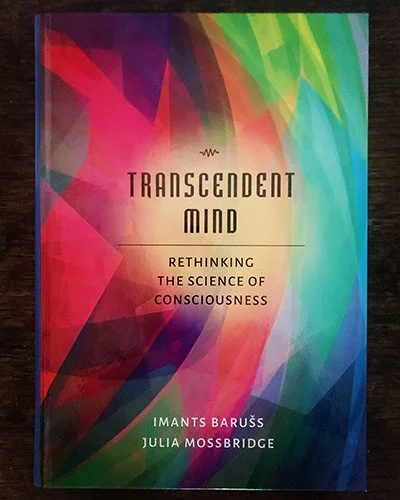
All this will still be a massive culture shock for the average agnostic westerner seeking alternative healthcare, especially hipsters raised on Richard Dawkins (who also has his place). But often the psychedelically-active patient will have become curious about these areas allowing for fundamentals to be touched upon at least. In 2015’s Transcendent Mind (see bottom of page) published by the famously orthodox American Psychological Association, Drs Imants Baruss and Julia Mossbridge present serious, rubber-stamped research that pairs ancestor worship with the collective unconscious and (I paraphrase) ‘that way you know your parents are about to call just before the phone rings.’ Refer to that last bit and riff from there…
To end. Experts like Dr Ido Cohen point out that the shamanic path is a calling as opposed to a blessing. Like other (supposedly) rewarding life paths, it comes with its own trials and sacrifices. Dr Tafur says, “if this makes you feel special, like you’re right and others are wrong, it’s not working. It’s supposed to make you feel part of something, working together.”
“Ultimately we’re reopening metaphysics. The research is in review now and we’re looking forward to sharing it with the world,” says Dr Tafur
Plant medicine fan favourite Pablo Amringo
Dr Tafur believes that mystical experiences can help cure epigenetic diseases from PTSD to psoriasis… and maybe even the Big C.
Modern Spirit, Dr Tafur’s non-profit org has collected genetic samples from some of the 107 patients in MAPS’ 12-month MDMA therapy trial (see above) where a stunning 68% of patients had statistically recovered from chronic, treatment resistant PTSD after three treatments. They’d been suffering for an average of 17.8 years.
“To a doctor, the sacred isn’t important. But to close your mind is a hiding place. People need to see something. Mental health? It’s competitive. But cancer is largely epigenetic and that’s one of the fields they’re saying they want to put more energy and understanding into.”
The research could also validate other holistic practices ranging from somatic experiencing to reiki.
“Ultimately we’re reopening metaphysics. The research is in review now and we’re looking forward to sharing it with the world,” he says.
He recounts a pivotal moment in his shamanic career, when ayahuasca visions insisted that a penitent’s disease was “on” as opposed to “in” her genes as medical consensus assumes.
This tall with the compelling field of epigenetics, which examines changes in our DNA (nature) brought about by environment (nurture). These can be passed down the generations, and include traumatic experiences. This was proven by landmark surveys using data assembled from descendants of Holocaust survivors. Of course it also works for colonialism, industrialised warfare, poverty, patriarchy and lovelessness. It’s a new and complex but far from fringe area: my mother is an identical twin who has been taking part in NHS epigenetic research funded by good old Wellcome Trust for decades.
This blog is not affiliated to Vital beyond my study on the course. The content shouldn’t be taken as representative as it’s a personal reflection and includes my own lived experience of the sector too.
Psychedelic substances are prohibited in the UK, other countries and most US states. I do not condone their use, neither am I evangelising for, or recommending them to you. There are more qualified people you can turn to in the Resources section but if you are considering psychedelic treatments the best person to speak to is probably your own therapist, counsellor, or doctor.
The EagleandtheCondorisatwo thousandyear old prophecypredictingunificationofthe American people
By Fellowship of the River cover artist Rai Weni
The propehcy that could be said to predict the colonisation of the Americas, the resulting cultural holocaust, and a re-emergence of mystical healing techniques.
The peoples of the Condor – indigeneous Americans – and the Eagle, western colonisers – will finally come together ushering a new paradigm of enlightenment.
Columbus’ First Voyage landed in the Carribbean in 1492. Syncronicity fans note that in 1994 Terrence McKenna published Food of the Gods and Dr Allan Schore released Affect Regulation and the Origin of the Self.
“Be careful with anything, no matter what, because things can be tricky in those spaces. The medicine itself is not trying to trick us. If there is light, and positive healing spirit, it’s clear”
The aforementioned Shuar shaman John Perkins has alluded to the propehcy as prompting a shift from the West’s ‘Death Economy’ based on competiting over limited resources to a ‘Life Economy’ where wellbeing is paramount (in our abundant era, the Death Economy is arguably so past its due that its basis in scarcity has even had to be simulated by, for example, western governments implementing policies to artificially raise house prices).
This prophecy is not uncomparable to Western astrology’s Age of Aquarius (which both Carl Jung in Aion and Aleister Crowley with his ‘Age of Horus’ suggested will have a non-dual flipside, but that is for another day).
“Hearing ‘is it real?’ from the other end gets kind of boring after a while”
The prophecy offers the very seductive idea of ‘Pachakuti’ a time of reconciliation and healing. But is it real?
“Who knows what’s real?” says Dr Tafur, when talking about ‘entity’ encounters’ and other sublime ingredients of the mystic experience, “we’re dealing with a mystery and we have to discern. Be careful with anything, no matter what, because things can be tricky in those spaces. The medicine itself is not trying to trick us. If there is light, and positive healing spirit, it’s clear. But if there’s any doubt, there’s no doubt – just wait. And don’t worry that you’re missing out, because you’re learning what could be good for you and what isn’t.”
It is your journey, and there are no clear answers. “Respecting your space is important, and these things should respect you too,” he says, “but this isn’t the sort of thing that can be learned on the internet. It’s messy and there’s room for projection and confusion.” Enforce boundaries as you should outside of DMT hyperspace.
“Hearing ‘is it real?’ from the other end gets kind of boring after a while,” says Dr Tafur.
Whether ‘entities’, or prophecies, or indeed ‘limbic resonance’ are facts is to miss the point.
Instead, ask – what are the feelings? And are they benefitting us?
To finish: trippy clippings, merry pranks, and psychedelic student life
Ask Savia Droid about reincarnation
Graph of the Week
Attribution of consciousness to living and non-living entities before and after a psychedelic belief-changing experience
After psychedelic experience
Before psychedelic experience
From: A Single Belief-Changing Psychedelic Experience Is Associated With Increased Attribution of Consciousness to Living and Non-living Entities (supplementary material) by Samdeep M Nayak and Roland R. Griffiths, John Hopkins University (2022)
My bookshelf weighs a ton
Notable new purchases for the occult library. Strictly second hand snap-ups only
This week: Transcendent Mind by Imants Barrus and Julia Mossbridge. Swept on for £50 when I noticed prices were going up quickly
£52 at April 2022, £75 by early May 2022
Despite what the sort of thing I write in my day job would have you believe, government-backed public education openly invests in paranormal research (for better or worse). It even issues press releases about the positive findings. Here in the UK Northampton University is the crucible of not-so-forbidden learning, with parapsychological research taking place across several departments.
Published in 2015 by the notoriously conservative American Psychological Association Transcendent Mind contains an enthusiastic review of official investigations into consciousness, the soul, supra-physical existence and the cosmic whole.
Observations from my study on Vital and recent happenings in the space
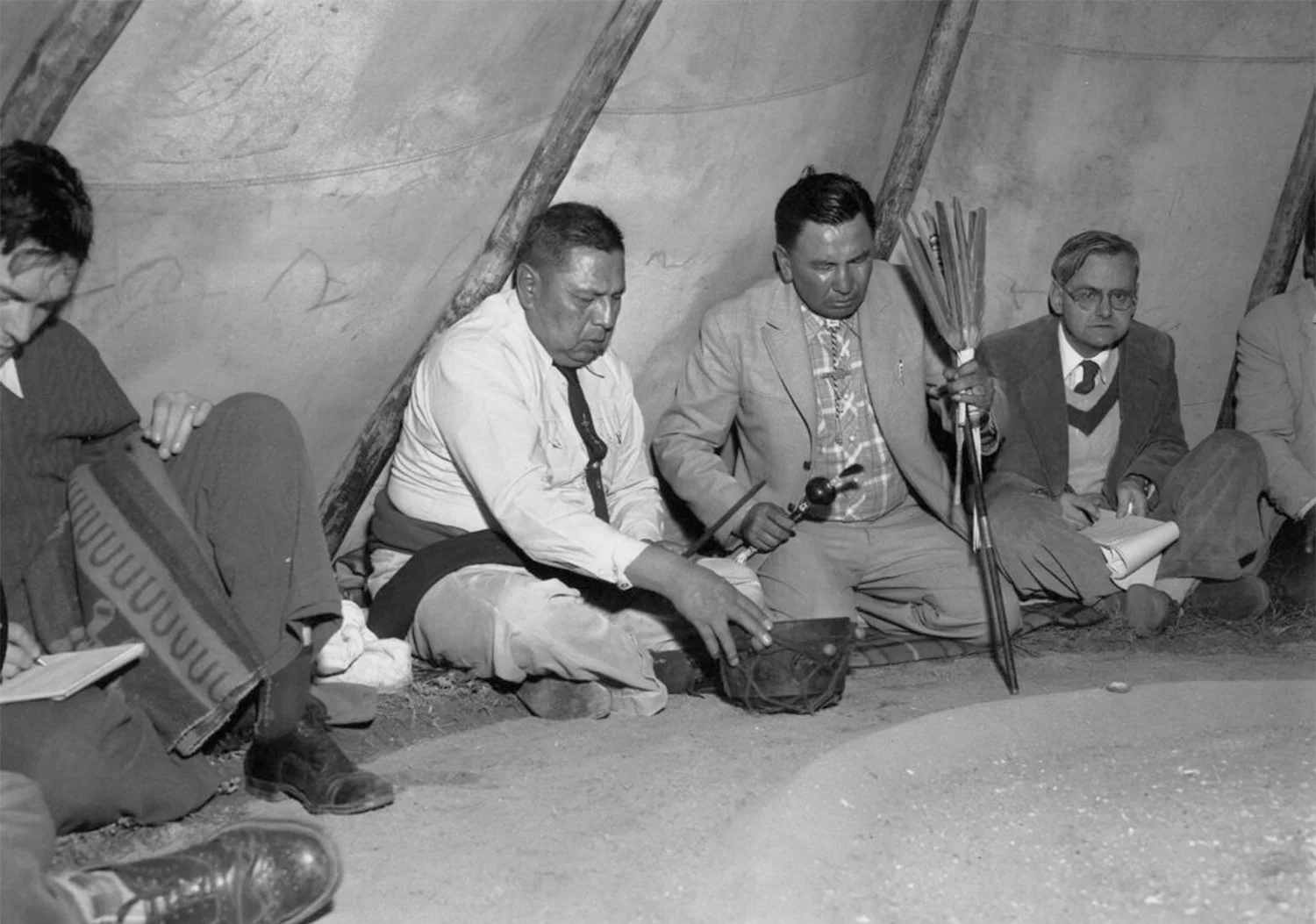
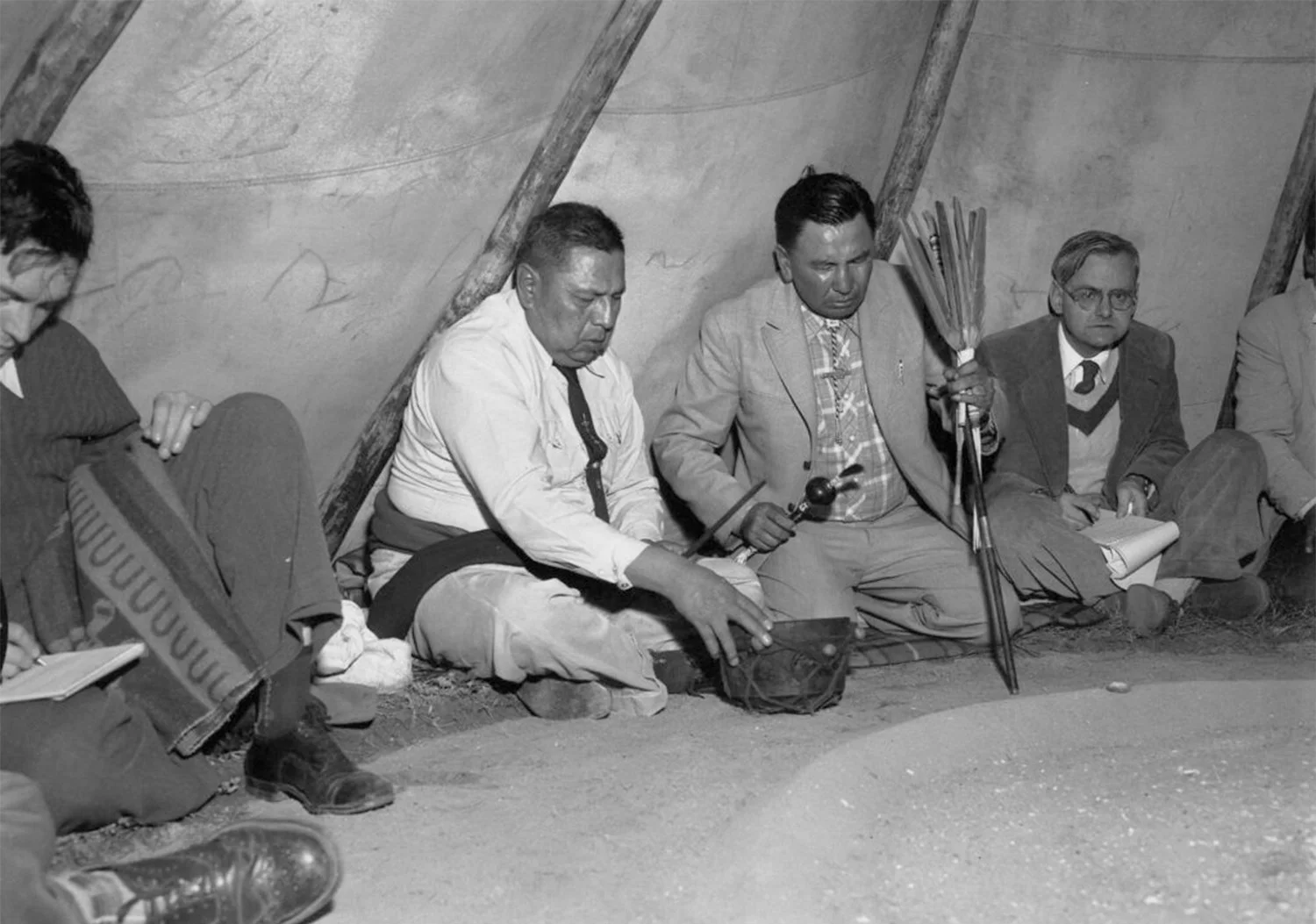
Humphry Osmond attends a peyote ceremony in 1956
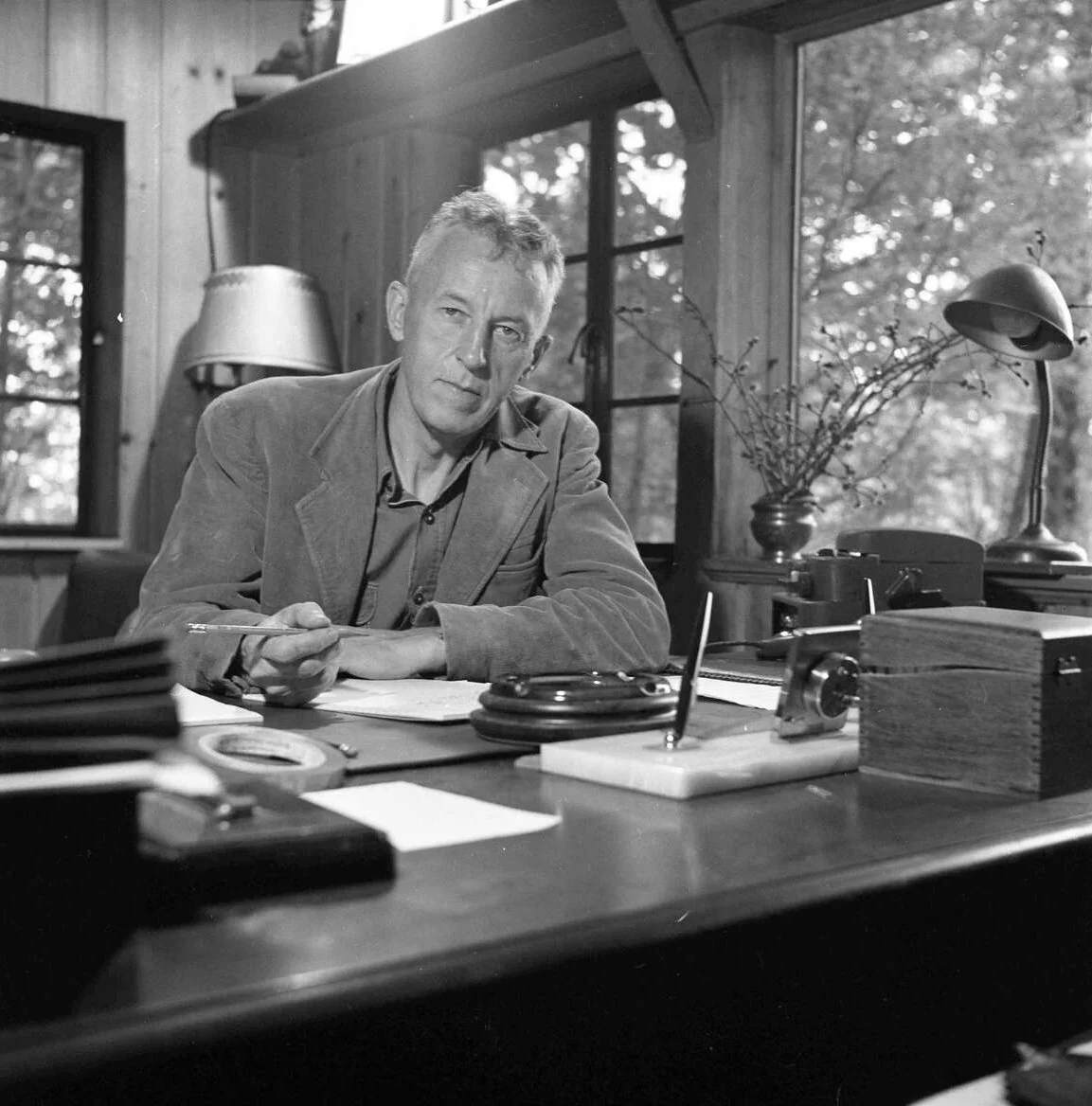
Historian Dr Erika Dyck lectured on the “ground zero of LSD research,” conducted by Humphry Osmond and Abram Hoffer at Weyburn Asylum in remote Saskatchewan beginning in 1951.
Osmond, a British expat, was observing Native American peyote ceremonies by 1956. A year later he coined the term ‘psychedelic’ in his correspondence with Aldous Huxley. Hoffer trailblazed nutritional approaches like fasting and vitamin treatments.
I studied history at university (specialising in Renaissance Florence and the Medici, cheers) so Vital’s inaugural week lay seductively inside my comfort zone. I seized the opportunity to go down a historical rabbit hole… and this zine is longer than future weekly updates will be. Stay locked for bonus history posts out of all the feverishly downloaded PDFs.
Dr Dyck is a key contributor to The Chacruna Institute of Psychedelic Plant Medicines, an organization founded by Brazilian anthropologist Dr. Bia Labate ‘promoting a bridge between “traditional ceremonial use” and clinical and therapeutic settings.’
These five items I pulled from the week’s research are themed along Vital’s natural element-themed structure:
Air: Historical and Current Approaches
Fire: Psychedelic Therapies
Water: Spaceholding and Navigating
Earth: Medical and Clinical
Ether: Integration
Plus! Stay on the dancefloor till the end for Graph of the Week and second hand book porn
Approach
Is ‘corporadelics’ doing enough for spirit, set, setting… and society?
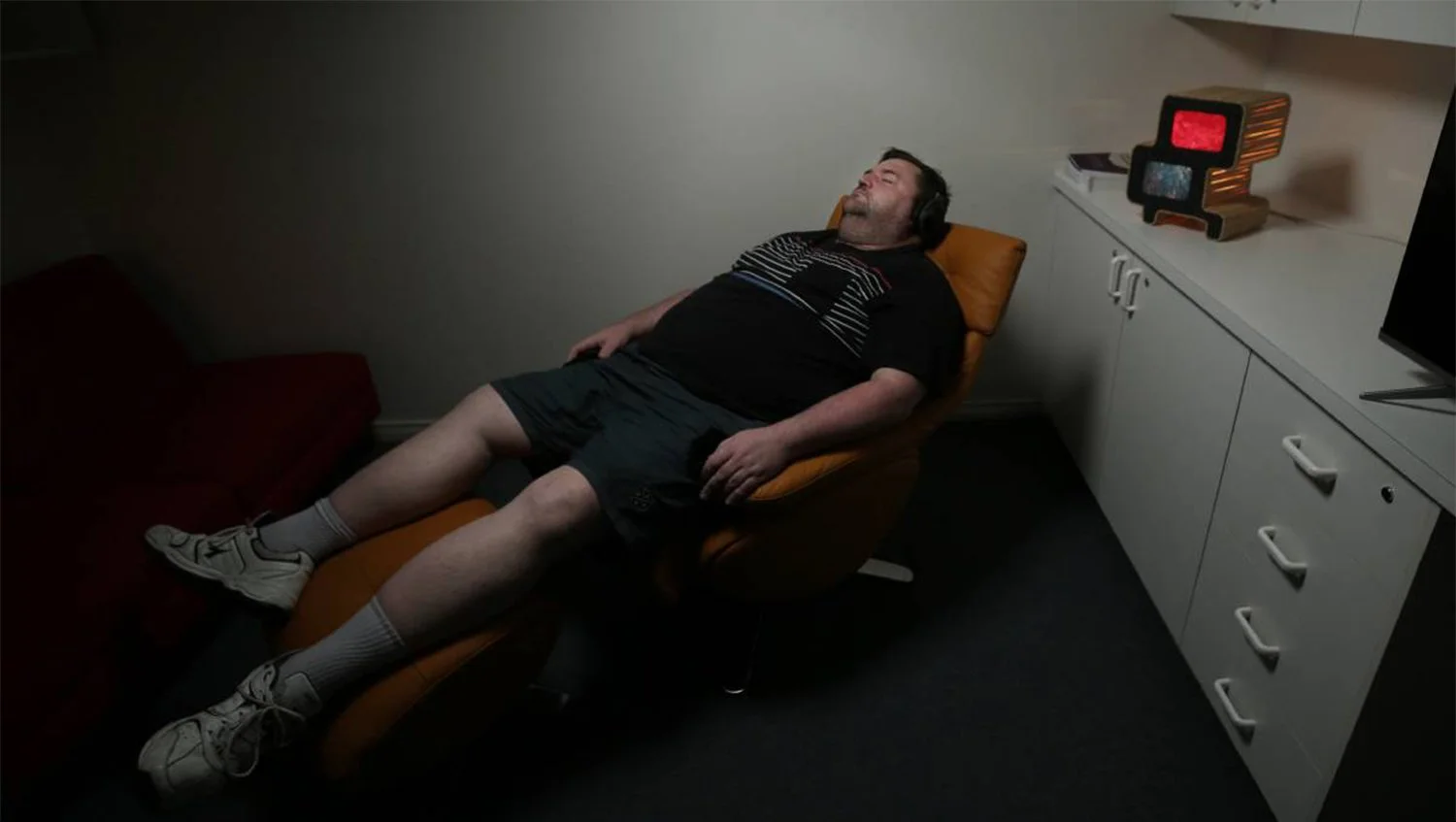
A powerful spirit healing experience taking place in Newcastle, England
The early days of LSD research are easily vilified. Spirituality is a dirty word in scientific circles right now: let alone reincarnation or astrology, both of which Stanislav Grof is quick to mention. It’s even considered unprofessional for the healer to develop a connection with the patient. 20th century Western scientists are easily cast cast as distant, privileged figures electro-shocking schizophrenics behind the asylum gates, collaborating with the CIA in return for research permits.
And now the spectre of ‘corporadelics’ hangs over LSD’s renaissance. I asked Dr Dyck what she learned about human nature from her research, that we can apply to the present.
”There’s a risk of reducing history to a cliché to push against,” she responded “or seeing history as ‘they had it wrong and in the past and we’re better now’.”
“However there’s still something that we can take from the spirit, the optimism, the motivation, the intentions,” says Dyck, “for example, a lot of people who went into these trials were designated as patients – but came through feeling they were collaborators. It pushes back against the competing model of engaging in scientific rigour, where methodology overwhelmed the need for investigating human behaviour in a more diverse way.”
Osmond, Hoffer and their in-house architect Kyoshi Yazumi (more of whom below) were revamping Canada’s mental health system as part of an ambitious pledge by Canada’s new socialist government. Their innovations included day trips outside the famously forboding asylum for inpatients, art and music therapy, and family visits, plus more autonomy for the nurses… who took LSD to ‘empathise better with the patient exprience’.
“The early researchers definitely were trying to align a health access point within a publicly funded system,” she responded, “That is certainly not on the horizon today. We see lots of competing, profit-seeking ways of turning psychedelics into something that, I would argue, are going to be less accessible.”
Therapy
Alcoholics Anonymous founder Bill ‘W’ Wilson’s psychedelic use inspired Twleve-step and cured his depression
Alcoholics Anonymous founder Bill Wilson was forced to stand down from his pro-LSD stance
Hospitalised three times already in less than two years during the mid-30s, Wilson checked himself into hospital for rehab bearing a copy of William James’ Varieties of Religious Experience. Hewas given the Towns-Lambert treatment for detoxification made using deadly nightshade, henbane (both lively natural psychedelics) and morphine over a period of days.
A close converted christian friend and recovery fellow, Ebby, visited, and pressed the conversation towards Wilson’s atrocious treatment of his wife Lois. Wilson hit ‘rock bottom’ – ego death – smiled up at Kali, and, as he writes in autobiography Pass it On:
“Then came the blazing thought, ‘you are a free man!’ A great peace stole over me, and this was accompanied by a sensation difficult to describe. I became acutely conscious of a Presence which seemed like a veritable sea of living spirit. I lay on the shores of a new world. ‘This’, I thought, ‘must be the great reality.”
Wilson also experienced visions of “a chain of drunks” extending around the globe, assisting each others’ recovery. This would become Alcoholics Anonymous (AA). Wilson also came to value spirituality, and etched its practice into The Twelve Steps. According to his I am Bill biographer Francis Hartigan, Wilson thought depression grew from a “lack of faith” and a dearth of “spiritual achievement.”
Vitally, he “did not see any conflict between science and medicine and religion.”
Thanks to Osmond’s work, church and community leaders were (at this stage) pro-LSD, having seen Osmond’s patients rejoin functional society. Wilson met Osmond and Hoffer in his role as an abstinence thought leader to discuss addicition in 1954. At this stage our favourite post-war sub-arctic boffins were blundering around believing LSD would prompt delerium tremens attacks that might shock drinkers out of their rut. Osmond: “We found, in fact, that this wasn’t quite how it worked… not unlike Bill’s experience. It gave us pause for thought. Not on the grounds of how terrifying it was, but how illuminating it was.”
In 1955 Wilson took LSD under supervision from consciousness pioneer Gerald Heard and psychiatrist Sidney Cohen (who also provided Aldous Huxley’s deathbed LSD). He wrote to Betty Eisner, one of his therapy team plus an especially innovative researcher into addiction and LSD, reporting:
“Since returning home I have felt — and hope have acted! — exceedingly well. I can make no doubt that the Eisner-Cohen-Powers-LSD therapy has contributed not a little to this happier state of affairs.”
AA’s narrative was that it healed through a combination of complete sobriety and the ‘higher power’ (the latter Wilson considered contactable via LSD). Psychedelics and even psychology didn’t fit with that. To fervent AA members, “Bill’s seeking outside help was tantamount to saying the program didn’t work” writes Hardigan.
In 2020, a systematic review published by Frontiers in Psychology compiling figures from alcoholism LSD treatments over many decades said, “LSD is revealed as a potential therapeutic agent in psychiatry; the evidence to date is strongest for the use of LSD in the treatment of alcoholism.”
John Hopkins stand-out Matthew Johnson began trials on psilocybin for smoking cessation in 2014, and has since racked up an 80% success rate that dwarfs other approaches. His team are also starting or planning studies using psilocybin therapy for a wide range of other conditions, including opioid addiction and alcoholism.
Bill ‘W’ Wilson caved into pressure and stopped LSD therapy in the mid-60s. Neither his depression nor drinking returned.
Space
Women invented chill out DJing
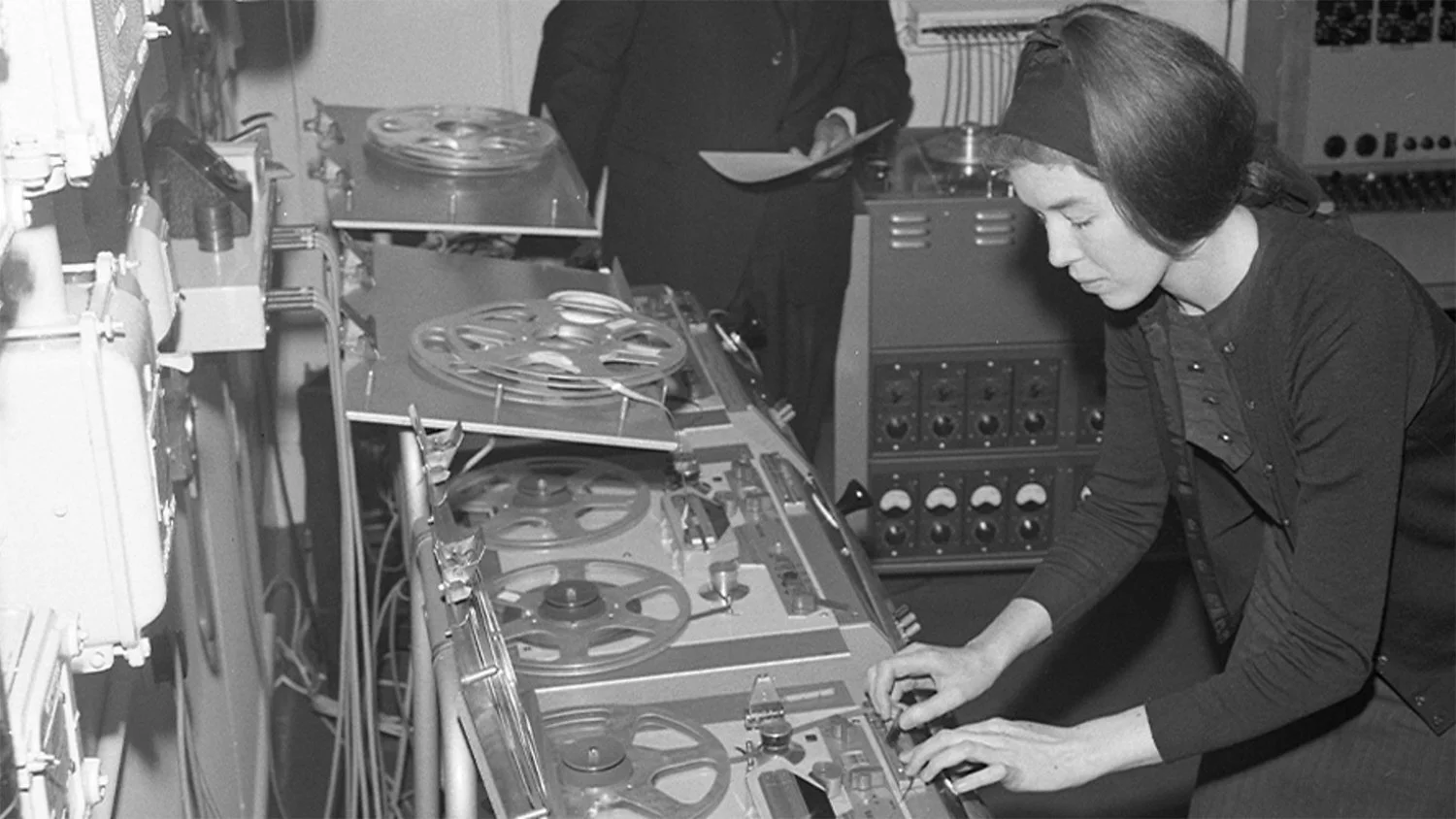
I couldn’t find a picture of Rose Hoffer, Hermina Browne or Helen Bonny in the 1950s so please settle for Delia Derbyshire making one of the earliest and greatest pieces of electronic music in 1962
And their style remains the template for chill out mixes – plus MAPS therapy sessions – today.
After Abram Hoffer’s wife Rose soothed a tripping patient by changing a jarring record to an elegant Bach number, she was thenceforth delegated I/C the tunes.
Hermina E Browne, director of music therapy at New Jersey State Hospital, began testing music for effectiveness during psychedelic sessions for alcoholics in 1956. Her major innovations were to divide the soundtrack into five thirty-minute parts plus – I love this one – put the music on for half an hour, then turn it off again for the same time. Her playlist categories were:
1 Relaxing to tense
2 Very tense, disturbed with a purpose
3 Solemn, meditative, self-searching, spiritual
4 Relaxing, spiritual
5 Reconciling, restoration of confidence, feeling of hope and faith
Browne passed her findings on to E Thayer Gaston, ‘The Father of Music Therapy’ who eschewed her policy of ‘Five Moods Projected’. Instead he insisted on music ‘familiar’ to the patient. (The handbook says have them ask to change it once, stand ground gently, then cave in if they ask again).
Enter during the 1970s Helen Bonny, who considered music ‘intersubjectively verifiable’ and set out to prove it. Her Maryland Hospital is noted for using four therapists in psychedelic sessions, always including a music therapist.
Bonny’s unpublished research did so, but she’s even better known for conceiving Guided Imagery and Music, the leading form of music therapy in the prsent day.
Medical
Public opinion had a huge effect on research back then. It still does
Poison
Dyck’s presentation began with a curved ball. She pointed out that pharmaceuticals were bang on-trend during the 1950s after the successful roll-out of anti-psychotic chlorpromazine (Thorazine). This generated goodwill for tests on more ‘wonder drugs’.
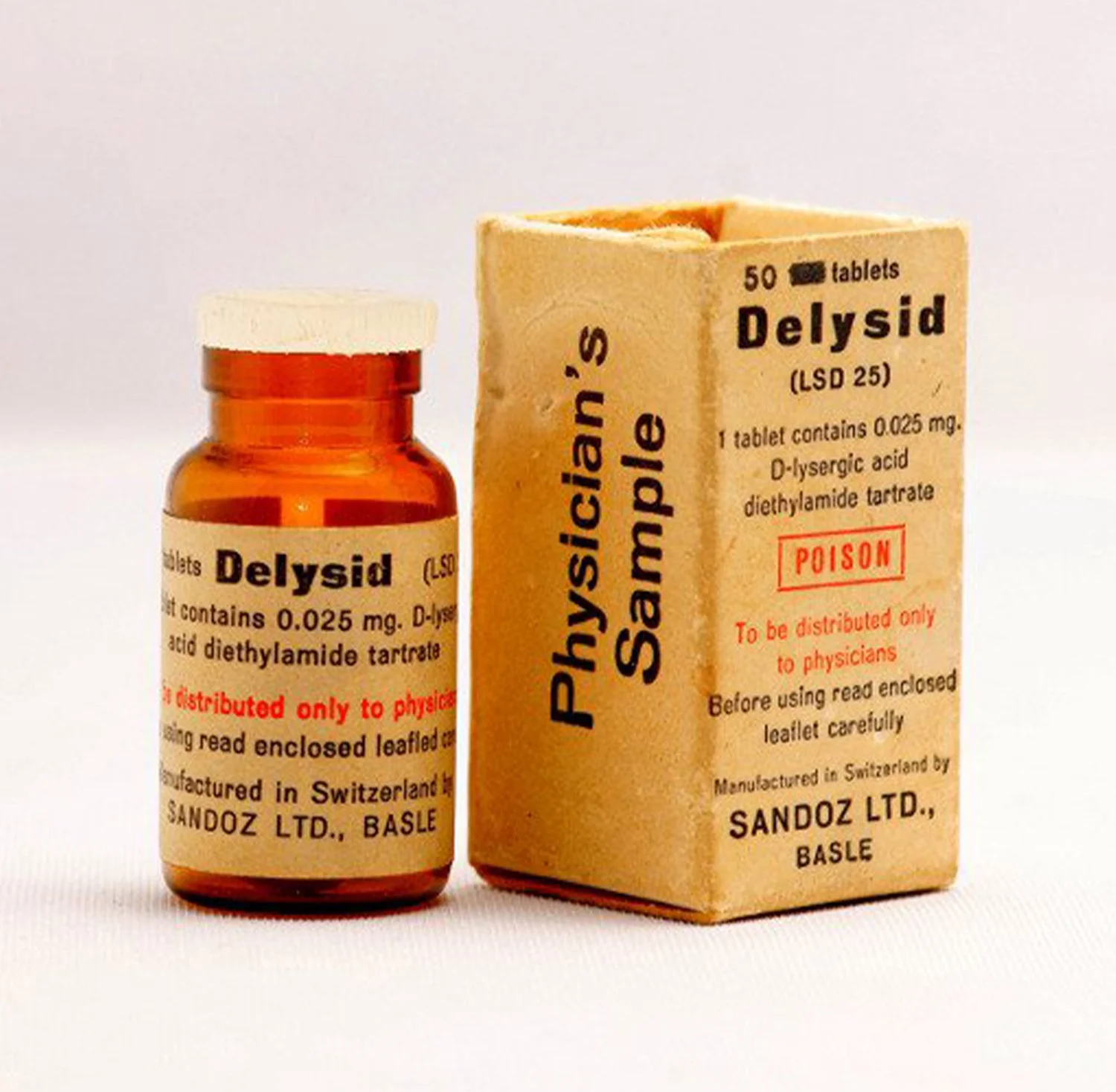
However, in the early1960s the startling effects of thalidomide on pregnancy came to light. “Images of deformed children caused outcry and a moral panic over testing ethics,” plus the emerging anti-modernity movement fuelled a backlash that brought LSD – brand name ‘Delysid’ – testing to a halt in Canada by 1962. Leary was fired from Harvard in April 1962. Research was legal elsewhere, but funding and support rapidly became non-existent.
Integral
Architecture is the trippiest job
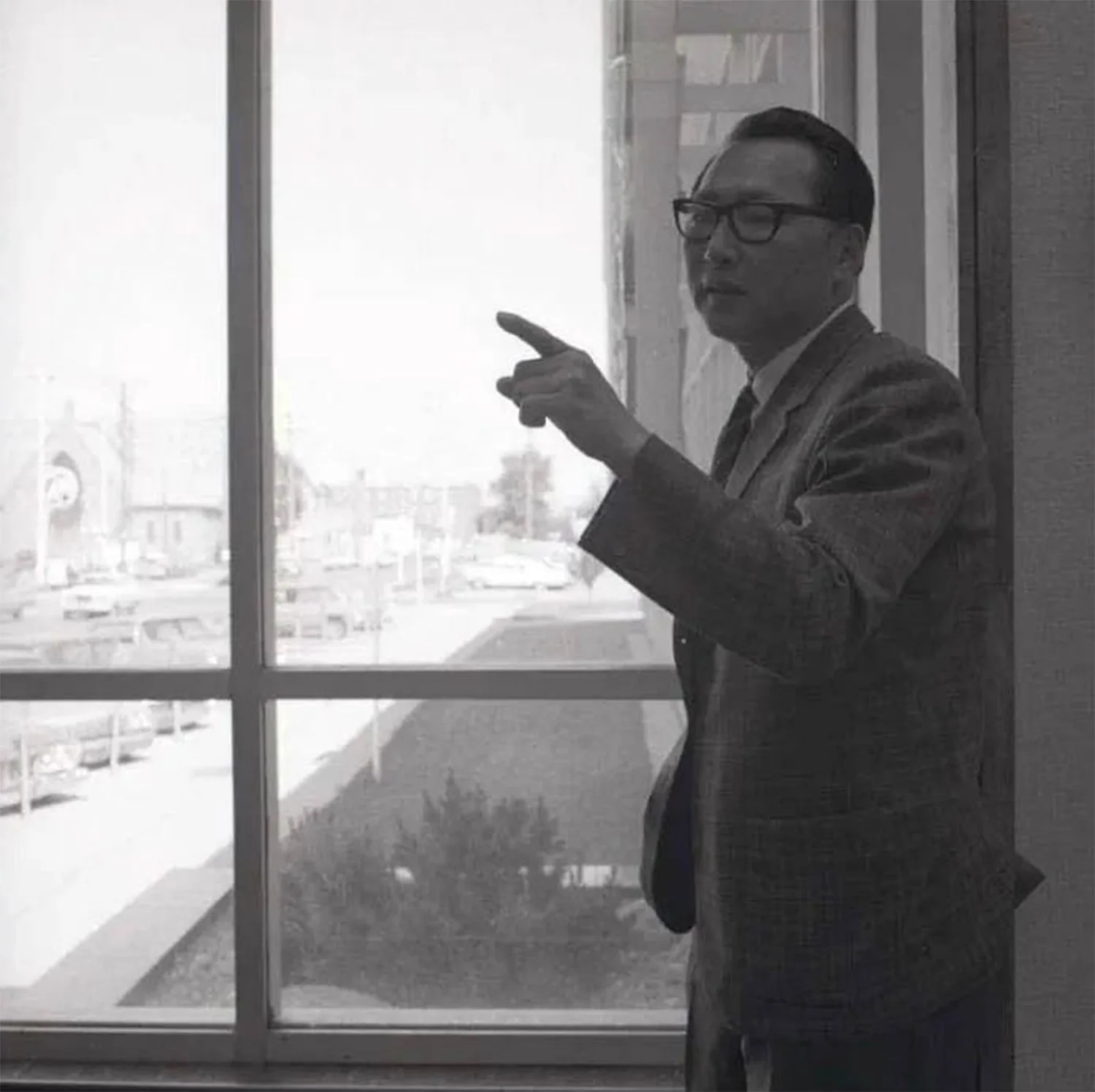
Kiyoshi Azumi built six ‘ideal mental hospitals’
Architects Henrik Bull and Erik Clough wrote chapters for Ralph Metzner’s The Ecstatic Adventure. They took part in noted creativity and problem-solving exercises under the influence of LSD during the 1960s. Architecture has arguably become the trade most closely associated with psychedelic self-improvement since.
The first modern-day architect to get turned on though was Kiyoshi ‘Kiyo’ Azumi. Commissioned to revamp Canada’s asylum buildings by Osmond and Hoffer, you can probably guess what happened after they met in 1956 under the proviso of ‘learning how the patients perceive their environment.’
A long friendship developed: the first ‘ideal mental hospital’ in Yorktown, Saskatchewan was opened in 1965, another five were built in Canada, and a further in Pensylvannia USA.
Izumi’s book LSD and Architecture specifies the following conclusions:
1 Provide as much privacy as possible
2 Minimize ambiguity of architecture’s design and detail
3 Bear no intimidating features
4 Foster spatial interactions that curtail the frequency and intensity of undesirable confrontations
Izumi passed away in 1996, and Weyburn was demolished in 2009.
Kool-Aid Corner
To finish: trippy clippings, merry pranks, and psychedelic student life
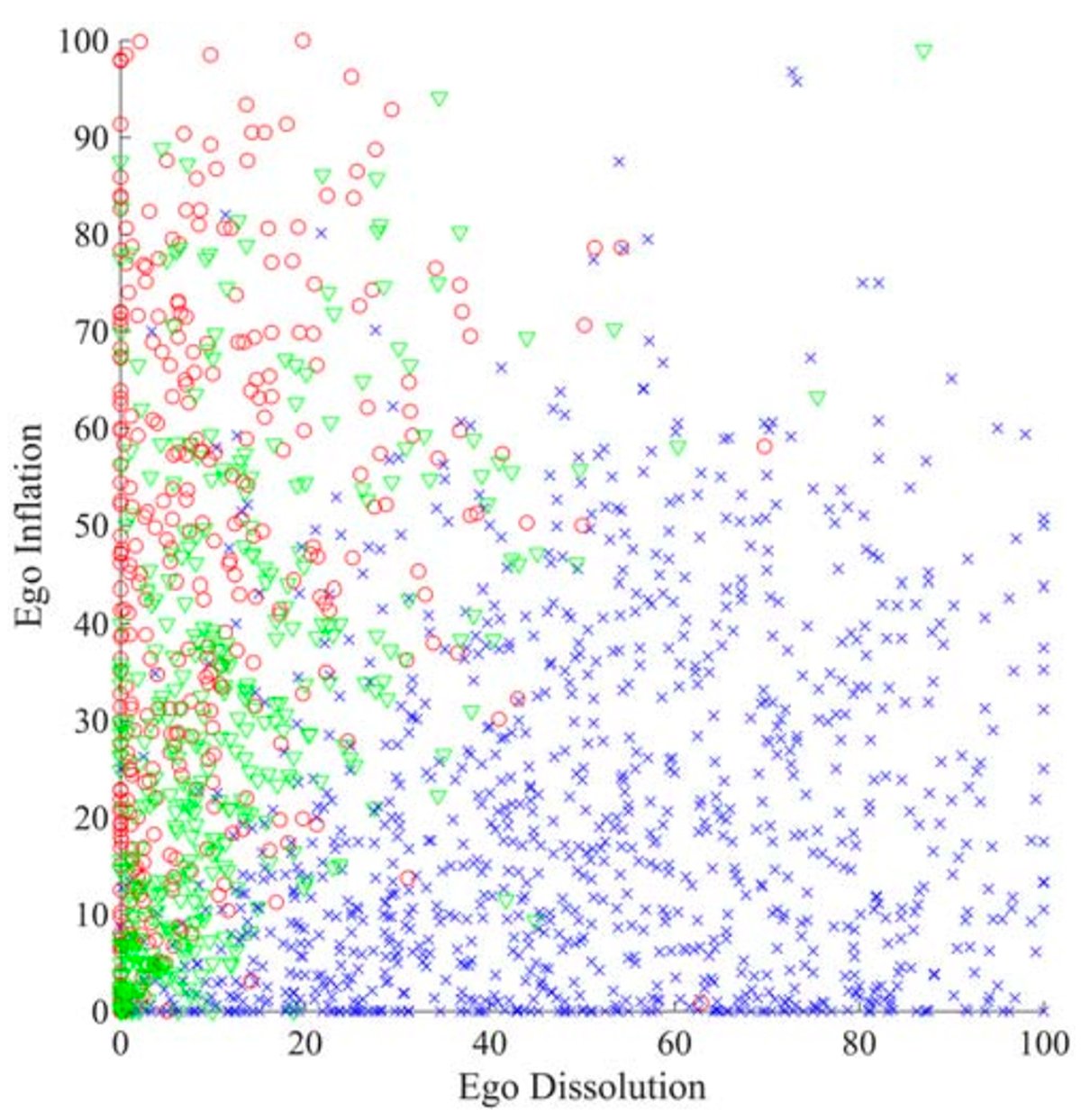
Graph of the Week
The relationship between ego-dissolution and ego-inflation for experiences occasioned by:
Classical psychedelics
Coacine
Alcohol
From: Ego-Dissolution and Psychedelics: Validation of the Ego-Dissolution Inventory (EDI) by Matthew M Nour, Lisa Evans, David Nutt and Robin L Carhart-Harris (2016)
My bookshelf weighs a ton
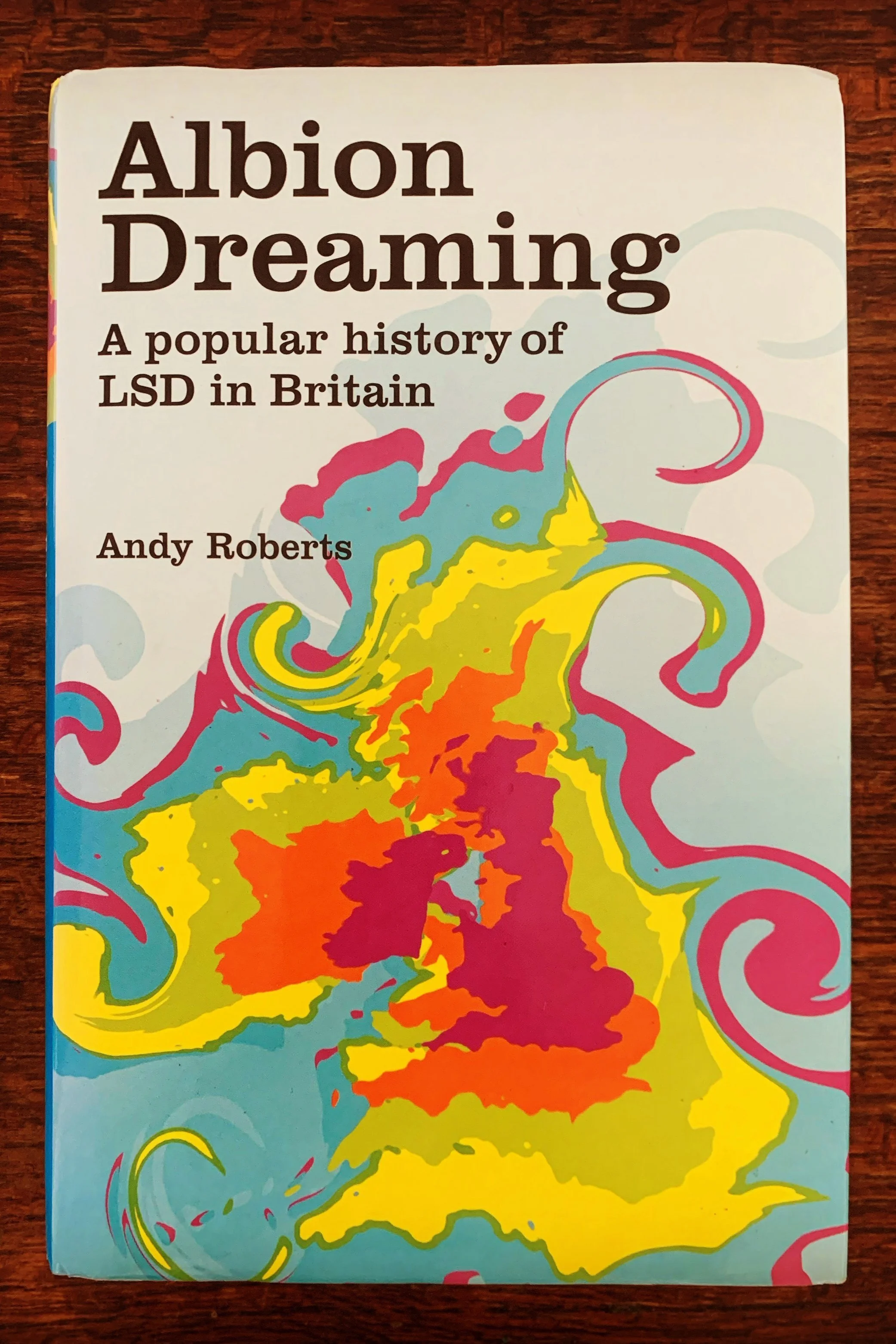
Notable new purchases for the occult library. Strictly second hand snap-ups only. This week: Albion Dreaming by Andy Roberts. Replaced after my first copy accompanied a close friend to his new life in NY
Snapped up for just over UK£25, copy for sale via GF Books in Hawthorn, CA for just over US$1000, UK price £95 and up
From the first chapter: ‘William Blake drew on Albion as a symbol of man before the Biblical fall and historian Peter Ackroyd has used the term for the title of his book charting the origins of the English imagination.
From the Sixties onwards sections of the counter culture used the term Albion to refer to their vision of a land, society and individual consciousness based on the insights offered by LSD.
Thus, Albion embodies the mythological imagination of these Isles, a state akin to the aboriginal Dreamtime, to which everyone should have access. This, then, is Albion’s dreaming.’
Andy Roberts is Britain’s answer to Erika Dyck; our national chronicler of the far out. Psychedelic Renaissance author AWAKN’s Dr Ben Sessa says:
“Andy is an anti-authoritarian, free-thinking individual who has happily nailed his colours to the weirdness mast without being lost in its sea of ethereal fluffiness.”
Next issue: Dr Joe Tafur explains traditional and modern indigeneous perspectives
This blog is not affiliated to Vital beyond my study on the course. The content shouldn’t be taken as representative as it’s a personal reflection and includes my own lived experience of the sector too.
Psychedelic substances are prohibited in the UK, other countries and most US states. I do not condone their use, neither am I evangelising for, or recommending them to you. There are more qualified people you can turn to in the Resources section but if you are considering psychedelic treatments the best person to speak to is probably your own therapist, counsellor, or doctor.
My unofficial Vital Study Zine #1 with observations from Vital Psychedelic Training and recent happenings in the space
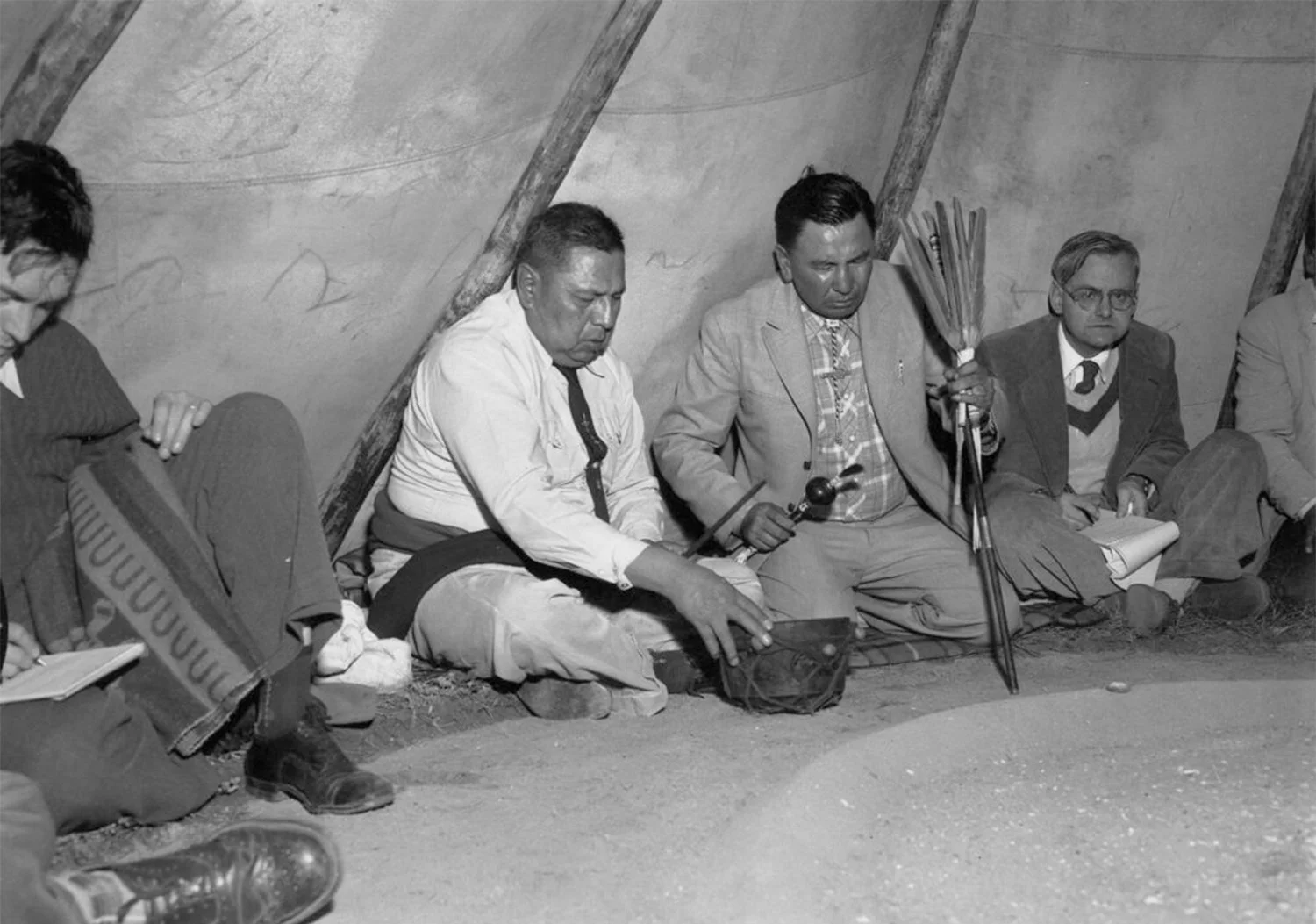
Humphry Osmond attends a peyote ceremony in 1956
‘The first lady of LSD history’ lectured on the progressive, pioneering research of Humphry Osmond – inventor of the word ‘psychedelic’ – and Abram Hoffer in remote Saskatchewan from 1951.
Osmond, a British expat, was observing Native American peyote ceremonies by 1956. A year later he coined the term ‘psychedelic’ in his correspondence with Aldous Huxley. Hoffer trailblazed nutritional approaches like fasting and vitamin treatments.
I studied history at university (specialising in Renaissance Florence and the Medici, cheers) so Vital’s inaugural week lay seductively inside my comfort zone. I seized the opportunity to go down a historical rabbit hole… and this zine is longer than future weekly updates will be. Stay locked for bonus history posts out of all the feverishly downloaded PDFs.
Dr Dyck is a key contributor to The Chacruna Institute of Psychedelic Plant Medicines, an organisation founded by Brazilian anthropologist Dr. Bia Labate ‘promoting a bridge between “traditional ceremonial use” and clinical and therapeutic settings.’
These five items I pulled from the week’s research are themed along Vital’s natural element-themed structure. Air – ‘Approach’ – provides anoverview of psychedelic use,Fireconcerns therapeutic applications,Watercovers ‘space holding’ – the art of keeping it together, Earthis where you’ll find medical matters, and Etherdiscussesintegration, the processof bringing psychedelicpower intoregularlife. Click straight through to your pet subject below or just go back a page.
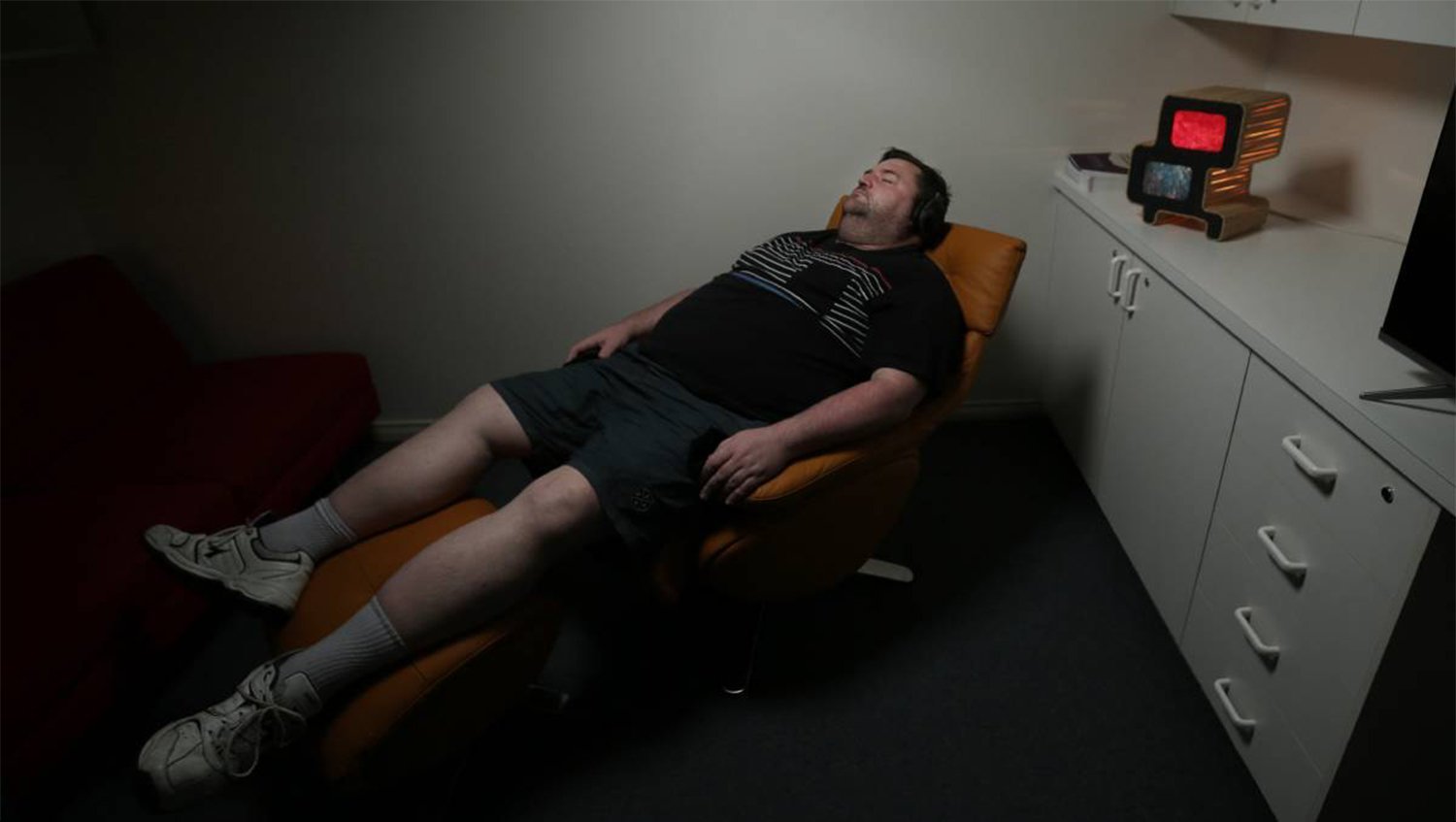
Osmond and the early researchers stressed the importance of aesthetics and the divine to LSD therapy. Are those elements sorely lacking down at your local ketamine clinic?
A powerful spirit healing experience taking place in Newcastle, England
During the Q&A session after Vital’s first lecture I asked Dr Dyck what she learned about human nature from her research, that we can apply to the present.
”There’s a risk of reducing history to a cliché to push against,” she responded “or seeing history as ‘they had it wrong and in the past and we’re better now’.”
The early days of LSD research are easily vilified. Spirituality is a dirty word in scientific circles right now: let alone reincarnation or astrology, both of which Stanislav Grof is quick to mention. It’s even considered unprofessional for the healer to develop a connection with the patient. 20th century Western scientists are easily cast cast as distant, privileged figures electro-shocking schizophrenics behind the asylum gates, collaborating with the CIA in return for research permits. And now the spectre of ‘corporadelics’ hangs over LSD’s renaissance.
“We see lots of competing, profit-seeking ways of turning psychedelics into something that, I would argue, are going to be less accessible”
“However there’s still something that we can take from the spirit, the optimism, the motivation, the intentions of these early Western researchers,” says Dyck, “for example, a lot of people who went into these trials were designated as patients – but came through feeling they were collaborators. It pushes back against the competing model of engaging in scientific rigour, where methodology overwhelmed the need for investigating human behaviour in a more diverse way.”
Osmond, Hoffer and their in-house architect Kyoshi Yazumi (more of whom below) were revamping Canada’s mental health system as part of an ambitious pledge by Canada’s new socialist government. Innovations included day trips outside the famously foreboding asylum for inpatients, art and music therapy, and family visits, plus more autonomy for the nurses… who took LSD to ‘empathise better with the patient experience’.
“The early researchers definitely were trying to align a health access point within a publicly funded system,” she responded, “That is certainly not on the horizon today. We see lots of competing, profit-seeking ways of turning psychedelics into something that, I would argue, are going to be less accessible.”