Blog

  • Next Up, The Psychedelic Enlightenment

    Next Up, The Psychedelic Enlightenment

      Approach
    Approach

    “Social, ethical, legal and metaphysical issues can undergo a transformation akin to psychedelic therapy” says an inspiring new movement with beards to match

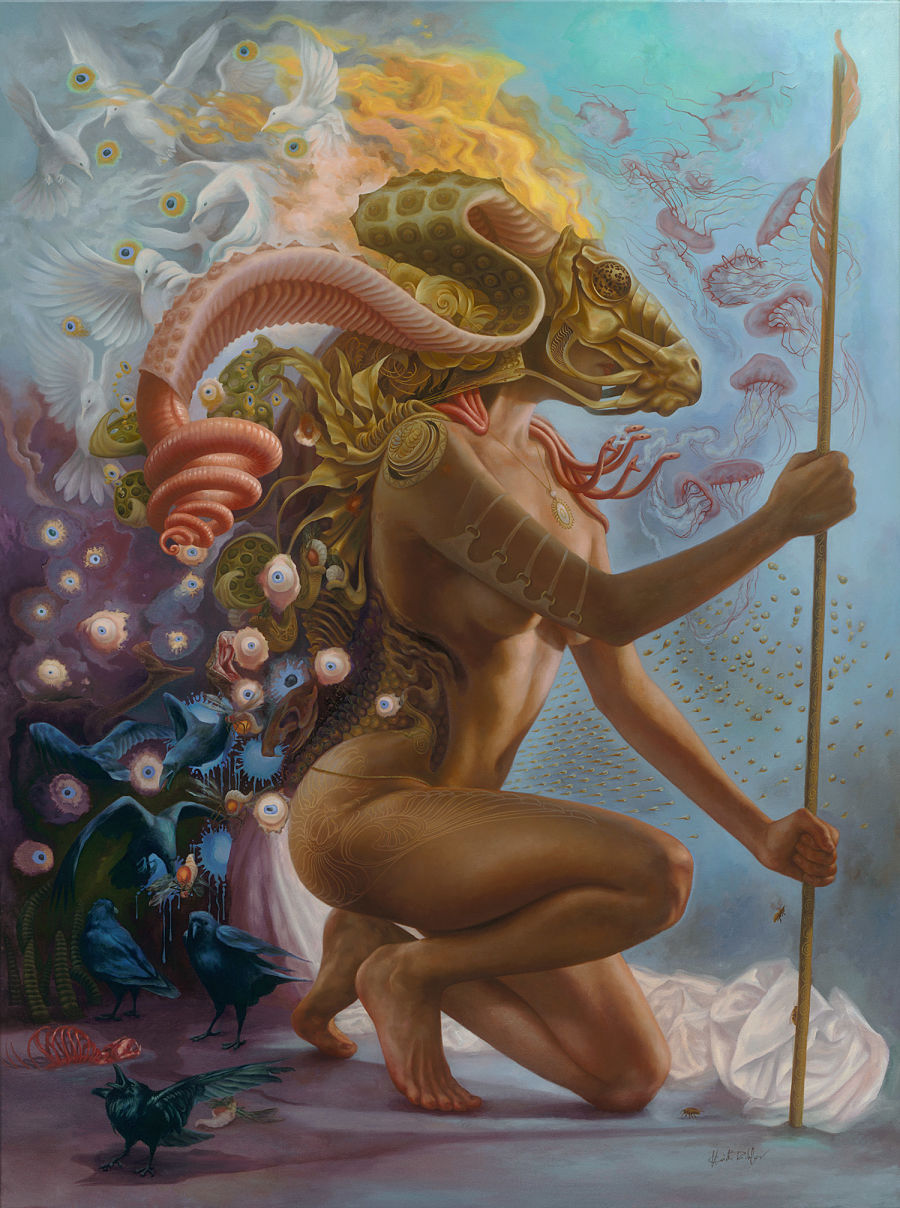
       By Dana Awatani, works via         Athr Art
    By Dana Awatani, works via Athr Art

    Psychedelics have a purpose beyond healing or good times according to the next generation of philosophers.

    Dr Chris Letheby is a laid-back (seemingly, you never know with these philosophers) Australian contemporary thinker. Say ‘epistemology’ in the accent.

    He likes jumpers and beards, and was the first to bring out a book titled The Philosophy of Psychedelics, published by Oxford University Press in 2021. 

    During a Letheby lecture I sneak into from Berlin-based MIND, Dr Letheby academic definitions of ‘knowledge’ onto psychedelic insight with skill and precision, deploying bon mots from global philosophers and key points from contemporary research along the way. 

    “Social, ethical, legal, and metaphysical issues can undergo psychedelic transformation akin to that achieved in therapy”

    Psychedelic philosophy’s nemesis is ‘the comforting delusion’; are we communing with the cosmos or just high and talking bollocks? Is psychedelic therapy, in Charles Grob’s phrase, an “existential medicine?” Or is it, as Michael Pollan wondered, ‘simply foisting a comforting delusion on the sick and dying”?’ Dr Letheby addresses in this article for MAPS.

    He’s calling for a ‘Psychedelic Enlightenment’ to follow our current ‘Psychedelic Renaissance’ period: “Social, ethical, legal, and metaphysical issues can undergo psychedelic transformation akin to that achieved in therapy,” he declares unpretentiously and convincingly.

    Philosophical debate though is not for the feint of heart, or head. Throw some ‘non-specific amplifiers’ into the mix and things get more real than real. Indeed as I write Vital week six lecturer Dr Sjöstedt-Hughes is fencing wits with Chris Letheby in the specialist press, about… admittedly I’ve not quite figured it out just yet from giving the article a scan. Although chances are it’s something to do with ‘the hard problem of consciousness’ (how life springs from matter, or otherwise). It usually is.

    Launching himself into this moshpit of contemplation is Aiden Lyon, another Australian with no beard this time but plenty of jumpers, out of Amsterdam University whose book… Psychedelic Experience is out soon, again from Oxford University Press. The formidable Lyon has a mind like a steel trap, unsurprisingly, plus the air of a frustrated Victorian man of reputation who’d prefer to be searching for King Solomon’s Mines, but the transpersonal will have to do instead. He opens a Mind lecture I attend by pointing out his ‘circular’ theory taking the ‘mind-manifesting’ definition of psychedelic experience has been approved by Imperial College’s Dr Robin Carhart-Harris. 

    “Nature has intrinsic worth. Not just spiritual worth”

    Lyon, who’s already set up in consultancy, slices his way through the ‘Are psychedelic insights to be taken seriously?’ thing to point out that they can be very useful. There’s loads more in this issue’s Medical item. Lyon and Letheby are both terribly plausible chaps. But you may be forgiven thinking it’s all a bit monochrome geometric patterns, and not enough Tarot cards. Left, as opposed to right brain.

    Step forward Sjöstedt-Hughes, a former schoolteacher whose repertoire arguably channels the psychedelic. He does have a beard, but the similarities end there.

    “There’s seemingly something in us that needs expansion”

    He’s catalogued philosophy’s psychedelic associations, and spares no superlatives when addressing the power of 5-MEO DMT compared to earthly religious experience.  Rarely (but not uniquely) among contemporary Western psychedelic renaissance types he tackles subjects like the ‘trickster’ archetype and its association with psychedelics, non-dualism and subjective morality, the existence and nature of ‘God’ – “looks like he’s out there but he doesn’t love you – nature has intrinsic worth, not just spiritual worth.”

    Sjöstedt-Hughes proposes the return of metaphysics to the political conversation and the high street: “like we’d see a therapist, we’d consult a philosophical-spiritual advisor… ‘the metaphysician will see you now’,” is just one flourish he delivers from behind his tinted aviators, “you could grab a leaflet featuring suggestions for alternative spiritual paths, like the simulation theory, or the receiver, on the way out.”

    But the psychedelic philosophers have ambitions way beyond the ivory towers of academia, or the medical industrial complex. Sjöstedt-Hughes in particular.

    “I hope psychedelics can be part of a grander idealism for civilisation. There ‘s seemingly something in us that needs expansion. Psychedelics might offer this. I do hope for it. and I do believe it’s actually going to happen.”

  • Become one with your Moomin cup…

    Become one with your Moomin cup…

      Therapy
    Therapy

    Can psychedelic philosophy explain our innate sense of the cosmic whole?

       By Wolfgang Tillmans from    Fragile, showing at Art Twenty OneEko Hotel and Centre for Contemporary Art, Yaba, Lagos, Nigeria till 10 July 2022
    By Wolfgang Tillmans from Fragile, showing at Art Twenty OneEko Hotel and Centre for Contemporary Art, Yaba, Lagos, Nigeria till 10 July 2022

    Psychedelic philosopher par eminence Dr Peter Sjöstedt-Hughes pictures a new breed of consciousness doctors to work alongside clinicians and therapists.

    “The metaphysician will see you now,” he jests about his notion of a service combining thinker, spiritual advisor and life coach.

    Spinoza, Alfred North Whitehead, Charles Darwin, and Albert Einstein all agreed nature was ‘God’,” says Dr Sjöstedt-Hughes, “and it doesn’t love you.”

    God is still all around. Like never before; ‘pansychism’ is the term for consciousness in all things. Like philosopher Jussi Jylkkä half-jests in this recent video interview with Sjöstedt-Hughes for The Philosopher, “So… I become one with my Moomin cup?”

    Before you marvel, “My ashtray is alive?” the consciousness operates at an atomic level, obvs. But, it’s still an ashtray. Keep up.

    “You should be doubting all the things you doubted before; you are uncertain about being certain”

    Psi-Phi, ‘philosophy of psychedelics’ presents an academic argument for the significance and benefit of psychedelic drugs. A sub-school of ‘psychedelic metaphysics’ explores belief structures like panpsychism. Legitimisation and education of reality-organising frameworks might aid mental health, like the personal ‘higher power’ 12-steppers are urged to take guidance from.

    “The hardest thing to see is what is in front of your eyes,” wrote Johann Goethe. And the psychedelic philosophy material is dense. My clumsy, infant sense of the subject is tempted to conclude that philosophy is to psychology what Lego Technic is to Duplo; it’s been debating the stuff YouTubers think they’ve just discovered for 500 years. Arguably, 5000.

    Psychedelic philosophy’s nemesis is the comforting delusion.

    “Is psychedelic therapy,” in Charles Grob’s phrase, an “existential medicine?”

    Or is it, as Michael Pollan wondered, “Simply foisting a comforting delusion on the sick and dying”?’

    Chris Letheby addresses the ‘Aren’t you just taking acid?’ question in this article for MAPS. Letheby also cites Danish wellbeing guru, former special forces operator Nikolai Moltke-Left and his doctrine of “unbinding self” that echoes psychedelics, and how popular he is with the chattering classes (Moltke-Left is collaborating with Lego, sync).

    And anyway, Aiden Lyon reckons “You should be doubting all the things you doubted before; you are uncertain about being certain,” so that’s that.

    It’s all quite radical in places. Psychedelics have a habit of flipping over sacred cows. This wannabe trickster never tires of reminding the psi-phi lads that most of their favourite philosophers met with sticky ends at the hands of the mob: “Often I have the impression that I am writing on paper already browning in the licks of the flames,” mulled Ernst Junger, coiner of the term psychonaut. Who actually lived till 102 years of age.

  • Who knows what lurks in the hearts of men and women?

    Who knows what lurks in the hearts of men and women?

      Space
    Space

    The shadow, obvs. And it has unfinished business… with you

      By    Rashed Al Shashai
    By Rashed Al Shashai

    A significant event like taking a step forward in human consciousness has got to involve some kind of challenge, like a hero’s journey, right?

    “We will have to bear the tensions of the opposites. There are no easy ways forward. We will have to grapple with the unknown,” said the magnificent Maria Papaspyrou, editor of The Psychedelic Divine Feminine and founder of Brighton’s Institute of Psychedelic Therapy, at July 2022’s Breaking Convention conference.

    Paradigm shifts in society though begin at home, with our own ‘shadow work’.

    The Jungian negotiation process with complex urges that we feel from sheepish to psychotic about, is crossing over fast. The subculture is throwing out stardust like London’s Kemetic shadow witches High Priestxss.

    “The greatest sense of agency and healing is often found at the centre of the storm”

    And start-up bros are said to be seeking a fresh challenge that even sounds like the psychedelic version of an iron man triathlon.

    “Serenity, salvation and strength are not always found in the upward sense to the light,” commented a richly experienced trauma specialist in my Vital study group, Kelli Ann Dumas, “they spring from inward: deep, in the ripeness of the trauma. The darkest part of the night is just before dawn. The greatest sense of agency and healing is often found at the edge of the depth, at the centre of the storm.”

    Crucially insiders say shadow work is mandatory for psychedelic therapists and guides, to clear any lingering sense of grey areas from the set and setting for example, and to engage in a regular process of checking one’s motivations: “The more clearly you understand yourself and your emotions, the more you become a lover of what is,” wrote philosopher Baruch Spinoza.

    Dr Sjöstedt-Hughes’ psychedelic philosophy, explained in his lecture to Vital students, takes shadow work a step further. It challenges our status quo that inherently considers stability and comfort to be desirable; the ‘slave morality’ of Nietzsche.

    Over to another of Sjöstedt-Hughes’ worldly philosophers, Ernst Junger:

    “I am an anarch in space, a meta-historian in time. Hence I am committed to neither the political present nor tradition; I am blank and also open and potent in any direction. Dear old Dad, in contrast, still pours his wine into the same decaying old wineskins, he still believes in a constitution when nothing and no one constitutes anything.”

    Sjöstedt-Hughes has poured over Whitehead’s personal copy of The Will to Power written by Nietzsche in 1887-8.

    “There are no easy ways forward”

    He points out Whitehead has double-underlined the line, ‘The contempt and hatred of all that perishes, changes, and varies: whence comes this valuation of stability?’

    Whitehead also finds Nietzsche pondering inter-connectedness, another psychedelic philosophy staple. He also gets his luminous marker out for, ‘It is essential that one should not mistake the part that ‘consciousness’ plays: it is our relation to the outer world; it was the outer world that developed it.’ Sjöstedt-Hughes draws further parallels between the will to power and Alfred North-Whitehead’s examination of consciousness providing our sense of purpose.

    “I am an anarch in space… a meta-historian in time”

    Repressed by the slave morality, we are mostly forbidden to sate the instincts that torture us unheeded. Honing our arete, the ancient Greek term for a sense of purpose that they aspired to instead of ‘happiness’ contemporary Western society considers irresponsible and selfish.

    It certainly does not encourage or revere our cyclical development like the ancient Egyptians. Let alone steaming around openly admitting “I am no man. I am dynamite,” like Nietzsche.

    Terrence McKenna considered ‘lived experience’ to be the ultimate form of spirituality. The path to virtu, notoriously, involves actions we find daunting yet fulfilling.

    Although hedonists will be pleased to know arete and the will to power don’t need to involve soul-shattering grail quests, or crossing the abyss, all the time… or not at least.

    Ask Ernst Junger. He might have decreed, “What doesn’t kill me makes me stronger; and what kills me makes me incredibly strong,” but he also swore by:

    “The Epicurean is the master of pleasure and knows how to moderate it, not so much from subjection to discipline as from the love of pleasure itself.”

    Always Dionysus – never the crucified.

  • More healthy, less normal

    More healthy, less normal

      Medical
    Medical

    The performance enhancing and problem solving powers of psychedelics are growing in legitimacy and acceptance

       By Sidone Roddam    via Gallery 46
    By Sidone Roddam via Gallery 46

    Psychedelic philosophy endorses mind-expanding supplement use as ethically sound plus highly beneficial to discovery and innovation.

    Scientific problem solving with psychedelics is the pet subject of Psychedelic Explorer’s Guide author Dr James Fadiman to this day.

    “It would be horrific if psychedelics just turned into anti-depressants,” says Dr Sjöstedt-Hughes, “What a waste of our psychedelic renaissance.”

    The ideology begins its case for supplemental LSD use with historical examples, like Nietzsche’s concept of moral relativity. The moustachioed firebrand challenged conservative christian ethics he concluded were toxic to society. Nietzsche believed the church promoted a ‘slave morality’ that he claimed advantaged the unadventurous and the unmotivated – crucially at the expense of the more inspired.

    “As with after-work drinks not everyone wants to take part”

    Admittedly Nietzsche could come across as a little problematic. So the argument in favour of psychedelic use for self-improvement also deploys topical markers of acceptability.

    “Carey Mullins said he ‘learned to use his visual problem solving imagination’ and that led to the applications of DNA,” is one of Psychedelic Philosophy author Dr Chris Letheby’s favourite pieces of lecture ammo. 

    Mullins’ open declaration of how much impact LSD had on his studies also makes an appearance in the summer ’22 paper in Drug Science, Policy and Law.

    “Many scientific insights were partially if not wholly dependent on criminalised activity”

    Psychedelics as potential catalysts of scientific creativity and insight by Drs David Luke and Sam Gandy presents a watertight case for creative problem solving under low doses of LSD (40ug to 100ug have been used in limited official trials over the decades) and otherwise. 

    The clarion call deploys history, philosophy, scientific thinking and direct quotes from the likes of Einstein: “The most beautiful experience we can have is the mysterious. It is the fundamental emotion that stands at the cradle of true art and true science.” The paper covers the importance of dreams and ‘visions’ in personal and scientific breakthroughs, citing declarations from Google creator Larry Page and Dmitri Mendeleev’s periodic table. It lists the inventors who’ve cited their psychedelic use itself: Apple boss Steve Jobs claimed the drugs advised him to focus on product quality over revenue generation, and contemporary physicist Carlo Rovelli claims psychedelics gave him an understanding of the nature of time which inspired his career.

    “Many of the insights outlined, including the Nobel Prize-winning discovery of PCR, were partially if not wholly dependent on criminalised activity… the potential of psychedelics as agents to support creative thinking demonstrates the restrictiveness of a ‘health-only’ classification that fails to holistically consider the breadth of risks and benefits of drug use,” it concludes.

    Real life, as ever is far ahead of academia and the medical establishment, let alone politics. Data scientists like Ahnjili ZhuParris, who’s provided frameworks for microdose self-tests and speed learning on psychedelics, are at the cusp of both the ‘Quantified Self’ movement – an army of science nerds self-testing for self-improvement – and the subculture’s citizen science element. 

    “It would be horrific if psychedelics just turned into anti-depressants”

    Ironically it’s exactly the attitude that eager start-up execs are drawn to. And modern-day corporatism is colonising the culture in its inimitable way. An article in the June ’22 issue of financial bible The Economist declared ‘Bosses want to feed psychedelics to their staff. Are they high?

    It turns out tripping in the office could be a case of two steps forward, one step back.

    ‘As with after-work drinks, not everyone wants to, or can, take part,’ The Economist reminds us more enthusiastic readers, ‘an asset manager at a big family office reports agonising over whether or not to accept an invitation from a firm in her portfolio to an (illegal) Ayahuasca retreat at a villa in California, with a shaman flown in for the occasion.’

    A portent perhaps, that even in the psychedelic renaissance we are still fretting about our workplace networking obligations. Perhaps we were naive to assume we’d glide towards a seamless new interconnectedness.

    More ancient forces, The Economist warns, are at play: ‘A mind-bending experience can lead workers to question everything—including capitalism and the nature of work.’

    Truly we must be mindful when turning on the staff. The New Health Club and Field Trip are among the companies vying to usher in this new age of glad-handling. Which to be fair sounds a lot more compelling than Friday evening in the local Irish pub.

    Apparently though, life is not all about work. And neither does our career have a monopoly on problems that require solving.

    “I loved and desperately wanted my wife. This was a surprise to everyone including ourselves”

    Within the pages of 1967’s The Problem Solving Psychedelic PG Stafford and BH Golightly went to the heart of the matter.

    “Marriage may begin with a great deal that favours success and yet there is an appalling rate at which the relationship deteriorates… the ‘advice’ given by LSD is for the most part benevolent. Instead of encouraging disparagement of a mate for shortcomings, as may result from greater intellectual clarity, the drug generally activates emotional tolerance, if not empathy, and highlights hidden or forgotten attractive qualities.”

    The writers quote two husbands who underwent LSD therapy in the 60s:

    “I am able to talk to my wife more freely and frankly than I ever used to be. I am not so afraid of saying what I really think even if I know she will not agree. Apart from the restoration of intercourse, we really get on much better than before.”

    “I loved and desperately wanted my wife. This was a surprise to everyone, including ourselves, because as I said we had been through a bad time together. But under LSD it is impossible to fake anything: she was my connection with life.”

    Certainly a more worthwhile state of affairs than after-work drinks. 

  • Rising from the Ashes of God

    Rising from the Ashes of God

    A new mythology is the psychedelic philosophers’ highest ambition

      By Kevin Quigley , works available via    Gallery 46
    By Kevin Quigley , works available via Gallery 46

    Hardcore philosophers like Junger, Reich, Nietzsche, Spinoza and Whitehead were happiest wandering around the woods.

    You’d be forgiven for thinking they were only content when their books were being burned by all three of the Stalinists, Nazis and the Christian Evangelists (Spinoza and Reich’s actually were).

    Yet “God is nature” proclaimed Spinoza (who also was not beyond emotional intelligence, advising: “The more clearly you understand yourself and your emotions, the more you become a lover of what is.”)

    “We live in a post-cartesian, post-christian world,” Dr Sjöstedt-Hughes said to introduce the panel ‘Should we return to the gods of nature?’ at Amsterdam’s 2022 Institute of Art and Ideas festival, “the ecological crisis and the hard problem of consciousness steam from the bifurcation of nature. Déscartes split mind and matter; now we have thought as an extension of thought, science as extension of knowledge. and still don’t know how we get mind from meat. Viewing nature as simply physical discounts any part it plays in that.”

    “What are the laws of nature? Physicists say they’re constantly changing”

    In his Vital lecture on philosophy during the course’s first module on approaches to psychedelics, Sjöstedt-Hughes summarised: “Whitehead had the advantage of relativity and evolution: he is a combination of Einstein, Darwin and Spinoza. He concluded that nature has an intrinsic worth, not just spiritual worth. If a virus can be determined ‘living’ why not an atom or a molecule? The future is creative, not yet formed.”

    He cites Whitehead’s ‘Process Philosophy’ as the closest to a post-quantum physics spiritual framework humanity has. With humility – “We have to acknowledge that we are nowhere near the answers, and that 5-MEO DMT and other peak experiences bring up ontologies unfathomable to the regular Western version, or any other.”

    Dr Sjöstedt-Hughes’ philosophy goes beyond even the ‘panpsychism’ touched upon by voices like Anneka Harris in Conscious, where all matter contains some spark of life. It brings both ancient and renaissance hermeticism into the era where God is dead: “It combines process philosophy with Amerindian-style metaphysics, which are complex as opposed to animistic. God doesn’t ‘love’ you – he is comparable to Aristotle’s ‘prime mover’ rather than a benevolent force as such. Eternal life is now, stepping out of time.”

    The psychoneural, where consciousness and the physical nervous system combine, exist within and are one with the natural, material world; the ‘lived experience’ that Terrence McKenna considers superior to any spiritual system: our purpose, vessel and environment in an infinitely expanding, spherical space opera.

    “De Quincy said, ‘memories are never lost only found again. But what is memory?” Bellows Dr Sjöstedt-Hughes like a young Brian Blessed, “What are the laws of nature? Physicists say they’re constantly changing. If the past doesn’t exist, should it have more status than fiction?” Before whispering conspiratorially, “the druidic yearning we see in Britain could be connected.” Dr Aiden Lyon believes psychedelics could create a new mythological wisdom to underpin society.

    “We have to acknowledge that we are nowhere near the answers”

    There are now at least three Druidic orders vying for eyeballs in 21st Century Britain. Six thousand people turned up at 4:49am on summer Solstice 2022 to watch the sun hit the Heel Stone in the centre and spread rays throughout the circle.

      Stonehenge at Summer Solstice 2022
    Stonehenge at Summer Solstice 2022

    In a British major kind-of newspaper, noted for usually disapproving of this sort of thing, a top-rated comment below its article on the gathering reads, (sic) ‘You don’t have to travel to Stonehenge and dress up to show your love of nature, the natural world and the Earth’s life force, it is all around us. Feed the wildlife, plant flowers and trees, celebrate it that way, and respect it, it’s in us all, we are part of it. We have a Female Blackbird that literally follows us around our small garden and stands at the green house door to be let in to help herself to the box of wild bird food we have in there, what a privilege for a wild animal to communicate with us and trust us to enter into the greenhouse when we are there. There’s magic in our own gardens and stones.’

  • Kool-Aid Corner #6

    Kool-Aid Corner #6

    To finish: trippy clippings, merry pranks, and psychedelic student life

    Preview image from Internice Eating the Weather by Charlotte Wendy Law

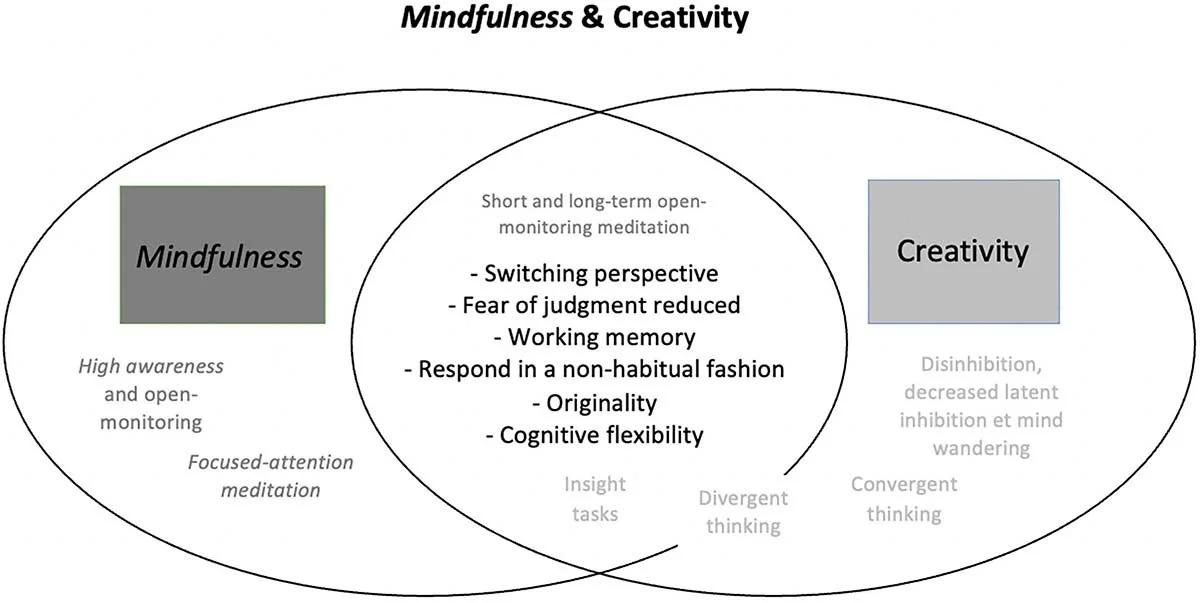
    Graph of the Week

    The relationship between:

    Mindfulness

    Creativity

      From    Mind full of ideas: A meta-analysis of the mindfulness–creativity link by Izabela Lebuda, Darya L. Zabelinab, Maciej Karwowskia (2016)
    From Mind full of ideas: A meta-analysis of the mindfulness–creativity link by Izabela Lebuda, Darya L. Zabelinab, Maciej Karwowskia (2016)

    My bookshelf weighs a ton

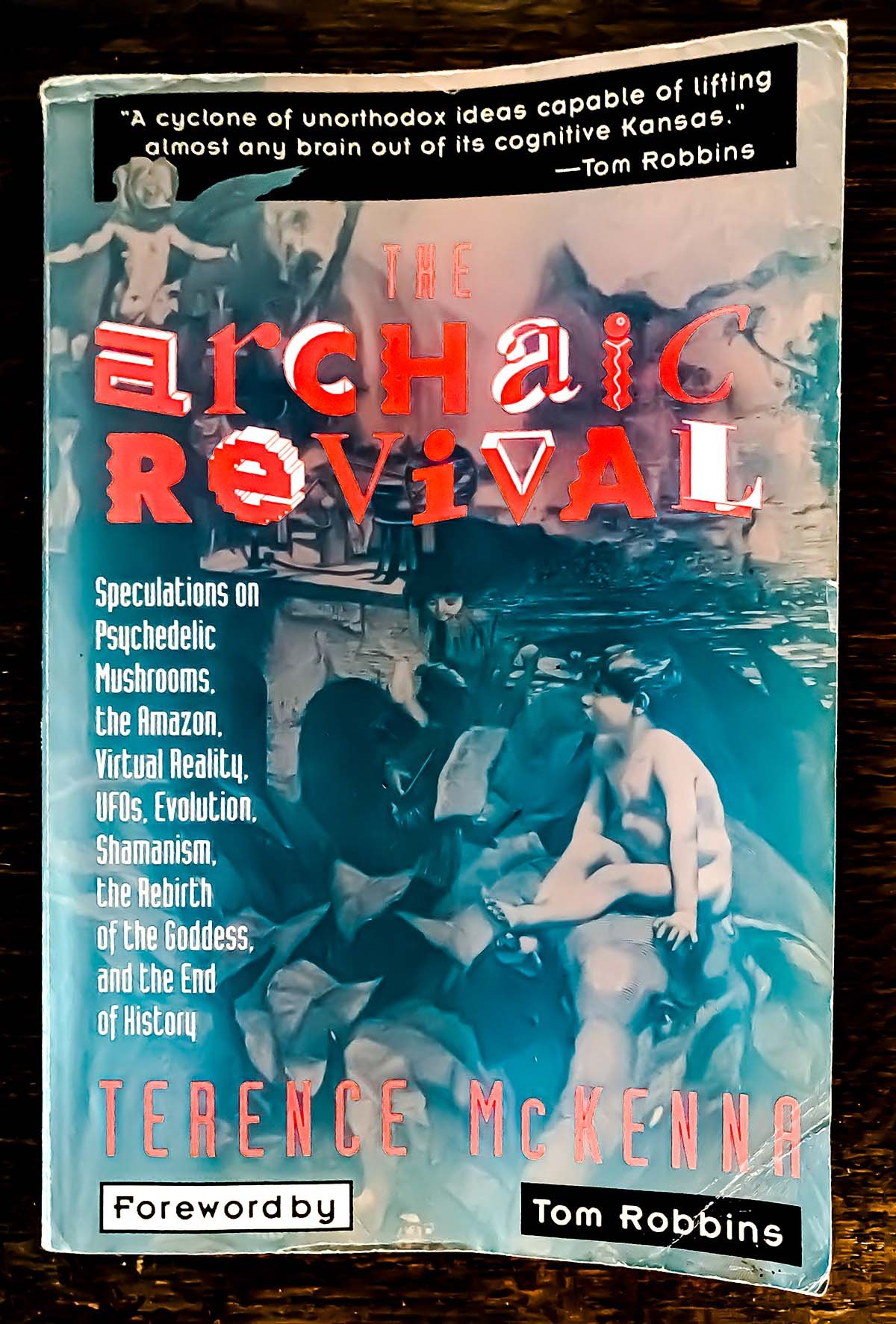
    Notable new purchases for the occult library. Strictly second hand snap-ups only. This week: The Archaic Revival by Terrence McKenna.

      From the incredible book stall at Brick Lane Market on Sundays for £8
    From the incredible book stall at Brick Lane Market on Sundays for £8

    Not to be overshadowed by any Netflix series or glossy hardback.

    Much more on this guy later on in the course, but Terrence was essentially laying down the psychedelic enlightenment in the underground press decades ago.

    It’s full of gems for all psychedelic aficionados, not just DMT bros. Terrence muses on rthe return of The Goddess, mankind’s destiny communicating as cephalopods, urges us all to try yoga and reciting mantras while microdosing, tells mystics to nob off in favour of lived experience, and much more.

    Next issue: Dr Rick ‘The Strass’ Strassman goes further than ever before… several times

  • Transpersonal psychology with Dr David Luke: Vital Student Zine #5

    Transpersonal psychology with Dr David Luke: Vital Student Zine #5

    My unofficial Vital Study Zine #5 with observations from Vital Psychedelic Training and recent happenings in the space

       Mary Jacoob   , ‘Constellation 01’ via    Gallery 46 Whitechapel
    Mary Jacoob , ‘Constellation 01’ via Gallery 46 Whitechapel

    The next stage of human consciousness is calling. Are we brave enough to answer?

    Dr David Luke is the most intrepid researcher of the psychedelic renaissance – ‘the real new psychonaut’. Straight out of London but living “on the edge… of Sussex” his inspirational investigations include DMT space exploration, the psychedelic divine feminine, biophilia (tree hugging) and psionic powers – often conducted “in the field”.

    David Luke dropped out of lecturing to study shamanism, and returned to Britain with consciousness expanded. Since he’s been at the vanguard of the psychedelic renaissance, consistently leading by example.

    Senior lecturer at all the best universities, co-founder of Breaking Convention, and director of the Ecology, Cosmos and Consciousness salon at the Institute of Ecotechnics which sounds incredible, he is a global figure in the transpersonal psychology movement. And he spoke to Vital students about it.

    In the Zine this week:

    Approach: Transpersonal psychology is back

    Therapy: Psychedelic mysteries of the feminine

    Space: Out in the field with citizen science

    Medical: DMT vs Death

    Integral: Alchemy for the People

    Kool Aid Corner: Your regular round-up of trippy clippings, merry pranks, and psychedelic student life

    Air provides an overview of psychedelic use, Fire concerns therapeutic applications, Water covers ‘space holding’ – the art of keeping it together, Earth is where you’ll find medical matters, and Ether discusses integration, the process of bringing psychedelic power into regular life. Click straight through to your pet subject above or browse the whole thing via the Vital Study Zine main page.

    See Dr Luke interviewed here plus a bunch more videos I put on this YouTube resource channel.

  • Transpersonal psychology is back and this time it’s real

    Transpersonal psychology is back and this time it’s real

      Approach
    Approach

    Science meets the super-normal in Stanislav Grof’s school of mental health study

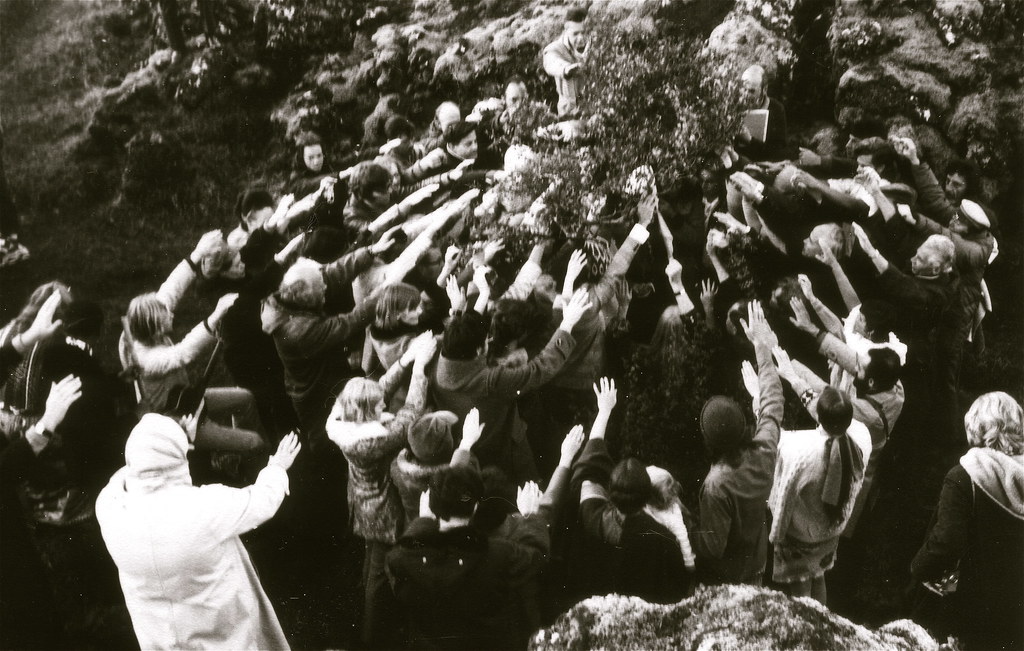
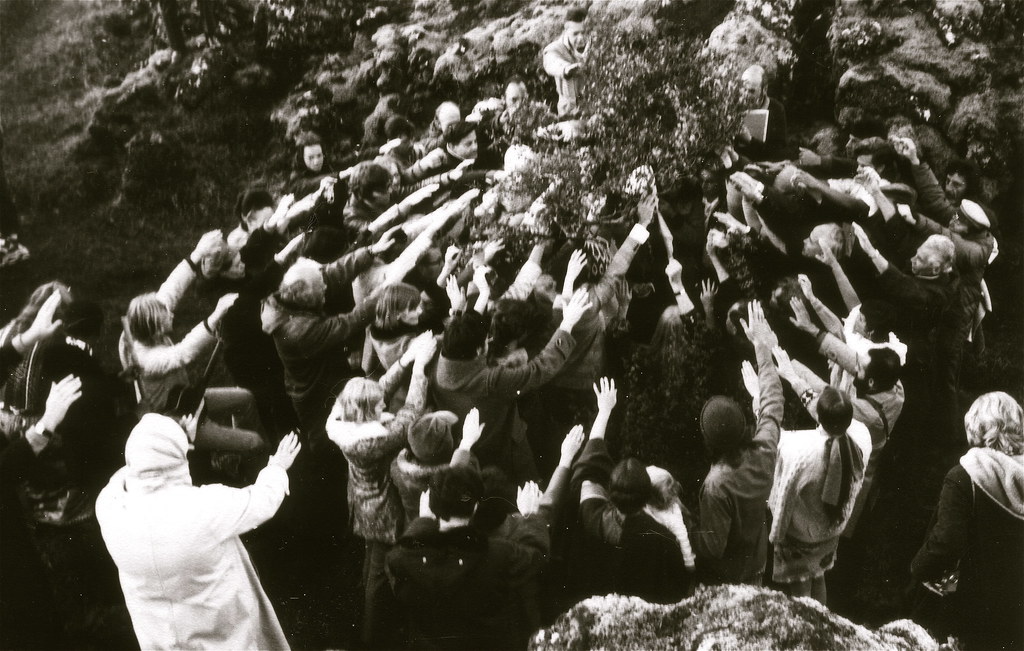
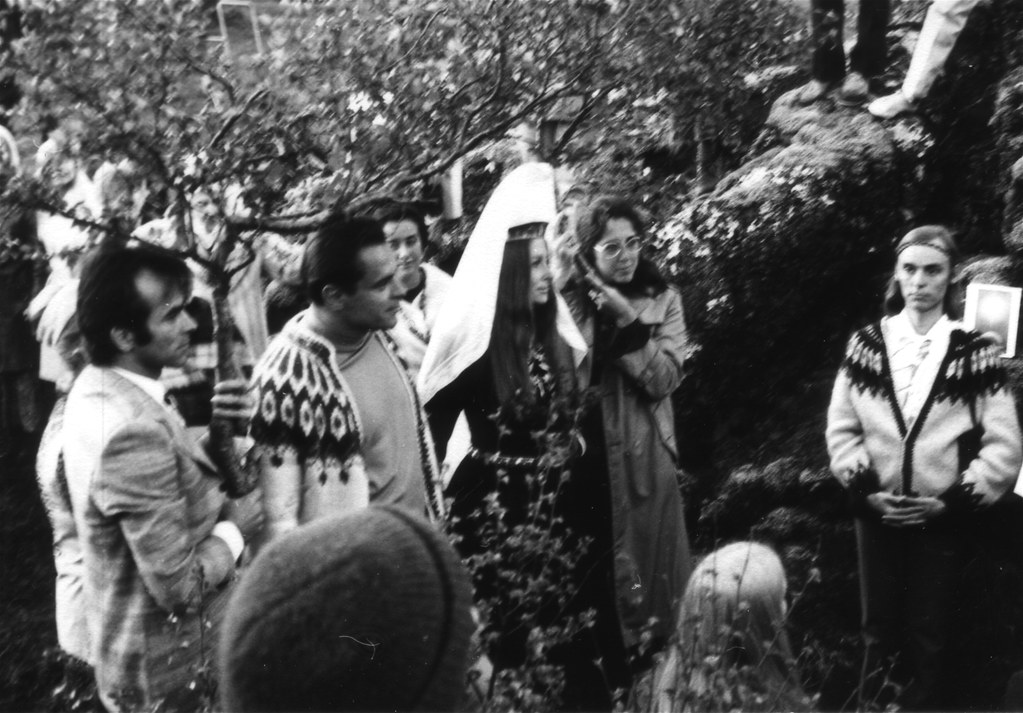
       Stanislav Grof’s 1972 wedding to    ‘Jiko’ Joan Halifax    in Iceland
    Stanislav Grof’s 1972 wedding to ‘Jiko’ Joan Halifax in Iceland

    In the 1980s transpersonal psychology staple and Way of the Psychonaut author Stanislav Grof found himself inventing holotropic breath work out of necessity after LSD faded from grace.

    Reflecting courageously on the flaws of transpersonal psychology, where science meets the super-normal, he nonetheless pointed out that the approach showed enormous potential for a range of treatment resistant diseases. And that it could be applied to other fields: like ecology, business, social work, maybe even medicine itself again someday.

    “The psychology of transformative experience” is how Dr Luke describes ‘transpersonal psychology’. Back in polite conversation thanks to Iain McGilchrist’s philosophy blockbuster The Matter with Things it’s the shrinks’ most progressive field, big in the 60s at Esalen and back with a vengeance thanks to everyone from ecologists to talk therapy refuseniks and engineers of the zero-point field, to pharma giants and governments with nationalised healthcare and their eyes on psychedelics’ potential to cure disease and reboot productivity. 

    “The only revolution that can work is the inner transformation of every human being”

    The transpersonal are “moments that evolve your current ego identity… by stepping outside normal consciousness to connection with a wider other,” explains Dr Luke. You’re in the realm of the transpersonal when you’re feeling warm and clear after meditating or making it to church: plus when acknowledging childhood trauma, or during a full revelatory, inner-visual spiritual experience… or being abducted by aliens, having a spontaneous DMT exprience, astral projecting, arguably dreaming and so on.

    The discipline is “ethnogenic, cognicentric and pragmacentric” meaning entirely inclusive and accepting of other modes of consciousness. It evolved throughout the 20th century from William James’ ‘radical empiricism’ – scientific testing for the mysterious and hitherto unknown – to include Burke’s ‘cosmic consciousness’, Jung and Maslow’s pining for the mystic, and ‘post religious’ belief systems like Ken Wilbur’s integral.

        Grof and      Halifax      exchange vows. They published The Human Encounter With Death together in 1977
    Grof and Halifax exchange vows. They published The Human Encounter With Death together in 1977

    You still have to do the graft though. “The only revolution that can work… is the inner transformation of every human being,” said Grof, and transpersonal psychology includes a faith in humanity’s ability to evolve not only physically but mentally, spiritually… and psionically. 

    “The mycelium is the message” grins Dr Luke, “other societies have sanctioned altered states, while ours refuses their existence.”

    Don’t confuse transpersonal psychology with quantum psychology.

  • Mysteries of the psychedelic divine feminine

    Mysteries of the psychedelic divine feminine

      Therapy
    Therapy

    Both genders can embrace spontaneity, intuition, change, connection and acceptance

          Heidi Taillefer   , ‘Angels of our Nature’ there’s a print going    here
    Heidi Taillefer , ‘Angels of our Nature’ there’s a print going here

    Dr Luke’s diverse body of work includes a blast of goddess energy.

    He co-edited of Psychedelic Mysteries of the Feminine: Creativity, Ecstasy, and Healing. To co-editor Maria Papaspyrou the psychedelic feminine represents self-expression, spontaneity, intuition, inclination towards change, mindfulness, connection, and acceptance. It isn’t gender-specific but archetypal: “The feminine is an elemental pattern we all carry within ourselves, whether we are men or women,” says Papaspyrou.

    Papaspyrou cites Gareth Hill, a Jungian analyst who divided the feminine into ‘static’ and ‘dynamic’ aspects. Static “serves the impersonal goals of life on Earth, species preservation and survival.” The dynamic “receives her wisdom by engaging with direct experience, and is receptive to knowledge that belongs to the deep inner worlds”.

    “The realms beyond that space belong to the feminine. There we meet what is beyond words”

    It is the dynamic in particular that we deny at our disservice and peril: “The dynamic feminine represents spaces that can be fascinating and ecstatic as well as terrifying and disorienting, that as a society we have learned to resist.” This is represented in myth by tantric goddess Kali who tramples men that gaze ecstatically up at her as a result, as she finally frees from the constraints of ego. We’ve all been there chaps.

    The feminine is psychedelic in that it encompasses concepts like cosmic union, timelessness, rebirth, and ego death. “The realms beyond that space belong to the feminine, and there we meet what is beyond words and immediate perception,” says Papaspyrou. Never mind that many sectors of the psychedelic renaissance are, or will, be served by women from social work to psychotherapy and luxury tourism.

  • Strength of street knowledge

    Strength of street knowledge

      Space
    Space

    What can the medical sector learn from the space? “Everything,” says Dr Luke

       If you like this there’s another    Grant Morrison    reference in the issue
    If you like this there’s another Grant Morrison reference in the issue

    ‘Field research’ is Dr Luke’s term for the surveys and private research projects he’s conducted on the fringes of everyday reality.

    “It’s citizen science at its finest – but tragically illegal,” expanded Dr Luke in answer to my question, ‘What can the medical sector learn from the psychedelic subculture?’

    “I’ve invented ‘psychograms’ to represent all sorts of altered states,” he offers by way of an example, “I have about four art-stroke-science virtual reality projects on the go right now ranging from inducing synaesthesic meditation to interplanetary inter-connectedness and the tarot,” he says. “It’s the inverse – you alter your perception to change your brain, rather than alter your brain to change your perception. We have things like that at the festivals, they supposedly replicate the effects psychedelics… at least on paper according to the tests. I slightly don’t believe it, but there is massive potential.”

    While keen to stress that “psychedelics are not a panacea” like all authentic experts, extensive surveys conducted by Dr Luke and his team “show that they can be good for all kinds of things actually, from autism to Parkinson’s.”

    “This is the intersection of science, and genuine transcendence of time/space to bring back information”

    In the suburban living rooms of Britain something stirs. “We go round to people’s houses, it’s much more pleasant for the subjects. We did some experiments with precognitive individuals, and put shared experiences declared by ayahuasca users under the microscope: two people, experienced users who didn’t know each other, weren’t allowed to talk beforehand, attempted to join each other in the experience, and were interviewed separately afterwards. I haven’t fully evaluated the data as independent judges are interpreting the reports and images. But just eyeballing the material, I thought it was a long shot but… it looks like we’re going to get something quite significant. Albert Hoffman saw the doctor coming with an obsidian knife and feathered headdress. He knew where the provenance; his colleagues in Basle had similar visions, but no idea of any connection to Mexico or the Inca.”

    This is the intersection of science, “and genuine transcendence of time and space to bring back information,” declares Dr Luke, “I’ve been looking into creative problem solving with scientists in DMT, bridging the gap between shamanism and science. It speaks to the very nature of reality, the meeting point between world views. And nobody’s asking these questions. They’re asking ‘What does it do in the brain?’ questions. And they’re getting ‘What it does in the brain’ kind of answers. They don’t engage with the glaring ontological questions about the nature of reality.”

    He believes the obvious experts to ask, like many actually do, are the DMT explorers of the Amazon. “Collectively as a culture they have thousands of years of expertise,” Dr Luke says, “They were the original keeps of the wisdom and the substances. They haven’t been invited to the table at these multi billion dollar conferences.”