Category: Therapy

  • What Goddess encounters really say about your lifestyle

    What Goddess encounters really say about your lifestyle

      Therapy
    Therapy

    Those visions and messages from the deep reflect real-world events, relationships and consequences

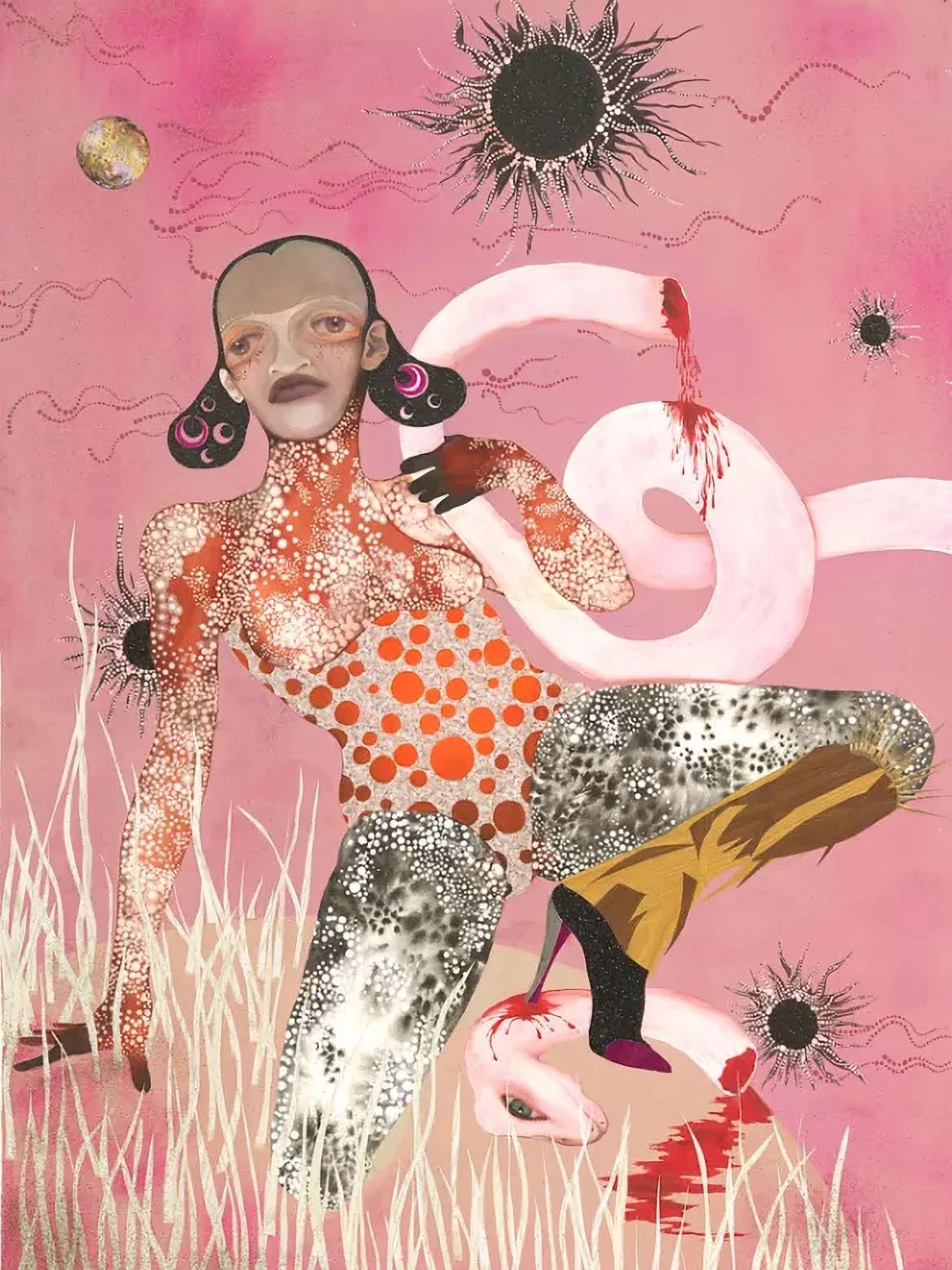
        Wangechi Mutu, ‘Yo Mama’ showing at      Intertwined, the New Museum, NYC till 4 June
    Wangechi Mutu, ‘Yo Mama’ showing at Intertwined, the New Museum, NYC till 4 June

    How do Jungian interpretations of trip reports actually play out in therapy rooms?

    Naturally we’re all smug that canonised psychologist Carl Jung – arguably the most famous one after Sigmund Freud and y’know, Jordan Peterson – dignifies the visionary aspect of psychedelic experiences.

    Jung’s relational depth psychology explains the personal relevance of dreamlike imaginary narratives in his masterworks including Man and His Symbols and Archetypes of the Unconscious.

    But waxing lyrical on your entity encounters is a far cry from a typical talk therapy session.

    “It’s not always good to start diving into the archetype that penetrated their body midway through a ceremony”

    I asked Vital lecturer Dr Ido Cohen how he uses Jung’s psychology to help patients make sense – and use – of psychedleic experiences.

    “It’s important to meet people where they are,” says the accomplished Jungian analyst and scholar of indigenous shamanistic practices, “So I think first I want to listen. I want to listen to where they are, what the actual capacity, is and what the need is.”

    Ido, also a scholar of indigenous shamanistic practices, explains: “I have patients who I worked with for years without talking about anything like I have today. You can also have someone specifically psychedelic related, who comes back from retreat really raw and are very, very open, or very, very scared or something. So it’s not a good time for them to start diving into like the archetype they saw that penetrated their body midway through a ceremony. That’s not what they need right now.”

    Jung related mental health to our inner conflict with subconscious yearnings. Poignant visions from dreams or the waking ‘active imagination’ were messages from our deepest instincts, he believed.

    But it’s the emotional content, and the compulsions they stir, that bear most relevance.

    “I’m not dismissing the image: act it, treat it as though it’s real. But my game is curiosity”

    Those encounters with the Goddess evoke more down to earth matters. They present as deeply profound because they are wrenched from the collective unconscious, where that which is undeniably bigger-than-us dwells.

    “To give you an example: I worked with this young man, lovely young man, riddled with anxiety and low like low self esteem, had a strong Saturnian father, went to ceremony, came back and he’s like, You don’t you don’t understand what happened to me!’,” says Ido. He continues, “I was like, ‘What happens?’ And he paints this scene, where he was on these mountains… and he was a wolf running with a wolf pack. He’s describing this to me in vivid detail. I asked him one question: ‘How was it? How did it feel, to run with wolves?’ He said, I’ve never felt so strong. I have never felt so capable. I’ve never felt so much in my body. And I’ve never felt so free’.”

    The subconscious demands we confront said urges. Not by actually going feral in the woods with the pack, tempting as it remains.

    “You were a wolf. Consider your wolf self”

    But instead by transitioning from the being we are, to someone a little more like the one up on the that mountainside. 

    “You were a wolf. I’m totally down with that. I’m not dismissing the image: act it, treat it as though it’s real,” says Ido Cohen, “But my game is curiosity… to have you consider your wolf self.”

  • Attention Ideology

    Attention Ideology

      Therapy
    Therapy

    Someone to listen to our trippy BS is often all we want when we first get back to Earth

         From Transcendent Country of the Mind by Sari Soninen published by      The Eriskay Collection
    From Transcendent Country of the Mind by Sari Soninen published by The Eriskay Collection

    Like all things consciousness-expansion related any integration practice will be highly subjective, and complex. 

    And somehow, simultaneously, dazzlingly, beautifully simple.

    Vital students, including storied specialists, were in agreement as to what many voyagers seek from their post-trip debriefs.

    “Just being witnessed, or seen, or heard, is so paramount,” says one wise Vital student in the question and answer session after Kyle Buller’s lecture to open Vital’s training module on psychedelic integration.

    “Just be open, without really much of any judgment, or even too much feedback”

    Indeed Dr Timothy Leary, for it is he, wrote in The Politics of Ecstasy, ‘Close your eyes and listen… and learn that it’s the oldest message of love and peace and laughter.’

    Another Vital learner, recently returned from retreat, says of his own touchdown: “It’s very important for the listener to just be open, without really much of any judgment, or even too much feedback.”

    So, do say: ‘Wow’.

    Don’t say: ‘Rr… right.’

    Conversation stopper: ‘I think you should stop hanging out with those people.’

  • Four Times You Probably Should Intervene with the Voyager’s Experience

    Four Times You Probably Should Intervene with the Voyager’s Experience

      Therapy
    Therapy

    Frontline clinical psychologist answers the big question: when the patient’s tripping balls, when does the therapist definitely need to get involved?

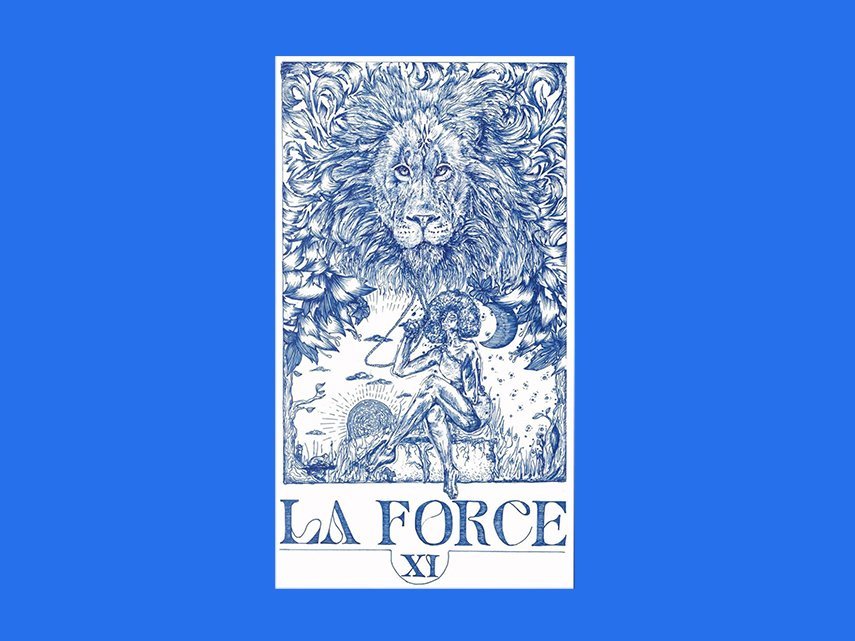
         From      The Order of the Fool      Street Tarot exhibition in Manchester
    From The Order of the Fool Street Tarot exhibition in Manchester

    ‘This level of reality should be the new standard being applied to therapy in general’ says a Vital cohort colleague in praise of Dr Lafrance’s theoretically informed approach.

    “It’s different to how we were trained!” replied the respected frontline clinical psychologist. Like you can read about in the Approach section this issue, she combines emotion-focussed therapy with a ‘theoretically informed’ style taking cues from lived experiences received in the treatment rooms.

    This not only contrasts with bureaucratic doctrine, that favours centralised top-down wisdom… which can take decades to catch up with what’s happening on the ground.

    It’s also at odds the non-directive or ‘inner directed’ approach pioneered by Dr Stanislav Grof (for it is he) which insists on more delicate interaction with the therapist during the psychedelic experience itself, to encourage a more detailed internal dialogue. 

    “I do warn them in advance that they’ll be more aware than I am”

    That’s the the way psychedelic therapy is going though, Dr Lafrance claims.

    Those of us who were only just getting the hang of being non-directive may be left a-flutter by this sudden change in er, direction. So Dr Lafrance has kindly detailed the when’s and why’s of sticking your oar in during the voyager’s experience. 

    “We still intervene in a relational, emotion-focused, and inner-directed way,” she comments in her Vital lecture profiling the emotion-focused, theoretically informed style. 

    Dr Lafrance’s reasons for chipping in? Conflict with parts of the self. Maladaptive emotions like anxiety and self-criticism. Anticipated shame and regret, along the lines of ‘I can’t believe I told you that, it’s supposed to be a secret.’ And, reluctance. 

    Each must be handled gingerly, and always in the context of the medicine experience – hence ‘inner directed’ still, prompting the patient to look inside themselves, still.

    To confirm if your planned intervention is indeed worthwhile, confer with the handy acronym WAIT – ‘why am I talking?’

    “We make a deal in the container that I’m always fine”

    For instance: when confronted by the thought of a sober therapist and spangled patient, an old tripping pal of mine asked, “What happens when they realise they’re taking care of you?”

    He was offering up a psychedelic riddle-cum-truism. But it does happen according to Dr Lafrance albeit more prosaically. 

    “I do warn them in advance that they’ll be more aware than I am,” says Dr Lafrance, “We make a deal in the container [agreed-upon boundaries of behaviour while tripping] that I’m always fine.” Because when patients suddenly start insisting that you go outside for a smoke, grab a coffee, or take some time to yourself “it can be reassuring to just say that you are” says Dr Lafrance.

    “But it can be more rewarding to go into that place,” she advises, “is there a process of caretaking that needs looking into?’ Tell them that you’re always comfortable, they don’t need to worry if you’re hungry because it’s been four hours.”

    Otherwise, go get that brew now “Or it may feel like a violation.”

    Uncharacteristic behaviour can be examined by gently pointing out that “It’s so wonderful to get to know this part of you… feels like it’s a part that really need to show itself?”

    That attentive, experience-led vibe seems to be sweet spot of ‘theoretically-informed, inner-led, emotion-focussed therapy.’

  • Neuroplastic Smiles

    Neuroplastic Smiles

      Therapy
    Therapy

    “Biology drives the effects of psychedelics but therapy shapes them,” says the latest scion in the Nichols psycho-pharmacological dynasty

         Ron English,      ‘Rabbit Grin’
    Ron English, ‘Rabbit Grin’

    The freshly ‘neuroplastic’ brain and new grey matter created during ‘neurogenesis’ both require careful curation from therapy afterwards, declares Dr Charles Nichols.

    It’s notable that a hardcore neuroscientist stresses the importance of combining his drugs with talk therapy.

    “If you don’t have therapy in the weeks after you may go back to that baseline state,” says the star chemist, “the process strengthens newly made connections and dampens old ones.”

    It’s a clear decision he’s come to after a career formally studying the effects of mind-altering chemicals, under exhaustive laboratory conditions. And taking fatherly advice from dad David, the most prolific psychedelic chemist of his generation. 

    ‘Neuroplastic’ effects last for many days after the psychedelic experience itself. Little spiky nodules sticking out from the surface of brain cells called ‘dendrites’ grow in cells all over the brain. This provides fertile ground for fresher, healthier thinking patterns to germinate and grow. 

    ‘Neurogenesis’ is different. It’s the generation of new brain cells. Those ones your school nurse said you’d never get back. Admittedly establishment science is yet to entirely admit she was be wrong. Humans are only capable of neurogenesis in the hippocampus, boffins reckon. We get it from aerobic exercise, sex, worthwhile achievement and all the other good stuff.

    No prizes whatsoever for guessing what else is said to cause neurogenesis. 

    Say neurogenesis is real and not some figment of the ever-lively psychedelic imagination. Given it definitely happens in chimps and rats it probably is. These new brain cells require injecting with healthy thought patterns by integration tactics and therapy too.

    What’s more, Dr Charles Nichols, born of David, categorically states that psilocybin is a more effective anti-depressant treatment than ketamine.

    “If you don’t have therapy in the weeks after you may go back to that baseline state”

    Although ketamine boasts impressive effects including its distinct ‘glutamate surge’ and anti-microbial properties, Charles’ rats felt psilocybin’s anti-depressant powers for much longer.

    Real psychedelics use their own neuropathic pathway to create neuroplasticity, believes Charles, not the MTOR pathway usually associated with glutamate-derived GABA and any ketamine-led ‘surge’ thereof. 

    Charles’ lab rats are still above their baseline satisfaction scores three months into the official testing period and counting. On ketamine they were back to baseline after one week. “Both will snap back but the difference is significant,” comments Charles.

  • The Hybrid Model

    The Hybrid Model

      Therapy
    Therapy

    Dr Luis Eduardo Luna’s got a plan to mix shamanic ceremony with Western medicine

        Lucile           Haut     , ‘Cyberwitches’
    Lucile Haut , ‘Cyberwitches’

    What can the Western model take – sorry, learn – from a tradition of psychedelic medicine that’s many millennia on from our own?

    After all our boffins recently confirmed that the mystic elements of a psychedelic experience can be especially restorative, although that aspect of healthcare was dismissed as ‘miracle work’ centuries ago. Despite their shared basis of a healing process using psychoactive plants, what we understand as psychedelic therapy is still very different to a traditional shamanic ceremony.

    That doesn’t stop regular guys like Green Bay Packers quarterback Aaron Rogers crediting ayahuasca for the two seasons in a row he just won the American football team’s ‘most valuable player’ award, and telling sports reporters ‘The greatest gift I can give my teammates, in my opinion, is to be able to show up and to be someone who can model unconditional love to them’ in the pages of USA Today. Those unable to travel can give virtual reality shamanic ayahuasca a try.

    Dr Luis Eduardo Luna is considered one of the foremost experts in the Amazonian shamanic custom. In his Vital lecture closing the course’s therapy-themed module, he rattled off a bluet-point list of what western therapy can do to make it as effective as its Amerindian inspiration. And as popular – given the choice it’s difficult to opt for a K-clinic treatment room on the high street over Dr Luna’s Wasiwaska retreat. Even halfway houses like luxury ayahuasca resort Rythmia or the growing number of on-trend local circles offer much more of that all-important mystical allure.

    “I think the doctors would be happy, as they participate in this separation, this depression”

    Dr Luna believes that group therapy over a period of days with eight to ten participants: “Intensive collective retreats are potentially more efficient and less expensive than individual treatments at medical institutions,” says Dr Luna demonstrating that he’s meeting the Western mindset halfway.

    Moreover, in a group session over several days a patient’s “Sense of community is created too” says Dr Luna. He also suggests the presence of a medical doctor, “Nearby in case help is needed, but not as part of the ceremonial aspect.” 

    From then on Dr Luna’s tips on how western psychedelic therapists can learn from the ancient ways diverge from our current model. His number one tip is for the therapist to trip too, like a traditional shaman does. “The therapist will go part of the route of taking the medicine him or herself, ready to give assistance if needed,” he says, “Only persons thoroughly familiar with modify the state of consciousness can understand and therefore assist persons on the going the experiences. Besides the therapist’s theoretical knowledge, he or she needs to have first hand experience in training with at least one or several sacred plants, fungi or other substances.”

    Which may put the puma amongst the guinea pigs, so to speak. “Ideally a well-trained indigenous practitioner, or [facilitators] trained within indigenous communities would be present too.” You can read more about the controversial trend of ‘co-sitting’ over in this issue’s Space Holding section.

    “Illnesses of civilisation are often related to a state of separation from the natural world”

    Dr Luna also frowns on western use of isolated chemicals instead of the whole plant or fungus they’re derived from and we’ll go further into that in this issue’s Medical section. He’s also got some superb suggestions for your retreat centre’s design based on his experiences tending the exquisite gardens at his Wasiwaska Rereat Centre in Florencia, Brazil that I detail in this week’s Integration slot.

    Here’s Dr Luna’s other suggestions specifically relevant to therapy. 

    Echoing the styles of pioneering MDMA therapists Dr Ben Sessa and The Mithoefers, Dr Luna urges level communication between therapist and patient where possible. “There are no shared myths,” he says, “despite a complex socio-economic provenance.” The codified language used instead is psychology, “which the patient has little knowledge of” and is very unlikely to lead the conversation in. Read Dr Ben Sessa’s own tips for negotiating the transcendental with alcoholics at his Awakn clinic in Bristol in Vital Student Zine issue #14.  

    Preparation for both therapists and patients should take the form of traditional dieta, “Minimising the use of salt, sugar or fat and consumption of alcohol. The food should be produced on site as much as possible so participants have direct access to the plants.” Also verboten, or kept to essential use only, is the use of personal electronic devices and social media.

    “Pharmacology does not take into account social or ecological concerns”

    Furthermore Western healers could benefit their own knowledge and reciprocate by establishing “Transnational networks involving conservation in educational ecological projects, involving whenever possible traditional societies, cross cultural recognition and integration of knowledge derived from indigenous sources.”

    Instead of chugging beer at the bar and doom scrolling during downtime on retreat, patients can enjoy face to face interaction, educational lectures and plentiful nature worship, “spending time in silence with the forest or gardens encircling the body, feeling the presence of the nonhuman persons.”

    Dr Luna expands: “Illnesses of civilisation are often related to a state of separation from the natural world. We would be learning about the habitat, disease tuition, cultivation, preparation, and cultural uses of sacred plants and fungi by traditional societies.” Our pharmacological model “Does not take into account social or ecological concerns,” he adds, instead putting emphasis on legal, economic, bureaucratic and moral factors, presented for the benefit of the patient when they are only really in place to protect and feed the managerial machine.

    Shamanic healing views discomfort very differently, considering it part of a restitution cycle. Affliction is something we consider anathema to medical treatment, and life outside hospital too. But it is the body exhuming disease that causes the unpleasant symptoms of illness, not the malaise itself. The close monitoring western psychedelic therapy adheres to may consider ‘disturbing’ outbursts – somatic, verbal, or ‘humorous’ in either the amusing or purgatorial sense – to be unacceptable in a treatment situation. Clinical staff and patients without the knowledge of their importance may not feel able to embrace the process, and may even consider encouragement of it to be inappropriate and even abusive. 

    A combined model of Western and Amerindian spiritual healing seems like a dream for now. Albeit a very worthwhile one that’s being mirrored to an extent in ‘underground’ ceremonies. Dr Luna though is optimistic for his vision being taken on board by the medical establishment: “I think the doctors would be more happy, as they participate in this separation, this depression.”

  • Behind the mask

    Behind the mask

      Therapy
    Therapy

    MDMA provides lasting respite for the traumatised

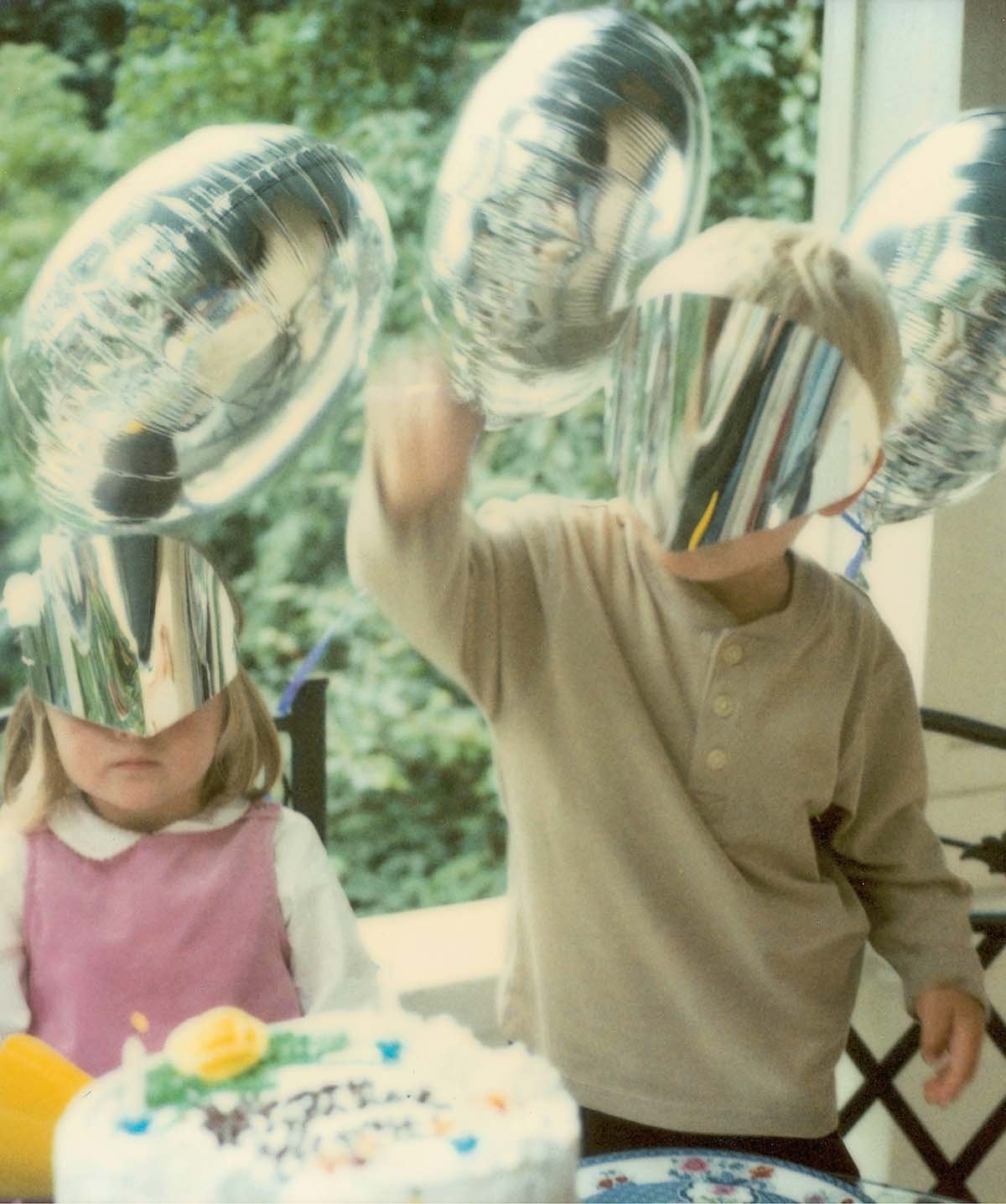
       Stefanie Schneider,      Boy with Silver Mask (Stay) Photograph
    Stefanie Schneider, Boy with Silver Mask (Stay) Photograph

    MDMA’s ideal for therapy because it can “rebrand your sense of self.”

    Shame and trauma dance a ghostly tango. An ostracised alcoholic is merely the grown-up version of the abused child we clutch our perals over. Or so says child psychiatrist and leading psychedelic researcher Dr Ben Sessa, presenting to Vital students.

    “Abused children generate tremendous sympathy,” says Sessa alluding to many high-profile court cases in the UK during lockdown and beyond, “but once the same abused child turns to addiction, they’re written off as a filthy smackhead, or an alcoholic.” Reported child abuse cases rose a staggering 1493% at one point during the C-19 lockdowns.

    Dr Sessa has worked as a child psychiatrist since 1997. But not just with under-16s. He’s taken his knowledge of childhood trauma and applied it across the all-too-adult issues it causes later.

    “Existing drugs are not treating the base disorder – trauma”

    Like alcohol use disorder (AUD) for example. 

    “I naturally take a very developmental approach to mental disorder,” he says, “I think that every adult psychiatrist should spend some time as a child and adolescent psychiatrist, because we really do grow up to become our parents. And those things that we learned in those early years – ‘Even my parents can’t love me, I’m useless, I’m a failure, I can’t achieve’ – become a blueprint for the rest of our lives.”

    Childhood trauma operates on a scale ranging from forced labour and sustained sexual abuse, to simply growing up in a rigid suburban household where neurotic parents act out their frustrations with a shaming communication style featuring ‘too many shoulds’. 

    “I deliberately lump together childhood trauma, post traumatic stress disorder, complex post traumatic stress disorder, and addictions,” explains Sessa, “it’s very difficult to treat these, and there’s no single approach.”

    The trajectory from trauma to addiction draws on John Bowlby’s attachment theory and research from the past decade or more connecting PTSD to substance abuse. Attachment theory suggests that maladaptive adult behaviour is more likely to be caused by issues between a baby and its mother and other environmental factors including poverty. This contradicts established psychoanalytic narrative, which says it’s all about… the oedipus complex, and other aspects of thanatos, the Freudian ‘drive’ to act according to one’s most selfish, basest urges.

    Despite being head of The Tavistock Clinic’s child psychology department from the mid-1940s, Bowlby’s ideas were still being rubbished by the establishment in the 1990s.

    “If you’ve had an insecure attachment to your parents, you develop these neuro-protective narratives: ‘I’m bad, I can’t achieve, I’m unlovable, the world is dangerous’,” explains sessa, “By the time you’ve been thinking like this for ten, twenty, thirty years you truly believe it. This is why mental disorders become chronic, lifelong unremitting problems. Faced with it, the safest and simplest way of dealing with it is to numb yourself, block out the world with sedating dangerous substances like heroin. And far more dangerous ones… like alcohol.”

    Like in the USA, there’s currently no pharmacological prescription for PTSD available in the UK. Nor alcohol use disorder; in the United States only 4% of AUD sufferers are given a medication.

    “We have what we call ‘polypharmacy’,” explains Sessa, “If the patient’s depressed, we’ll give them an antidepressant. If they can’t sleep, we’ll give them a hypnotic. If they’re constantly anxious, we’ll give them an anxiolytic. If their mood goes up and down, we’ll give them a mood stabiliser. If they are hyper-vigilant, one of the core features of PTSD, if this spills over into paranoia will give them an anti-psychotic. And of course, you have to keep taking these drugs day-in, day-out as maintenance medications for the rest of your life. None of these different classes of drugs are curing the patient. They’re not treating the base disorder – which is trauma.”

    Here in the UK psychiatrists (doctors prescribing drugs), clinical psychologists (NHS trained psychoanalysts who have lots to do) and psychotherapists (talk therapists of wildly varying quality, without medical training) have long existed seemingly independently of each other.

    Personal and financial resources are required to tackle one’s mental health with impact.

    “Pharmaceutical MDMA is 99.8% pure and very expensive”

    I’d recommend medication, psychoanalysis and psychotherapy. But as a customer myself I know it doesn’t come cheap. The experience can be arbitrary too.

    “After 30 years in psychiatry, my opinion is that psychotherapy boils down to a relationship between the patient and the therapist, and an ability for the patient to talk about their pain,” claims Sessa with authority, “that’s fine for around 50% of people with trauma based disorders.” 

    But not nearly for all.

    “A significant half, they cannot go there to talk about their pain… they will do anything but talk about that night when they were ten years old, and their grandfather came into their bedroom,” says Dr Sessa.

    Many therapists are understandably not fully prepared to deal with angry, impenetrable PTSD cases with substance use disorders and co-morbidities like ADHD.

    “Trauma victims drop out of therapy. We have high rates of self harm and suicide, and very high rates of addictions. There’s a 50% treatment resistance in PTSD. After detox, 70 to 90% of addicts are back on the substance again.”

    Combining psychiatry and psychotherapy sounds like common sense. But it’s practically unheard of. “The therapy alongside the MDMA makes the difference,” says Sessa pointing out that his clinic Awakn doesn’t offer its current ketamine programme without accompanying talk sessions.

    Awakn conducted its BIMA – Bristol Imperial MDMA for Alcoholism – project under research trial conditions, so while the process mirrored a regular treatment programme with genuine sufferers they didn’t pay and regulations were fiercely adhered to. Pharmaceutical MDMA was used, “it’s 99.8% pure and very expensive,” says Sessa. 

    MDMA’s cocktail of positive therapeutic effects include a melodic duet between the amygdala and frontal cortex, where the amygdala ‘fear response’ shrinks while activity in the advanced brain grows, providing an ‘optimal window of arousal’. MDMA’s empathy-increasing properties, generated by production of the hormone oxytocin, strengthen the bond between therapist and patent.

    “Elements of transpersonal psychotherapy were used during the drug sessions”

    The ‘peak experience’ though remains key for softening the calloused neural pathways that dictate repeated cycles of dysfunctional behaviour, like addiction in particular. 

    “You can’t just tell someone ‘stop thinking like that’. Chronic unremitting mental disorder is all about ‘stuckness’. It becomes your version of yourself.” Decades on from the original trauma, “Something otherwise relatively benign happens in the queue at the post office and you have a panic attack,” illustrates Sessa. 

    BIMA’s eight-week course Sessa describes with characteristic honesty as, “‘MDMA assisted psychotherapy for the treatment of alcohol use disorder’, which is perfectly accurate. It’s never been done before; we were making it up as we went along.”

    For MAPS-trained Sessa and his prodigal collaborator Dr Celia Morgan (named by Business Insider as one of the ‘Women Shaping the Future of Psychedelics’) this meant drawing on their wealth of experience carving out the Psychedelic Renaissance over the past 20 years, rather than riffing.

    “Of course it was more nuanced than that. We had elements of transpersonal psychotherapy we used during the drug sessions; we used a lot taken from the maps manual for PTSD.” 

    All the subjects were daily heavy drinkers who had been through detox. Talk therapy in the ‘non drug’ sessions, a total of 15 around three MDMA ‘trips’ drew from their experience at the forefront of addiction treatment: “We used elements of Acceptance and Commitment Therapy, Motivational Enhancement Therapy, and CBT [Cognitive Behavioural Therapy], which were typical for addiction studies. We are of course writing the manual for this, and will be using it as we move into Phase 2B.”

  • Consciousness expansion for the masses

    Consciousness expansion for the masses

      Therapy
    Therapy

    Do the public care about therapy with their infusion? They do when trips get intense

      From ‘K Hole’ by    Ted Vasin
    From ‘K Hole’ by Ted Vasin

    Veronika Gold has a front row seat at the new psychedelic healthcare reality.

    The family psychologist worked on ketamine treatments at Cleveland’s New Pathways before heading to SF, training with MAPS and co-founding Polaris Insights.

    Unsurprisingly, when psychedelics hit the general public it can get quite messy. Never mind your neighbours falling down the K-hole – can you explain that it’s only ego death and it’ll be alright soon? (Encounters with Anne Shulgin’s (RiP) ‘death door’ may be more complex).

    “Even if you don’t agree with areas of psychedelic therapy, like the re-living the birth process and perinatal matrices, they can come up in patients. We’ve had girls go through that process,” says Veronica, who’s KAP program has been honed by what she sees in her treatment rooms each working day.

    Accompanying psychotherapy for ketamine treatment is not covered by US insurance policies, as things stand. Over here in the UK its benefits aren’t exactly stressed by, for example, London’s Safe Minds. Besides haven’t we all gone round in circles with our psychotherapists enough by now?

    “Patients might struggle with things coming up that conflict with their established beliefs”

    Compass Pathways exec, psychiatrist and ketamine veteran Dr Steve Levine, who’s treated over 6,000 people with 60,000 infusions, urges caution over ketamine’s efficiency without therapy, and shakes his head over standards on the off-label scene. One Vital student who tried out their local K-clinic said he was very much left to his own devices. “It didn’t necessarily engage in what I would consider best practices, preparation and integration, stuff like that,” he tells Veronika in her Vital lecture Q&A, “During the higher doses, I would get lost. I wouldn’t know where it was, what was going on, or I just didn’t have any sort of focal point, even with the music.”

    A study group fellow on a series of ketamine treatments tells me anecdotally, “You get what you pay for.” Veronika is of course appalled at rookies being left alone in drab treatment rooms. Attention is important for first-timers especially, she says. 

    Most of all Veronica’s own Ketamine Assisted Therapy (KAP) program stresses flexibility. “The medicine may be too much for psychedelic therapy where they process internally, so you lower the dose and try a psycolitic approach with talk therapy while they are under a lighter influence. Or the patient could pull back from a shamanic experience where they confront the trauma, to discuss insights on a transpersonal level. They might struggle with that as things are coming up that conflict with their established beliefs.”

    It seems clinic staff need to stay light on their feet.

    “It was exciting to see that for some people, home treatment worked better”

    And, prepared.

    “We have a long intake questionnaire, we as well ask about trans-generation trauma, we ask about their birth process, we ask about you know relationships in their life, we’re asking about religious and spiritual history, discuss how they may want to be held,” says Veronika. Screening patients is key to unproductively disturbing scenes. “We have though, had referrals asking for the medicinal treatment alone who’ve had a difficult time and needed attention,” she warns. 

    “We see people moving a lot, kicking, pushing, shaking off trauma physically,” says Veronika, “patients subconsciously feel more able to do this when they‘re not connected to the IV, so switching administrations can be useful too.”

    If the unwashed masses crashing down main street on K wasn’t concerning enough, moral guardians gasped when the pandemic struck and ketamine therapy was offered… via Zoom.

    “We weren’t sure how it’s how it’s going to work,” says Veronika, “it was really exciting to see that for some people it worked better. They didn’t have to end the session at the three hour mark, get everything together to leave the clinic, have somebody pick them up or take a ride home. They were able to stay in their space.” Sounds groovy.

    Vital student and first responder Kelli Ann Dumas, who talks about her own ketamine treatment experience elsewhere in this issue of the unofficial Vital Student Zine took her later lozenges accompanied only by her two terriers, snug in her beloved RV surrounded by Louisiana woodland. She thinks it wouldn’t have been as effective without applying her own self-healing skills, which range from to participation in ayahuasca ceremonies to frontline trauma counselling work and a transpersonal psychology qualification. 

    “Pulling into the observing ego was my benefit,” says Kelli, “I’ve learned how to access an observing space, but that’s through years of yoga, meditation and eastern studies. Plus from my career I have advanced skills in narrative therapy. I don’t think someone without access to those would have as effective an experience.”

  • Homestasis is where the heart is

    Homestasis is where the heart is

      Therapy
    Therapy

    Seeing your shrink will never be the same after MDMA-AT

      By    Jeppe Hein    on display at Albion Fields till 22 Sept 2020
    By Jeppe Hein on display at Albion Fields till 22 Sept 2020

    MDMA-AT consists of three ‘blindfold’ experiences each a month apart.

    These are punctuated by fifteen therapy sessions dedicated to assessment, preparation and integration. Each stage – indeed, each appointment – includes a detailed, mindful strategy.

    The ‘inner healer’ concept is described as a the mind mending itself in the same way the body might gradually heal a graze or cut. The method and therapy is described as the dressing that might be put on a wound, providing the correct environment for the miracle of human evolution to do its stuff.

    Homeostatic instinct is the term used by men and women of science for the inner healer. Freud (who isn’t dead, it’s just a headline. Well he is physically of course) said instinct is a ‘demand made on the mind by the body’. Back in the renaissance Spinoza wrote that ‘Joy is associated with a transition of the organism to greater perfection’ as noted by top scholar Antonio Damasio.

    Could denial of our human instincts – personal drive, logos, awen, true will, whatever you want to call it – land us in a chronic long-term disease ward? Not serving animal instincts certainly does.

    “It’s only when the process begins that they understand”

    During the MDMA time itself, patients are encouraged to spend time both talking to the therapists and by themselves processing beneath the blindfold, “although we are focussing on the inner experience” says Michael, and discussions during the experiences are intended to facilitate “a self directed experience. They don’t even have to wear the blindfold if they don’t want to, but often they end up doing so.”

    Patients are shepherded towards their own “personal alchemy” to quote Michael, a bespoke therapy style unique to them. This can be cultivated by honing one’s ‘self energy’, a calm, curious and compassionate state that provides an emotional container for patients to open up to themselves. 

    “Usually therapists have goals or ideas of where they should go, but the patient directs that,” notes Annie, “which can be difficult for some people – they want to be told how they can cure their PTSD! It’s only when the process begins that they understand.”

    The MAPS dyad and MDMA-AT designers quote psychology colossus, emeritus professor at Stanford and When Nietzsche Wept author Irvin David Yalom, who wrote, “The therapist must strive to create a new therapy for each patient, or strive to encourage the patient to create a new one for themselves.” 

    Surprisingly perhaps, patients’ individual inner work often has a similarity to popular methods. One that come up in particular is Internal Family Systems (IFS), where patients discuss talking to the ‘parts’ of themselves that play different roles in their ruminations. 

    “The therapist must strive to create a new therapy for each patient”

    “We see again the value of allowing space and time for something unexpected, terrifying or beautiful, to come through from the inner healing intelligence”

    A patient who allowed themselves to be filmed for educational purposes discussed acknowledging, listening to, and comforting his aggressive/defensive self – Jungian shadow work, essentially. I asked Dr Michael Mithoefer in the after-lecture Q&A if he had suggested the method: “if I even had, I wouldn’t have described it as ‘shadow work, which is part of the work of Sigmund Freud’s protege Carl Jung’. I would’ve put it in layman’s terms.” 

    ‘Imaginal exposure’ – fictional examinations of how thoughts and feelings may play out in reality – and ‘active imagination’ – using fantastical metaphors to better comprehend stark reality in classic ‘psychedelic insight’ style – are two methods patients turn to naturally. Call it a ‘Jungian archetype’ or a ‘spirit animal’, it’s imaginative right brain activity processing complex thoughts to achieve balance. “We see again the value of allowing space and time for something unexpected, terrifying or beautiful, to come through from the inner healing intelligence,” says Michael. 

    “We’re clear that the process isn’t designed to suppress their symptoms… but get to the root”

    Transference issues can be used to highlight areas of behaviour to work on. Freudian psychodynamics, the examination of unconscious motivations, is still relevant despite me declaring ‘Freud is dead’ last week.

    Other methods patients organically, roughly, incline towards range from the practical such as somatic experiencing (feeling trauma in the body) and corrective attachment (establishing a healthy behaviour model) to the totally way-out transpersonal. 

    “We’re keen to normalise transpersonal experiences, letting the patent know we won’t think they’re weird. Transpersonal experiences aren’t essential. Patients that don’t have them tend to do very well also.”

    What is impressed upon patients is that they will get the most benefit from leaning in to their inner turmoil, not suppressing uncomfortable feelings but letting them flow forth instead. Moreover, this is not entirely linear, themes can wax and wane in importance, and it might be unpleasant and uncomfortable in places: “They might get worse before they get better. We are clear that the process is not designed to suppress their symptoms, but get to the root.”

    The celebrated MAPS dyad call processing under the blindfold ‘going inside’.

    “They never have to, and we are aware when they are avoiding it and help with that. But we will say ‘maybe now is a good time to go inside’ when we think it’s a good point in conversation for them to process. If they come up with a connection themselves it’s more powerful – for example, ‘I notice every time I start talking about ‘x’ I ask to go to the bathroom.’

    We explore that first before prompting them to go inside: ‘Would you like to experiment with that for a little bit?’ We make it clear they don’t have to hang out with something they want to avoid. It’a matter of is it needed at all, timing, and offering the option so it doesn’t sound like we’re pressuring them.”

    The hardest part, say the pair, who’ve worked with MAPS for two decades, is not barging into the process. “IFS creator Dick Schwartz [who’ll be talking to Vital students later this year] uses the acronym ‘WAIT’,” says Michael, “why – am – I – talking?” 

    The therapist is not the ‘healer’ – that’s inside the patient. Defence mechanisms mean it can be a long struggle to help patients come to the conclusions that would benefit them: for instance, decorated commandos who refusing to believe that their PTSD could have anything to do with all the combat missions, or rape victims desperate to bury their experience. “One patient commented, ‘I now have a battle plan when before I was thrashing about in the undergrowth’,” says Michael.

  • Freud is dead

    Freud is dead

      Therapy
    Therapy

    ‘ACE’ is a new therapeutic approach devised by Drs Ros and Richards, with inspo from Stan Grof

       ‘Icosahedron’ by Anthony James from      Unit London
    ‘Icosahedron’ by Anthony James from Unit London

    Freud is Dead. And we have killed him.

    My loose understanding of the gossip in the ivory towers of psychology is that Freudian psychoanalysis maintains an iron grip on legitimacy. 

    This seems to have crumbled almost overnight like empires do. Psychoanalysis’ spiritual home The Tavistock Clinic has been rocked by scandal. And Imperial College didn’t use psychoanalysis as such in PsiloDep 2. Because it’s only been an initial part of psychedelic therapy as documented by Stanislav Grof. 

    Indeed Grof’s former colleague, TV’s Dr Bill Richards who’s still kicking it himself at John Hopkins (and on Netflix) advised on Acceptance, Connection and Embodiment (ACE) therapy, the model applied by Imperial College in its landmark trials testing psilocybin against a market SSRI anti-depressant.

    “The trials followed a standard psychedelic psychedelic therapy format: preparation, the high dose, and then integration alongside an Acceptance and Commitment Therapy [ACT] adapted model,” relays Ashleigh. 

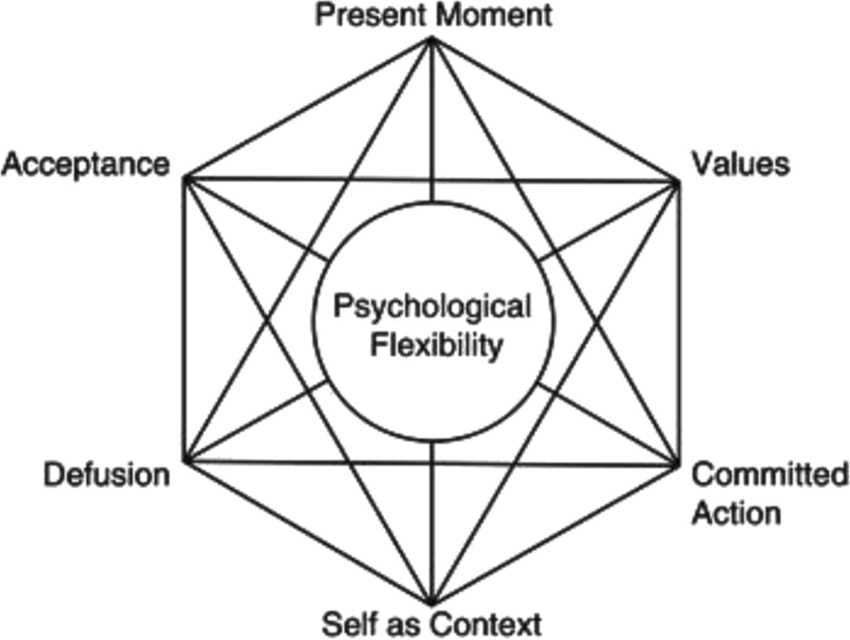
    ACT is a kind-of proactive mindfulness to encourage ‘psychological flexibility’ an adaptive mindset resilient to stressful events. The psychological flexibility model or PFM is referred to in the title of Dr Ros’ stealth bomber of a paper, The use of the psychological flexibility model to support psychedelic assisted therapy which points out the approach is in use in trials at NYU and Yale, too.

    And guess what? Everyone prefers it to being told stuff in the past they were doing their best to forget has ruined both their present and future, so it’s going to cost them £200 a week. Plus, ACT’s explanatory infographic is a freaking icosahedron, the sacred geometric form that’s like a 20-sided Dungeons & Dragons dice.

       Acceptance and commitment therapy’s ‘hexaflex’ graph
    Acceptance and commitment therapy’s ‘hexaflex’ graph

    ACT is empirically proven in all of these tests we’re beginning to think will be endless, and approved by EG the NHS.

    “It’s a very complex experience that people are going through. So we’re using lots of different influences”

    But because ACT’s not Freudian analysis, it gets crap from the old guard. Seems like nobody cares what they think any more, though, because their way hasn’t worked, except for them. And they gave kids gender reassignment.

    That’s not all. “As clinicians, we were drawing on a lot of different psychological theories to support people because it’s a very complex experience that people are going through. So we’re using lots of different influences,” says Ashleigh.

    ACE is Dr Rosalind ‘Ros’ Watts’ remix of ACT. It even has P-ACE (for preparation) and I-ACE (for integration). It includes aspects of polyvagal theory, lived experience and non-dual thinking to name but two.

    And there’s even deferral to the inner healer or ‘homeostatic instinct’ to give it its new scientific name in ACE. Metaphors employed for the healing process include ‘diving for pearls’ illustrated by specially prepared visualisers. Plus, let’s not forget, a new ambient John Hopkins’ LP bespoke-made for the trials.

    “We’re asking people to open up to emotional pain at a pace they may never have experienced”

    Stan Grof says psychoanalysis was useful for the earliest stages of treating in-patients, but soon gave way to even more fundamental realms of the psyche – and body – that required knowledge not only of cutting-edge thinkers.

    “I wonder how possible it is to grasp”

    He names William Reich for perinatal matrix III when the body spasms start (not seen many of those on the course yet) and Jung in his Red Book days, but the ‘transpersonal’ (IE weird), plus theology, literature and philosophy too.

    “We invite them to tap into a sense that there may be wisdom and guidance to be learned from emotional pain, and difficult experiences in life,” says Ashleigh. There’s practical considerations that don’t come up in that room your therapist has in Finsbury Park with the knitted throws and knackered dreamcatcher on the ceiling.

    “We’re asking people to open up to emotional pain, to an extent, and at a pace they may never have experienced before,” says Ashleigh, “I wonder how possible it is to grasp. We wrangled over what we tell people beforehand, so they can make an ethical and informed decision about taking part in a treatment like this.”

    ‘Must we ourselves become gods simply to appear worthy of it?’ opined Nietzsche upon his most famous line, ‘God is dead.’ The firebrand philosopher meant a sense of shared, guiding ideology rather than the monotheistic biblical concept of God.

    He was mostly right, because us stupid normies did come up with a new God – science. The bits of that which considered our relationships to each other, so the only ones that counted, originated from Sigmund Freud, and Richard Dawkins via Charles Darwin.

    The new anti-religion preached a mirror image of historical spirituality: humans were essentially chimpanzees, except cleverer, so even more unpleasant to each other.

    Arts, achievement, compassion, shared laughter… all just tactics in the game to get ahead. Beneath it all we were just throwing our turds at each other, and pretending not to enjoy getting screwed by the alpha male.

    Who hasn’t been seduced by this perverse science at some point? Especially on cocaine, like Sigmund Freud was half the time. 

    Eventually though it gets… depressing.

  • Who’s therapy is it anyway?

    Who’s therapy is it anyway?

      Therapy
    Therapy

    Probe your own intentions, for the floor of the abyss is littered with wounded healers

       From Phantom VII by      Neil Krug
    From Phantom VII by Neil Krug

    The will to power exists even in the most open hearts: “Every ethical misstep has a healing impulse,” says therapist ethics expert Kylea Taylor.

    73.9% of therapeutic professionals entered the field due to their personal history. The ‘wounded healer concept was flagged by Carl Jung, who wrote “A good half of every treatment that probes at all deeply consists in the doctor’s examining himself… it is his own hurt that gives a measure of his power to heal.”

    A psychedelic guide must wrangle with their reasons for being in the space. Achievement, hoping the voyager enjoys a significant experience, is a forgivable impulse; influence too if we’re being as honest like both the medicine, and the guide’s role, demand.

    “Mistakes are an opportunity for improvement and change”

    But the guide isn’t drilling the patient like a sports coach. Complementing the voyager’s experience is akin to dancing with them, says Taylor in the deft analogy she uses in her book The Ethics of Caring.

    “We do best in the dance when we are not ahead of ourselves,” she explains of letting the process and the client lead this technicolour two-step, “we are able to know what we need to know in the moment.” One must be instinctively aware of one’s dance partner, the music and the dance floor. “A foot in the client’s world and the other in our role of providing safety,” illustrates Taylor, “The container is the ballroom; others are dancing there too… it’s set and setting, preparation, relationship, and relational dynamics – and the psychedelic space itself.”

    The effortless presence of mind honed in meditation is considered the number one skill required for psychedelic therapists, claims Taylor’s presentation, and she is consulting for two different written codes of ethics currently in development. Taylor calls this ‘bi-modal’ consciousness. To me it seems quite demanding; out of reach of many perhaps. “Unawareness leads to missteps and sore toes,” says Taylor, “but mistakes are an opportunity for improvement and change.”