Category: Approach

  • More mushroom tea, vicar?

    More mushroom tea, vicar?

      Approach
    Approach

    Savvy brits in the space are sussed to self-care. But the vulnerable are left behind

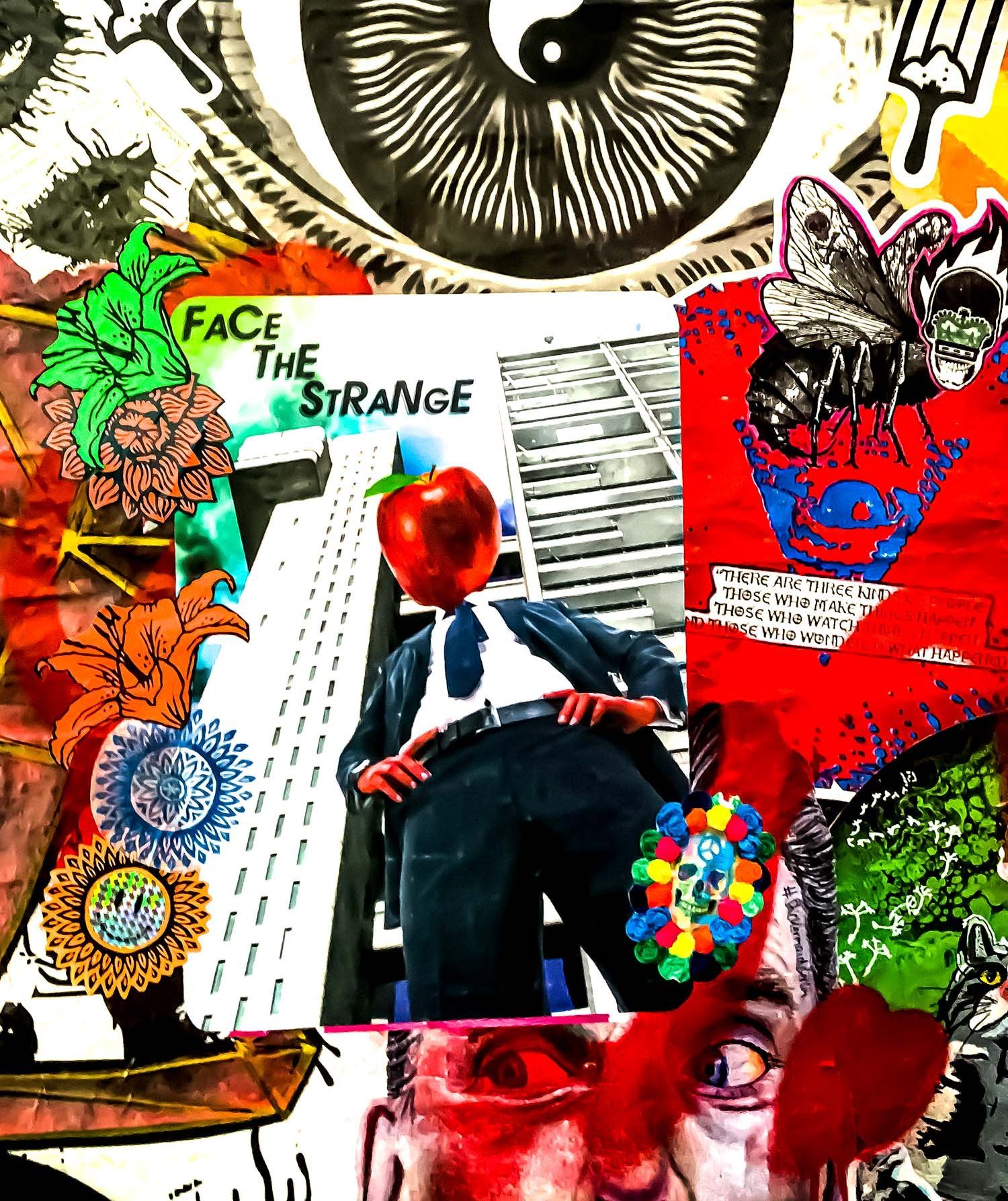
       Contemporary graffiti in east London
    Contemporary graffiti in east London

    Here’s a ray of optimism, before I start even attempting to unravel the respective messes that are Britain’s drug laws and mental health provision.

    A judge in Cumbria, northern England just said she hoped ’the law will catch up with science’ when pardoning an accused man for growing his own magic mushrooms to benefit his mental health.

    Britain has the highest depression rate among children in Europe, along with one-third of the continent’s drug overdose deaths and its worst alcohol problem. Mental health problems cost the British economy £118 billion annually. The situation is apparently more dismal than we even think. Lockdown saw a 47% increase in young people seeking help and I need hardly quote again my recent article elsewhere detailing the stigma that still exists in the workplace around stress and burnout.

    It’s characteristic of the British legislature to turn a benign blind eye to self-medication while dragging its feet on psilocybin prescriptions. Former prime minister (PM) Boris Johnson and his pantomime villain advisor Dominic Cummings supposedly had psychedelic therapy as a political cause celébre partly because Brexit meant chances to the law could be actioned quicker. Now they’re out of the game, things are even worse in the corridors of power.

    Unlikely Men in Tights of this particular pantomime are the Conservative Drug Policy Reform Group

    UK home secretary Priti Patel says she’ll ban ‘middle class’ cannabis smokers from nightclubs and take away their passports to derision from even Daily Mail readers. Front runner for new PM Liz Truss has turned Judas on her 420-friendly past.

    The centre left is no better with its leader Keir Starmer, a former head of public prosecutions, saying he’s “seen too much damage” in his former role. Dude, the unremittingly grim extraction economy lifestyle is the problem across all classes especially the estate-condemned non-working class. Not the weed itself.

    While kids opting for dank oblivion above all else is a problem, it is hardly caused by marijuana alone and previous alternatives like booze and heroin are frankly worse. My entirely subjective opinion from the ground is that the approach reeks of not upsetting near-senile, control-freak baby-boomers.

    Unlikely Men in Tights of this particular pantomime are the Conservative Drug Policy Reform Group that are actually part of the UK’s centre-right Conservative [Tory] Party. Its campaign to legalise cannabis and psychedelic therapies has the blessing of former prime minister John Major, ex-Tory leader William Hague, current Northamptonshire police, fire and crime commissioner Stephen Mold, plus ex-MI5 (it’s like Homeland Security) chiefs Lord Evans and Baroness Eliza Manningham-Butler.

    Over half of voters from even right-wing parties believe in the legalisation of psychedelic therapy, according to a YouGov poll quoted by broadcaster and former advisor to PM Theresa May Tom Swarbrick. Thought leaders like the redoubtable Zoe Cormier of good eggs Guerrilla Science are also in the media front lines doing the mushroom god’s work.

    Meanwhile the country’s largest NHS trust are opening a new dedicated facility in the grounds of the former ‘Bedlam’ hospital alongside Compass Pathways which you can read about elsewhere in this issue.

    The naturally British reaction is to quietly do what it seems the justice system, NHS and general public are already doing. Which is plough on regardless leaving the government apparatus and armchair windbags to their own ineffectual posturing. 

  • Healing of the Nation

    Healing of the Nation

      Approach
    Approach

    Become a tree, mushroom, bee or flower with pollination models and mycelial economics

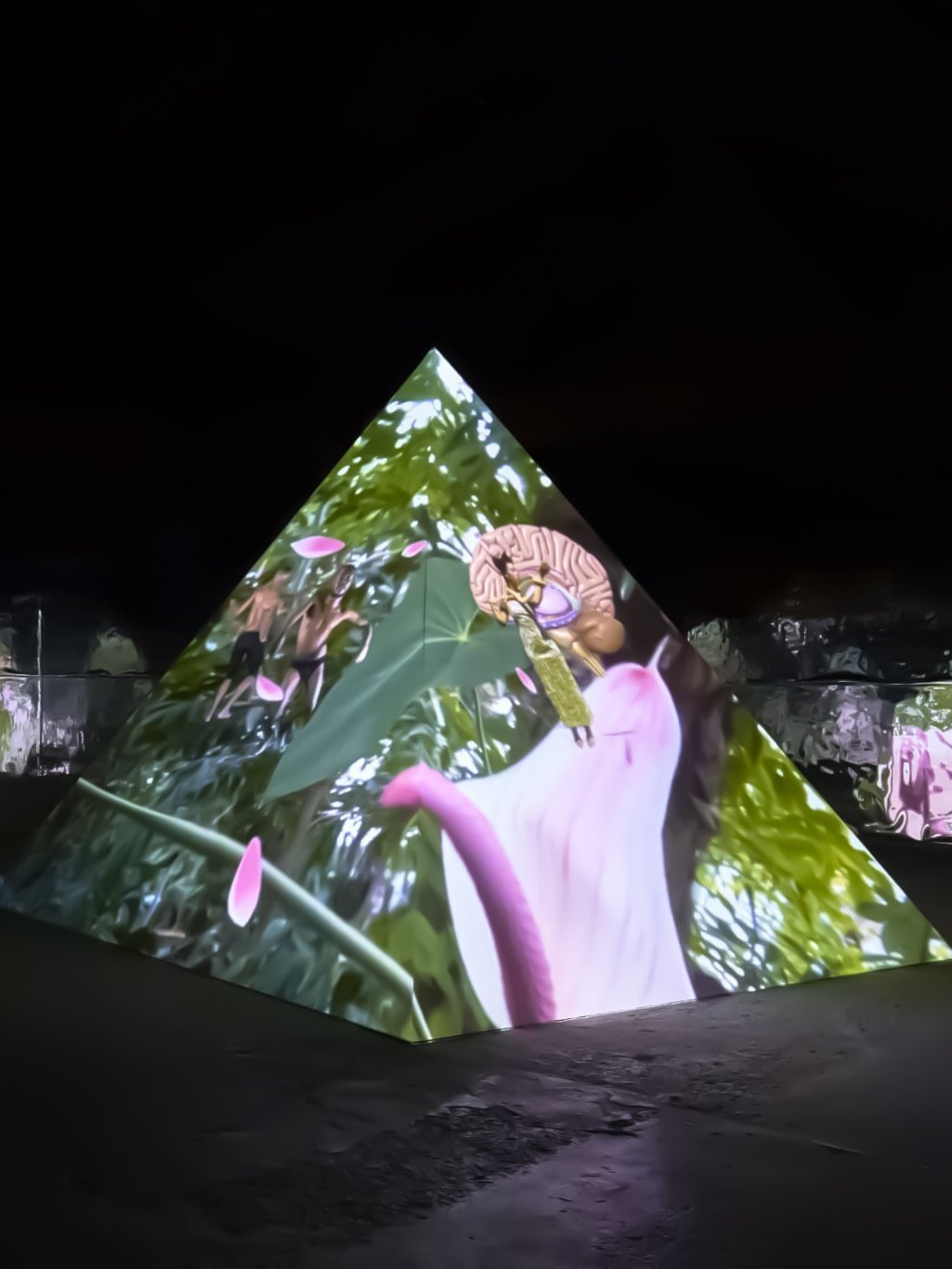
       By Tabita Rezaire in      Black Fantastic      at the Southbank Heyward Gallery, London till September 18
    By Tabita Rezaire in Black Fantastic at the Southbank Heyward Gallery, London till September 18

    Psychedelics have been totally colonised, of course. But mushrooms even have the answer for that.

    Dr Zelner didn’t just quit the rat race. He found a way to disable the money trap.

    ‘The Pollination Approach’ that he originally outlined in a landmark article for MAPS is a new community based healthcare structure, inspired by the vastly successful Frome Model that you can read about in this issue’s Medical section.

    He further acknowledges that if community, business, economics and health are interconnected, then it’d only truly work if systems other than healthcare change too. Especially if we’re to avoid a psychedystopia like that set out in illustrated story We Will Call it Pala, which my Reichian body work coach would call ‘evocative’.

    Wielding his understanding of biomimetics, Dr Zelner says “Fungi control the allocation of resources to plants, and they don’t set it all up so one can get much bigger than the others,” he says, “The social shift is from a disconnected pattern to a connected pattern, where people in social organisations are linked in multiple ways – which is also nature’s pattern, the mycelial network, the root networks if you will, of mushrooms. Resources are circulated through the entire system, keeping money local and creating economic multipliers.”

    It’s the kind of thing both Banksy and my dad would agree on.

    Dr Zelner’s Transformative Capital Institute is allocating funds to those kind of projects.  

    “None of us needs to take on the responsibility to change the world. Incremental, emergent change is how life’s process works”

    Regenerative economics, the ‘community and wellbeing first’ business strategy has also been completely colonised. You can do an MSc in it. Zenner says, “I’m not anti-capitalist, but in regenerative economics shareholders can’t be prioritised above all. I saw the phrase crop up in a traditional venture capital firm report, saying they like my pollination approach and it could help double their profits. Obviously there’s a conflict there.”

    He continues, “Wellness has been colonised,” of course, “any change we can make through the policy process is incremental at best.” Ranting at your Twitter feed about the latest moral-political infraction is finally over.

    “None of us needs to take on the responsibility to change the world, says Dr Zelner, “Incremental, emergent change is how life’s process works. Positive action at a micro level is regenerative. Individual behaviours quickly become a pattern shift. You are a pollinator.”

    And yes, psychedelics could still be the healing of the nation as ‘The first lady of LSD history’ Dr Erika Dyck stated in this rallying Charcuna piece. “Psychedelics help people question their beliefs, and we are socially constructing this reality. They shift people from disconnection to connection. It’s an embodied experience of the regenerative pattern.”

    We don’t need to get everyone on board immediately. “Tipping points happen only at 15-20% of a network,” advises Dr Zelner.

    Switching to ‘steward ownership’ is one way socially-minded firms new and old can limit their exposure to extracting finance. The format allows a business to legally put purpose over shareholder returns, capping revenue-based financing returns after eight years. Late in 2021 Europe’s Synthesis Institute raised its Series A round of $7.25 million investment funding under a stewardship model becoming the first psychedelic company to do so.

    Back around the neighbourhood, Dr Zelner’s local Brooklyn Psychedelic Society are drawing up a Frome-style health co-op to great excitement. 

    I grew up near Frome, and my parents remain active in community life: amateur dramatics, parish council, village hall management committee, ‘walking football’ for the boomers. The internecine clashes within village life have inspired endless hours of situation comedy over the years, plus recently a lockdown viral sensation

    Research from Imperial College, no less, says psilocybin treatment for depression increased nature awareness and softened any authoritarian politics amongst the test group. I ask Dr Zelner if psychedelics can even heal neighbourly squabbles. 

    “I don’t have as many funny stories as I’ll probably have this time next year,” he grins, “The Brooklyn project is very new and run by a guy called Colin Pugh. They’re still at the phase where they’re figuring out if to be a traditional co-op, versus a non-profit co-op, how to engage the existing membership of their traditional psychedelic society…” 

    Maybe a dose of non-dual thinking will still be required before life’s committee meetings.

    Till then, we can but dream.

  • Boldly going where no heads have gone before

    Boldly going where no heads have gone before

      Approach
    Approach

    Intravenous infusion (IV) application allows for extended DMT sessions dubbed ‘DMTx’ lasting hours at a time

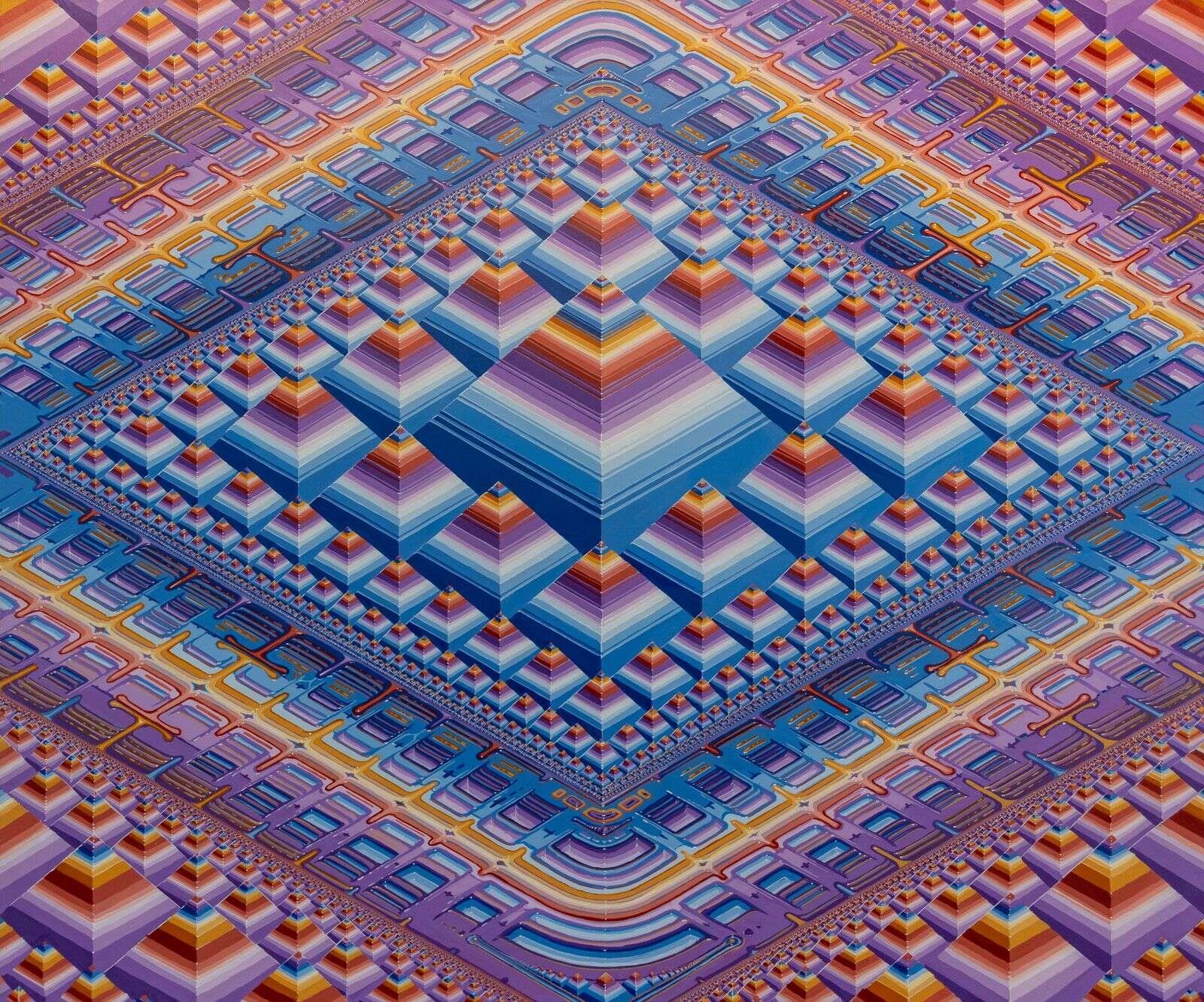
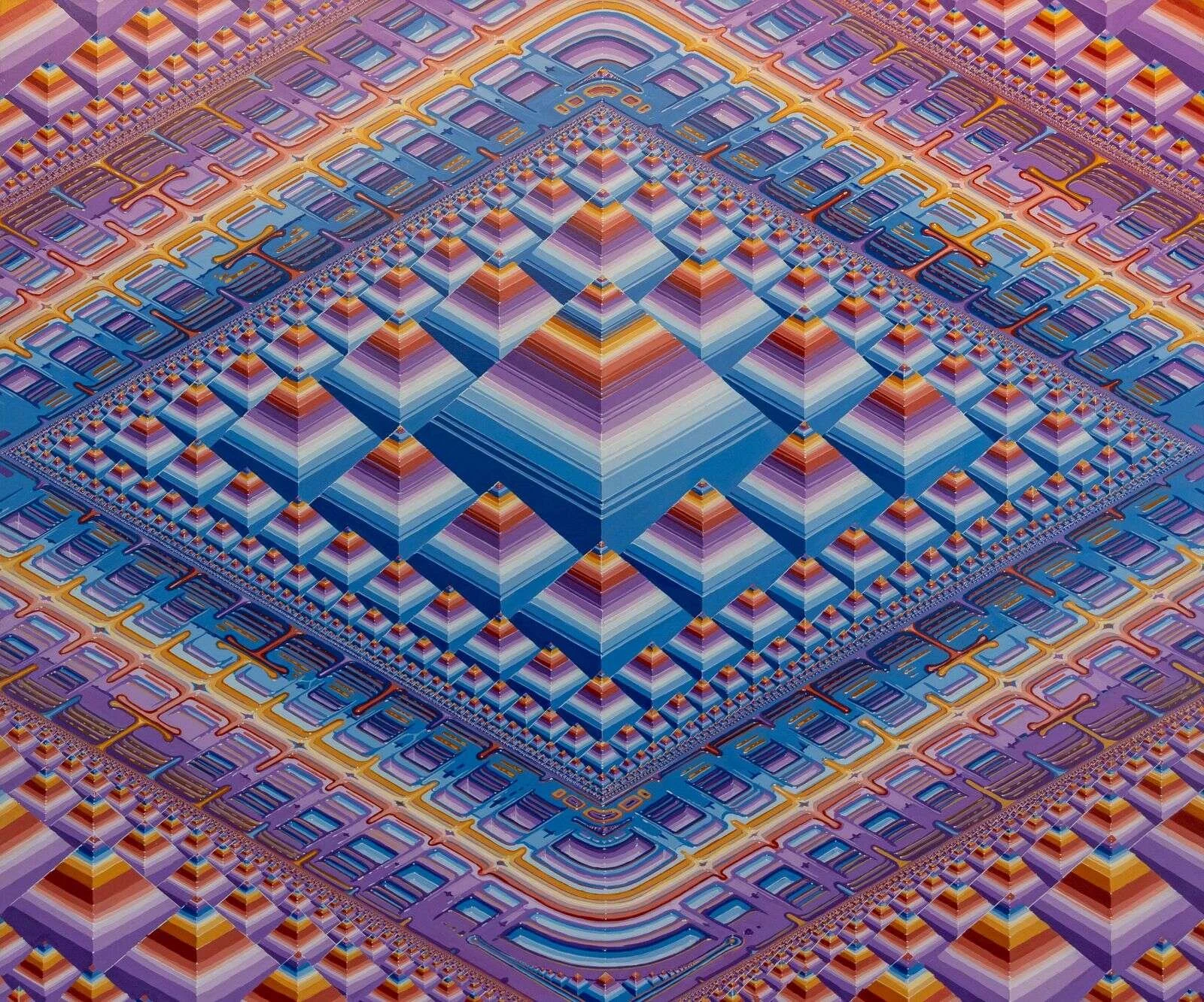
        By Colin Prahl from the exhibition      Limit Sequence      at The Chambers Project gallery till 16 September       2022. homepage image    ‘   Geodesia’     also by Prahl is available as a print from the       artists’ webstore   .
    By Colin Prahl from the exhibition Limit Sequence at The Chambers Project gallery till 16 September 2022. homepage image ‘ Geodesia’ also by Prahl is available as a print from the artists’ webstore .

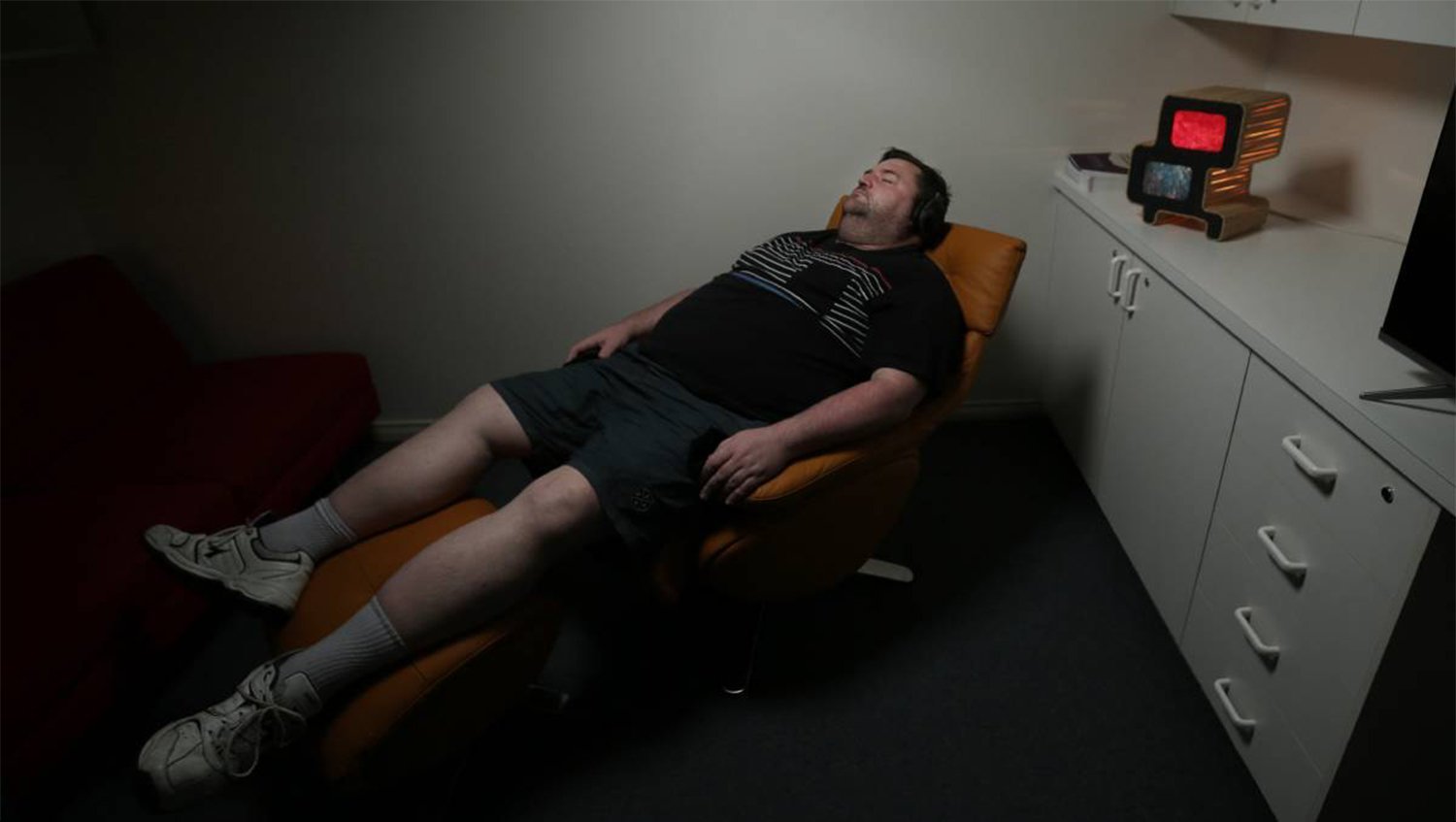
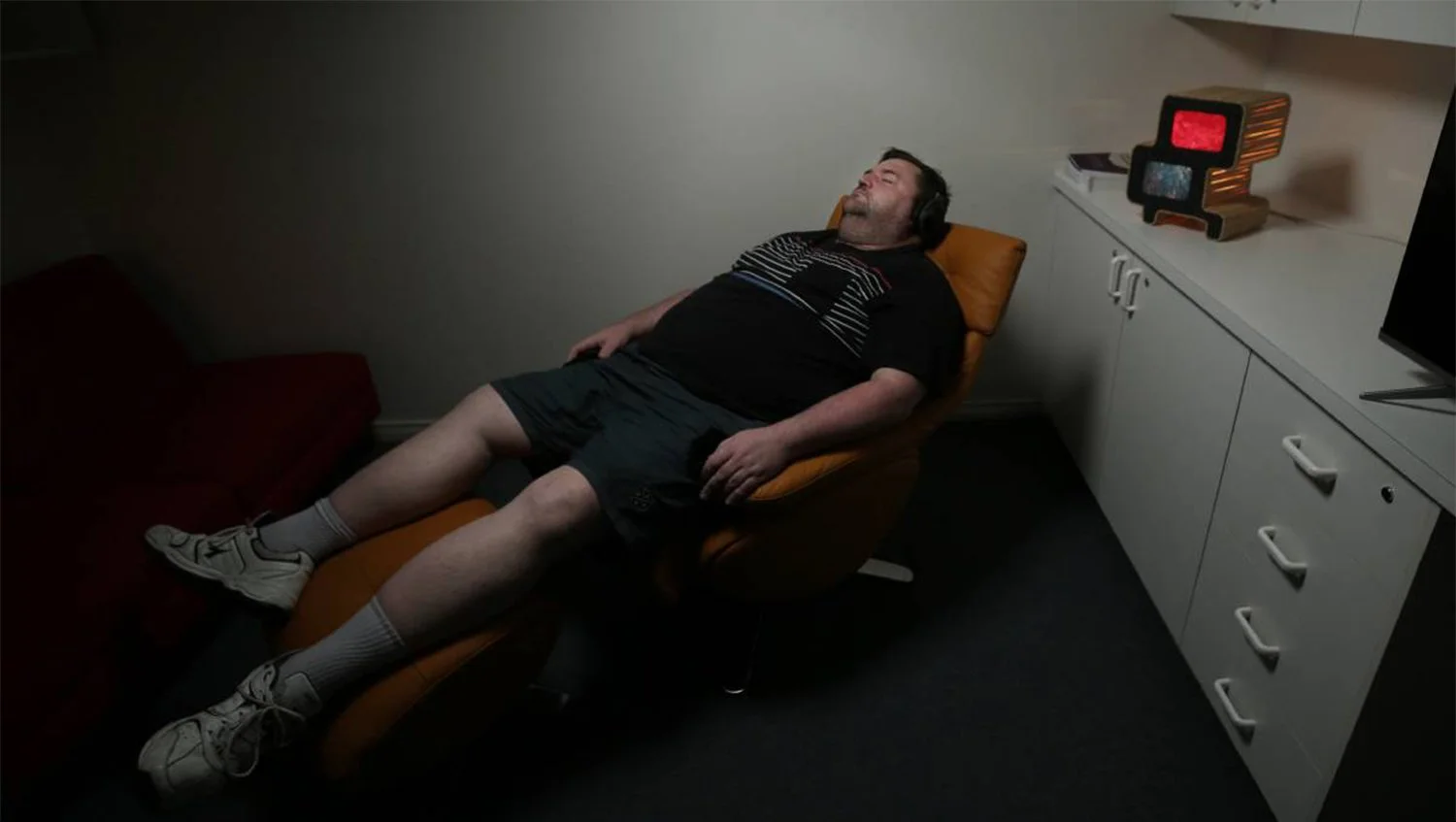
    DMTx is an extended DMT trip applied by intravenous drip… in the ‘DMTx machine’ at Imperial College London.

    “It’s crazy that ppl aren’t studying endogenous DMT more than they are,” says the man who brought ‘the spirit molecule’ to Western attention, pointing out that Dr Jon Dean of DMT Quest cannot get further funding for his revelatory 2019 discovery that DMT is produced in large quantities by the human body.

    “Nature is gushing with DMT” according to Dennis McKenna. At least plant medicine got decriminalised in Dr Dean’s Michigan neighbourhood.

    “How is DMT made?” Strassman prompts, “What’s its synthesis? What turns it on or off? Why should the brain when faced with this simple, ubiquitous molecule start constructing these alien realities? And what purpose does it have?”

    Dr Strassman’s got plenty of ideas to get the ball rolling. He first put forward the notion of a DMaTrix in a 2016 paper published alongside Andrew Gallimore, a Japan-based British neuroscientist who could lay claim to being the most ambitious psychonaut in the global space.

    “The DMT experience could be ‘titrated’ both in terms of duration and intensity, adjusting these levels to accommodate the specific needs of individuals”

    The two pointed out in rigorous scientific detail that DMT was ideally placed to be administered by IV drip, hospital bed-style. 

    ‘There are potential clinical applications of a continuous IV infusion of DMT,’ they wrote, ‘Compared to the substantially longer effects of other psychedelic substances, DMT offers more discrete and therefore more easily manageable experiences. In conjunction with continuous target‐controlled infusions, the DMT experience could be “titrated” both in terms of duration and intensity, adjusting these levels to accommodate the specific needs of different individuals and indications.’

    Colorado based Mindfulness Medicine picked up on this and began its DMTx awareness-raising project already preparing 21st Century to explore DMT hyperspace for extended periods. Gallimore’s enthusiastic lectures suggested they would y’know, get used to it after a while, find their feet and achieve a clearer, productive learning experience. The intensity can be dialled up or down, and explorers in dire straits can be pulled out of DMTx at the flick of a switch.

    “I asked Rick how long he’d like to spend there,” says DMTx’s Daniel McQueen, a psychotherapist and psychedelic retreat organiser, and ‘Oh, a couple of days’ was the reply.”

    On the practicalities of commuting to hyperspace Dr Strassman commented “Well, astronauts wear diapers” during his Vital lecture.

    No prizes for guessing where the DMaTrix is up and running right now. Imperial College London, backed by the UK’s Small Pharma company are on the verge of publishing the results of their experiment SPL028 Prolonged DMT Series: An injectable formulation of deuterated DMT designed to deliver a more prolonged psychedelic experience.

    At July’s Breaking Convention conference I chatted to a gentleman who’d been in the DMaTrix (already shortened to ‘The DMTX Machine’ in UK space argot), the day before; a young neuroscientist. He seemed pretty chilled, to be fair.

    “I won’t ask you what it was like,” I said, flexing my fearless reporting skills. “Hm,” came the reply, in acknowledgment. He showed me photos, and there he was wired up to the machine in a technicolour Frankenstein’s laboratory transported into the secular era, with MSB doors plus health ‘n’ safety notices. And a dude playing the lute in the corner.

    While it was one of those strikingly unfamiliar scenes that tickled my ontology, there was undeniably something exciting, creative, proactive and downright courageous about it too. This was bolstered by the presence of Robin Carhart-Harris himself, who’s taken personal charge of SPL028 (which is patented). Still, by the time you actually read this there could be a hole torn in the fabric of reality where Imperial’s South Kensington campus used to be.

    “The important thing is not what the entities are, but what can we learn to better ourselves and society?”

    Imperial’s model is considered ‘scientific’ in comparison to the DMTX org’s emphasis on spiritual preparation. The college’s secret weapon Dr Chris Timmerman though is out there detailing a combined model of approach and researching DMT’s similarity to a ‘waking dream’ state featuring the requisite rapid drop in alpha waves and rise in delta plus gamma waves, plus: “reduced modularity, increased integration and functional plasticity. These findings were complemented by psychological studies showing that the DMT state is one of immersive visual imagery, intense somatic experiences and partial disconnection from the environment, which we found shared significant overlap with near- death experiences. DMT administration also resulted in positive mental health outcomes in healthy volunteers providing evidence for the first time that DMT may provide a useful alternative to currently investigated psychedelic treatments.”

    The space’s first documented encounter with stand-alone DMT came in 1961 when William Burroughs wrote to Timothy Leary urging him to have some apomorphine to hand if he gave it a go. Because Burroughs had thought he was fine with DMT until one of his companions turned into – what else? – a bejewelled jaguar. (Burroughs was already a veteran of the Amazon, having written about yagé over a decade previously. Neuroscientist Andrew Lees credits Burroughs, a failed doctor who became a writer, with inspiring him to sample yagé that in turn “broke down certain rigid structures that were blocking innovations” in Lees’ leading Parkinson’s disease research).

    Leary write later that DMT was “the nuclear bomb of the psychedelic family. A sub-cellular cloud-ride into a world of ordered, moving beauty which defies external metaphor. There’s memory of structure, because space is converted into flowing process.” His crew’s reports were varied, and indeed DMT still gets a mixed reception today despite a John Hopkins compilation report maintaining 80% of users surveyed reported positive entity encounters

    “The kids round here don’t need psychedelic guides. They’ve got YouTube and DMT vapes”

    Lady Amanda Fielding described it as “a little harsh” with English understatement at the Psych Summit. But her Berkley Psytech concluded in its ayahuasca research that long-term use is beneficial. 

    Might as well try microdosing it then.

    “The kids round here don’t need psychedelic guides. They’ve got YouTube and DMT vapes,” said a friend of mine based in a large regional UK city when I told him about Vital. And indeed medical reports published in July 2022 shows how a diagnosed schizophrenic claimed to have healed himself with DMT and other psychedelics.

    “During his final trip, he even encountered an “entity” in the form of a geometric shape called an icosahedron “with a consciousness”. Every thought that the teenager shared with the icosahedron was mirrored back to him as if it would have answers to all possible questions.

    Taking his treatment a step further, the patient then began smoking low doses of DMT on a daily basis for an extended period of time. Doing so brought him into contact with yet more entities and produced an antidepressant effect. Eventually, he came to realise that “he wanted [to] belong to the society and the world, to live and enjoy life. He described that ‘life had begun to feel like a life”.’

    Well, The University of California says microdosing DMT works for rats.

    Out there in the self-healing underground though, the “question everything” rule Dr Strassman swears by is alive. “Vaping DMT is spiritual masturbation” writes one discontent (a Chicken Licken or plant medicine snob? You decide). Carl Jung warned, “Beware of unearned wisdom” and with my apprentice ‘guide’ hat on I would remind everyone to actually live the lessons learned from the Icosahedrons or whatever they might really be above. 

    “The important thing is not what they are, but what can we learn to better ourselves and society?” says Dr Strassman. And we cannot do that if we spend the whole time wired into a machine at Imperial College.

  • Next Up, The Psychedelic Enlightenment

    Next Up, The Psychedelic Enlightenment

      Approach
    Approach

    “Social, ethical, legal and metaphysical issues can undergo a transformation akin to psychedelic therapy” says an inspiring new movement with beards to match

       By Dana Awatani, works via         Athr Art
    By Dana Awatani, works via Athr Art

    Psychedelics have a purpose beyond healing or good times according to the next generation of philosophers.

    Dr Chris Letheby is a laid-back (seemingly, you never know with these philosophers) Australian contemporary thinker. Say ‘epistemology’ in the accent.

    He likes jumpers and beards, and was the first to bring out a book titled The Philosophy of Psychedelics, published by Oxford University Press in 2021. 

    During a Letheby lecture I sneak into from Berlin-based MIND, Dr Letheby academic definitions of ‘knowledge’ onto psychedelic insight with skill and precision, deploying bon mots from global philosophers and key points from contemporary research along the way. 

    “Social, ethical, legal, and metaphysical issues can undergo psychedelic transformation akin to that achieved in therapy”

    Psychedelic philosophy’s nemesis is ‘the comforting delusion’; are we communing with the cosmos or just high and talking bollocks? Is psychedelic therapy, in Charles Grob’s phrase, an “existential medicine?” Or is it, as Michael Pollan wondered, ‘simply foisting a comforting delusion on the sick and dying”?’ Dr Letheby addresses in this article for MAPS.

    He’s calling for a ‘Psychedelic Enlightenment’ to follow our current ‘Psychedelic Renaissance’ period: “Social, ethical, legal, and metaphysical issues can undergo psychedelic transformation akin to that achieved in therapy,” he declares unpretentiously and convincingly.

    Philosophical debate though is not for the feint of heart, or head. Throw some ‘non-specific amplifiers’ into the mix and things get more real than real. Indeed as I write Vital week six lecturer Dr Sjöstedt-Hughes is fencing wits with Chris Letheby in the specialist press, about… admittedly I’ve not quite figured it out just yet from giving the article a scan. Although chances are it’s something to do with ‘the hard problem of consciousness’ (how life springs from matter, or otherwise). It usually is.

    Launching himself into this moshpit of contemplation is Aiden Lyon, another Australian with no beard this time but plenty of jumpers, out of Amsterdam University whose book… Psychedelic Experience is out soon, again from Oxford University Press. The formidable Lyon has a mind like a steel trap, unsurprisingly, plus the air of a frustrated Victorian man of reputation who’d prefer to be searching for King Solomon’s Mines, but the transpersonal will have to do instead. He opens a Mind lecture I attend by pointing out his ‘circular’ theory taking the ‘mind-manifesting’ definition of psychedelic experience has been approved by Imperial College’s Dr Robin Carhart-Harris. 

    “Nature has intrinsic worth. Not just spiritual worth”

    Lyon, who’s already set up in consultancy, slices his way through the ‘Are psychedelic insights to be taken seriously?’ thing to point out that they can be very useful. There’s loads more in this issue’s Medical item. Lyon and Letheby are both terribly plausible chaps. But you may be forgiven thinking it’s all a bit monochrome geometric patterns, and not enough Tarot cards. Left, as opposed to right brain.

    Step forward Sjöstedt-Hughes, a former schoolteacher whose repertoire arguably channels the psychedelic. He does have a beard, but the similarities end there.

    “There’s seemingly something in us that needs expansion”

    He’s catalogued philosophy’s psychedelic associations, and spares no superlatives when addressing the power of 5-MEO DMT compared to earthly religious experience.  Rarely (but not uniquely) among contemporary Western psychedelic renaissance types he tackles subjects like the ‘trickster’ archetype and its association with psychedelics, non-dualism and subjective morality, the existence and nature of ‘God’ – “looks like he’s out there but he doesn’t love you – nature has intrinsic worth, not just spiritual worth.”

    Sjöstedt-Hughes proposes the return of metaphysics to the political conversation and the high street: “like we’d see a therapist, we’d consult a philosophical-spiritual advisor… ‘the metaphysician will see you now’,” is just one flourish he delivers from behind his tinted aviators, “you could grab a leaflet featuring suggestions for alternative spiritual paths, like the simulation theory, or the receiver, on the way out.”

    But the psychedelic philosophers have ambitions way beyond the ivory towers of academia, or the medical industrial complex. Sjöstedt-Hughes in particular.

    “I hope psychedelics can be part of a grander idealism for civilisation. There ‘s seemingly something in us that needs expansion. Psychedelics might offer this. I do hope for it. and I do believe it’s actually going to happen.”

  • Transpersonal psychology is back and this time it’s real

    Transpersonal psychology is back and this time it’s real

      Approach
    Approach

    Science meets the super-normal in Stanislav Grof’s school of mental health study

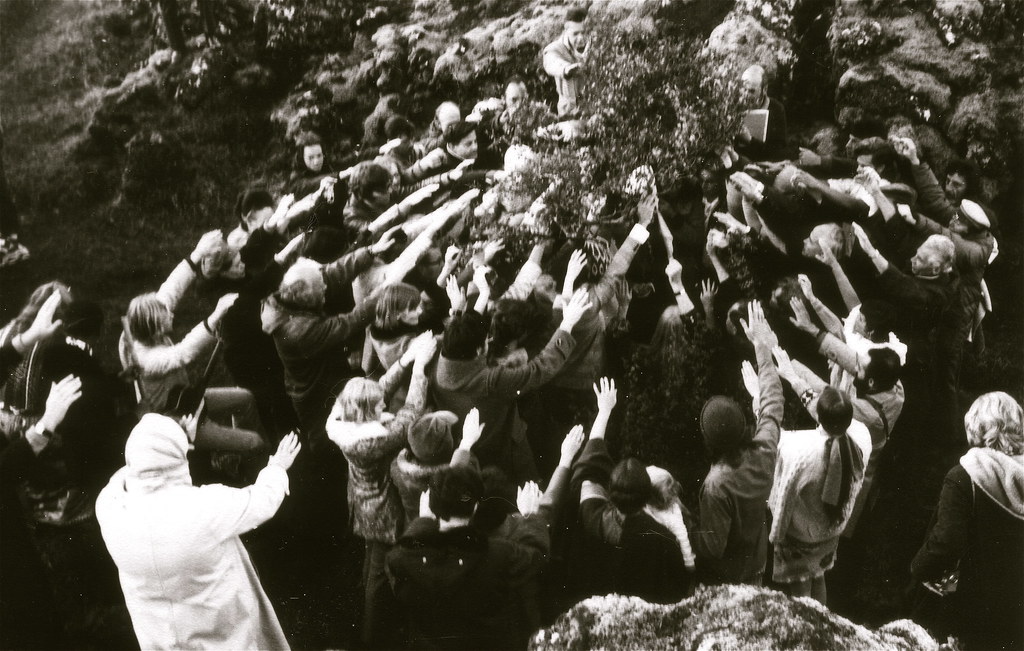
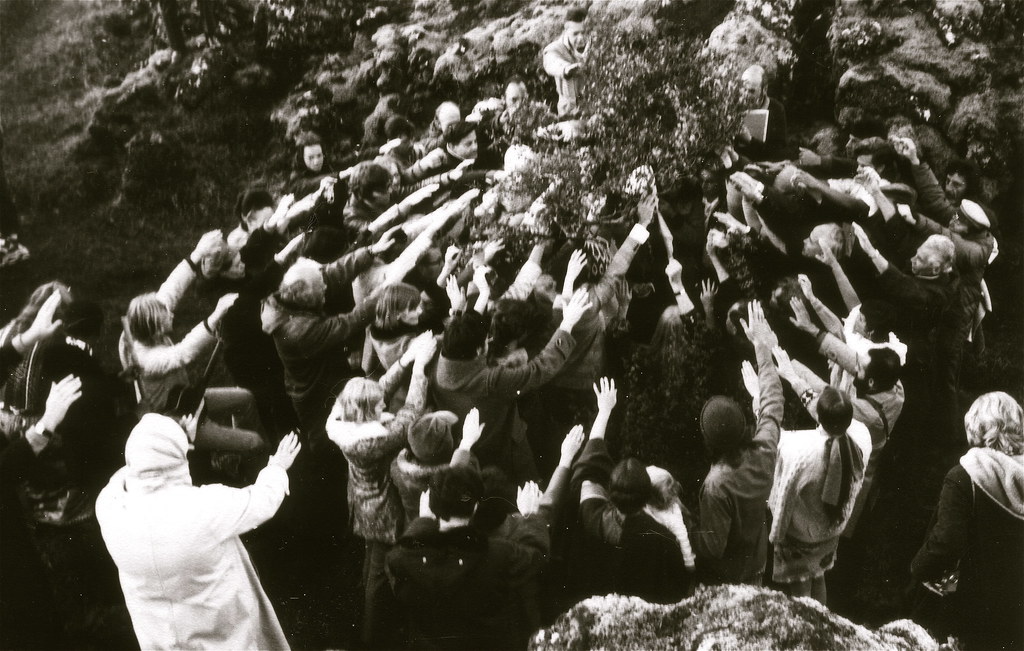
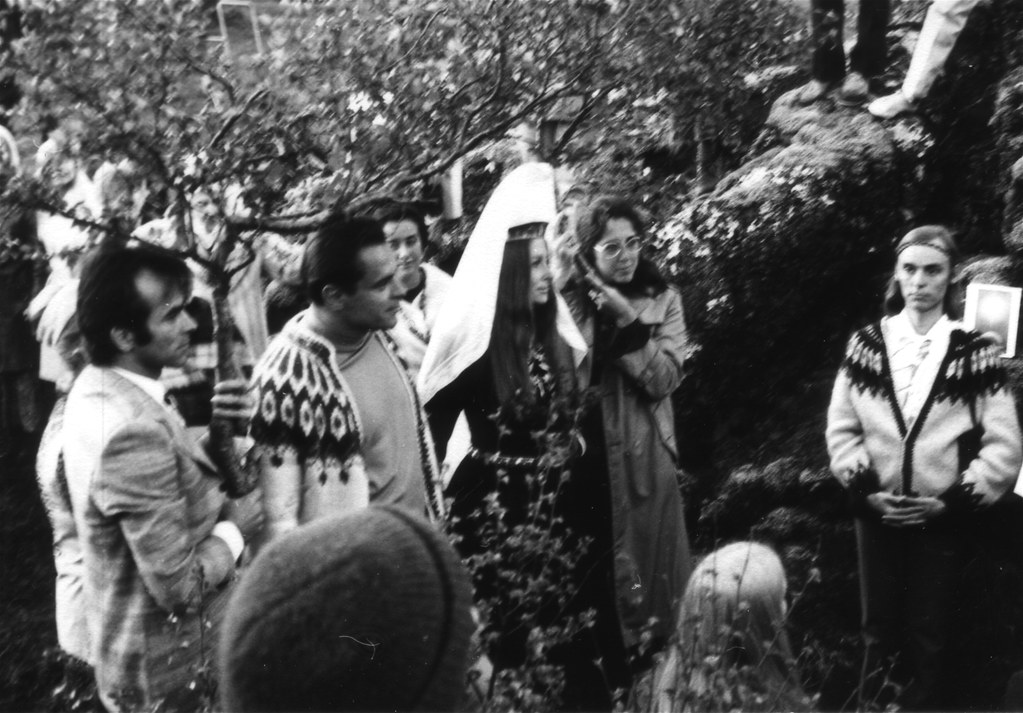
       Stanislav Grof’s 1972 wedding to    ‘Jiko’ Joan Halifax    in Iceland
    Stanislav Grof’s 1972 wedding to ‘Jiko’ Joan Halifax in Iceland

    In the 1980s transpersonal psychology staple and Way of the Psychonaut author Stanislav Grof found himself inventing holotropic breath work out of necessity after LSD faded from grace.

    Reflecting courageously on the flaws of transpersonal psychology, where science meets the super-normal, he nonetheless pointed out that the approach showed enormous potential for a range of treatment resistant diseases. And that it could be applied to other fields: like ecology, business, social work, maybe even medicine itself again someday.

    “The psychology of transformative experience” is how Dr Luke describes ‘transpersonal psychology’. Back in polite conversation thanks to Iain McGilchrist’s philosophy blockbuster The Matter with Things it’s the shrinks’ most progressive field, big in the 60s at Esalen and back with a vengeance thanks to everyone from ecologists to talk therapy refuseniks and engineers of the zero-point field, to pharma giants and governments with nationalised healthcare and their eyes on psychedelics’ potential to cure disease and reboot productivity. 

    “The only revolution that can work is the inner transformation of every human being”

    The transpersonal are “moments that evolve your current ego identity… by stepping outside normal consciousness to connection with a wider other,” explains Dr Luke. You’re in the realm of the transpersonal when you’re feeling warm and clear after meditating or making it to church: plus when acknowledging childhood trauma, or during a full revelatory, inner-visual spiritual experience… or being abducted by aliens, having a spontaneous DMT exprience, astral projecting, arguably dreaming and so on.

    The discipline is “ethnogenic, cognicentric and pragmacentric” meaning entirely inclusive and accepting of other modes of consciousness. It evolved throughout the 20th century from William James’ ‘radical empiricism’ – scientific testing for the mysterious and hitherto unknown – to include Burke’s ‘cosmic consciousness’, Jung and Maslow’s pining for the mystic, and ‘post religious’ belief systems like Ken Wilbur’s integral.

        Grof and      Halifax      exchange vows. They published The Human Encounter With Death together in 1977
    Grof and Halifax exchange vows. They published The Human Encounter With Death together in 1977

    You still have to do the graft though. “The only revolution that can work… is the inner transformation of every human being,” said Grof, and transpersonal psychology includes a faith in humanity’s ability to evolve not only physically but mentally, spiritually… and psionically. 

    “The mycelium is the message” grins Dr Luke, “other societies have sanctioned altered states, while ours refuses their existence.”

    Don’t confuse transpersonal psychology with quantum psychology.

  • Move any mountain with neo-shamanism

    Move any mountain with neo-shamanism

      Approach
    Approach

    LSD is a promethean invention that has democratised the sacrament, and given humankind the ability to heal itself says Dr Gibson

       A neo shaman
    A neo shaman

    The S-word, problematic from the start, is getting ever more laden.

    No surprise, when you consider that the criteria for shaman-hood range, depending on your understanding, from genetic lineage, grave dedication, and fighting spirits to cure treatment resistant diseases all the way to a dubious certificate, some bongos and an Instagram account. 

    ‘Neo shamanism’ to Gibson is humankind’s recent ability to be his own wise counsel and medicine woman. The synthesis of LSD, a colourless tasteless substance able to inspire psychedelic states in minuscule amounts, he believes has democratised the role.

    Poetically, this most scientific of revelations has inspired a rebirth of personal spirituality and philosophic examination. Scholars will point out that it’s the first time in 500 years, a la Joe Tafur’s Legend of the Eagle and the Condor, that science and religion have conjoined, whether in the form of transpersonal psychologist Stanislav Grof or the discoveries of quantum physics.

    “For once, and for everyone, the truth was not still a mystery. Love called to all”

    Mystical healing may be associated with the Shipibo curanderos but they don’t use the word shaman themselves. In many communities associated with ‘shamanism’ the healer role itself is rare, considered apart, and special. Scientific medical training is not uncommon amongst indegeneous mystical healers.

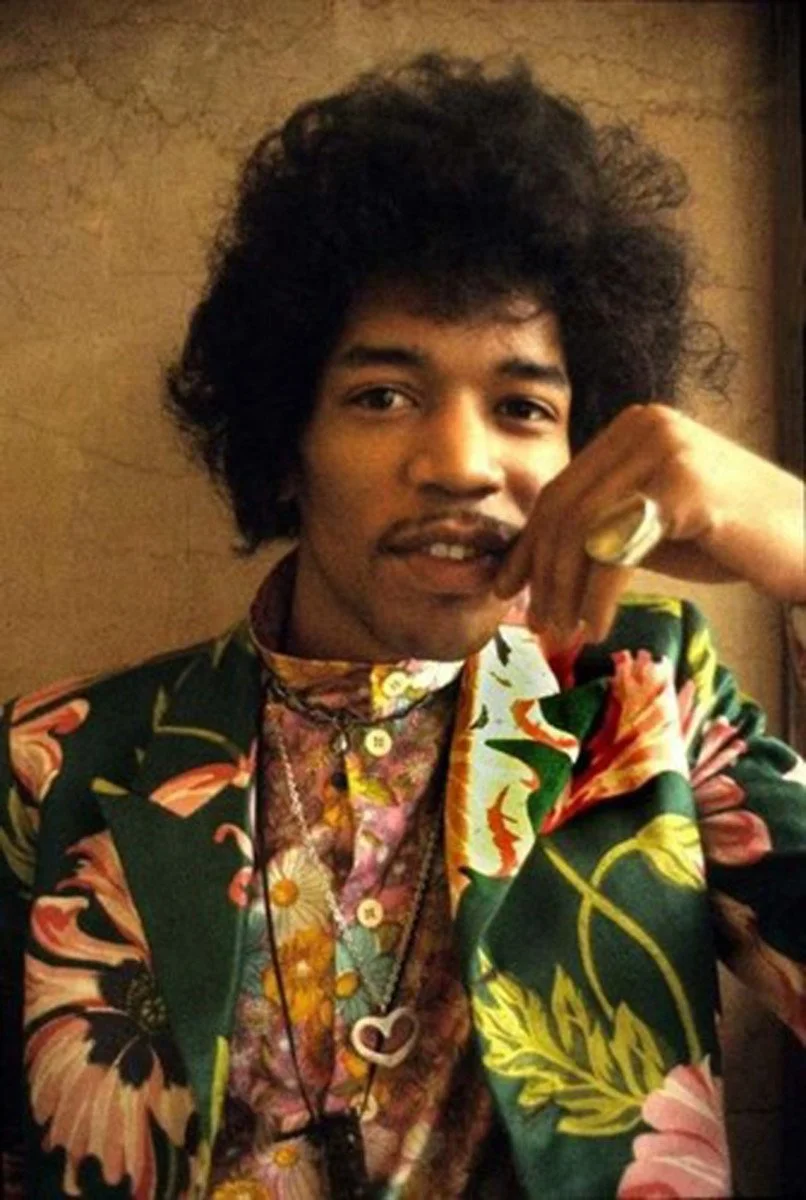
    Personally I understand exactly why usage is revered and not to be bandied about, certainly in an “I can cure you by battling with entities” manner. Gibson’s own understanding is that the neo shaman is a contemporary voyager into the new frontiers of the ‘Psyche,’ itself the name for the Greek goddess of wisdom and the soul. Obvious candidates for 20th Century LSD neo-shamanhood might be Grof, Aldous Huxley, Amanda Fielding or Jimi Hendrix. And Timothy Leary, who was scolded by RD Laing for democratising LSD… But if LSD had remained the preserve of the elite, Hendrix might never have wrote in his personal poetry after Woodstock in 1969, “For once, and for everyone, the truth was not still a mystery. Love called to all.”

    Mankind’s destiny calls, and we are all ordained to answer.

  • Saving lost souls for three million years. And now with MDMA

    Saving lost souls for three million years. And now with MDMA

      Approach
    Approach

    Could the love drug offer salvation to the lost?

      Graciela Arias Salazar, ‘La Virgen del Capinurí  out of    @centro_selva_arte_y_ciencia    via    Antricion    gallery in Zurich
    Graciela Arias Salazar, ‘La Virgen del Capinurí out of @centro_selva_arte_y_ciencia via Antricion gallery in Zurich

    Dr Tafur saw ayahuasca’s positive effect on beleaguered veterans.

    He took this as a validation of his own conversion to plant medicine after ayahuasca was instrumental in his recovery from a depressive episode.

    He told Vital students that transcendent unconditional love, of the kind received in a sacred ceremony, has a positive effect on psychoneuroimmunology (PNI) just like family love (the good enough kind).

    It can be transmitted via ‘limbic resonance’ – a theoretical term for hormonal interaction between one or more people. With its support our subconscious processes difficult emotions more efficiently. The healing effect moves from the psyche (P) through the nervous system (N) into the immune system (I), bolstering the body’s own intuitive ‘inner healer’.

    The importance of empathy has recently been recognised within western medical treatment. But we are all understanding that professional clinicians can only give so much of themselves.

    However. Try instead exotic ceremonies, remarkable locations, skilled practitioner, devout participants, and zealous dedication in the form of the ‘only was out is through’ strategy of taking high-strength ancient jungle acid five nights in a row – and you have the missing element required to treat a range of psychoneuroimmunologically-related conditions currently frustrating doctors and destroying families.

    The spiritual sector, to its eternal credit, provides the social role of offering salvation to those mired in confusion, or paralysed by ethical quagmire. It can provide rare complex moral reconciliation, of the kind that PTSD treatment benefits from enormously. Where though does MDMA come in? It’s an ‘empathogen’ as opposed to a psychedelic.

    Nonetheless the ‘love drug’ too can augment some characteristics of psychotherapy just like psychedelics and traditional healing ceremonies. Not only does MDMA increase the level of limbic resonance between doctor and patient, it’s also been shown to activate areas of the brain used during childhood to ingrain healthy social behaviour patterns.

    Besides, “The MAPS PTSD programme going up for FDA-approval has a mystical element,” says Dr Tafur, responding to my disbelief that western psychotherapy can rapidly replicate the awe of ayahuasca, “in my experience the clinical sector is increasingly interested in ceremony. There are some really open-hearted therapists at MAPS,” he expands, referencing the completely accepting nature of spiritual fulfilment… historically known as ecstasy.

  • Are ‘corporadelics’ doing enough for set, setting… and society?

    Are ‘corporadelics’ doing enough for set, setting… and society?

      Approach
    Approach

    Osmond and the early researchers stressed the importance of aesthetics and the divine to LSD therapy. Are those elements sorely lacking down at your local ketamine clinic?

      A powerful spirit healing experience taking place in Newcastle, England
    A powerful spirit healing experience taking place in Newcastle, England

    During the Q&A session after Vital’s first lecture I asked Dr Dyck what she learned about human nature from her research, that we can apply to the present.

    ”There’s a risk of reducing history to a cliché to push against,” she responded “or seeing history as ‘they had it wrong and in the past and we’re better now’.”

    The early days of LSD research are easily vilified. Spirituality is a dirty word in scientific circles right now: let alone reincarnation or astrology, both of which Stanislav Grof is quick to mention. It’s even considered unprofessional for the healer to develop a connection with the patient. 20th century Western scientists are easily cast cast as distant, privileged figures electro-shocking schizophrenics behind the asylum gates, collaborating with the CIA in return for research permits. And now the spectre of ‘corporadelics’ hangs over LSD’s renaissance.

    “We see lots of competing, profit-seeking ways of turning psychedelics into something that, I would argue, are going to be less accessible”

    “However there’s still something that we can take from the spirit, the optimism, the motivation, the intentions of these early Western researchers,” says Dyck, “for example, a lot of people who went into these trials were designated as patients – but came through feeling they were collaborators. It pushes back against the competing model of engaging in scientific rigour, where methodology overwhelmed the need for investigating human behaviour in a more diverse way.”

    Osmond, Hoffer and their in-house architect Kyoshi Yazumi (more of whom below) were revamping Canada’s mental health system as part of an ambitious pledge by Canada’s new socialist government. Innovations included day trips outside the famously foreboding asylum for inpatients, art and music therapy, and family visits, plus more autonomy for the nurses… who took LSD to ‘empathise better with the patient experience’.

    “The early researchers definitely were trying to align a health access point within a publicly funded system,” she responded, “That is certainly not on the horizon today. We see lots of competing, profit-seeking ways of turning psychedelics into something that, I would argue, are going to be less accessible.”